

- Ponnagyun residents displaced by fighting urgently need humanitarian aid
- POW says junta soldiers offered cash, promotions and drugs before combat in Arakan
- Arakan Army blocks junta offensive on key route into Arakan State
- Junta airstrikes on Ponnagyun Twsp village kill two civilians
- Elderly residents at Kyaukphyu’s Thandar Myay Home for the Aged face food, medicine shortages
Myanmar practises nominal democracy: Arakanese youths say
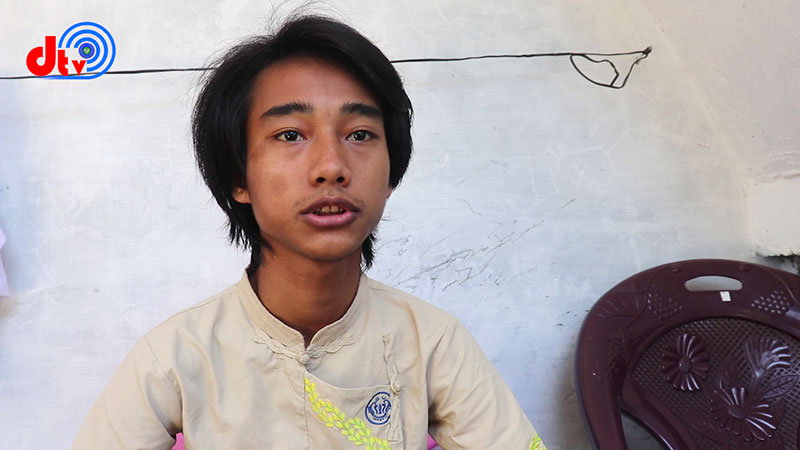
Headed by Arakanese youths, a discussion titled “Youth and Democracy” was hosted in Sittwe, capital of Arakan state on 15 September, on the occasion of International Day of Democracy.
17 Sep 2019
Aung Htein | DMG
17 September, Sittwe
Headed by Arakanese youths, a discussion titled “Youth and Democracy” was hosted in Sittwe, capital of Arakan state on 15 September, on the occasion of International Day of Democracy.
Panelists discussed the role of youths in restoring democracy in the country. During discussions, a panelist who led the talks said that Myanmar was adopting nominal democracy.
“I see the NLD government that took power to move the country closer to democracy ostensibly uses the word “democracy”. It does not adopt democratic policies in reality,” said Ko Toe Toe Aung, secretary of the Sittwe University’s Students’ Union.
Elements of a democratic system in the regions of ethnic people are few and people have faced dictatorial powers, he said, adding that their regions were lacking the rule of law because civilians were killed without any reason.
The government should build mutual understanding with ethnic people across the country, reduce its oppression of ethnic people and welcome the attempt of ethnic people to promote their own culture, young people said in the discussion.
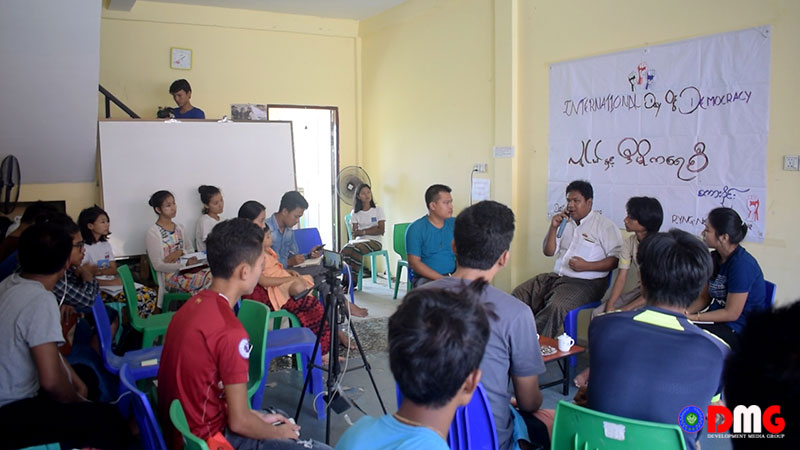
A female activist said that women need to participate in different sectors so that the country could evolve into a democratic society seamlessly.
“If a bird is used as a metaphor for building a democratic country, women and men are each a wing of the bird. So, women should participate in different areas, whether it’s political, economic, and educational or any other social institution that can improve the quality of people’s lives,” said activist Ma Tin Cho Htwe.
The discussion was held at the office of the Arakan Youth New Generation Network in Sittwe and over 20 youths participated in the discussion.

Top News
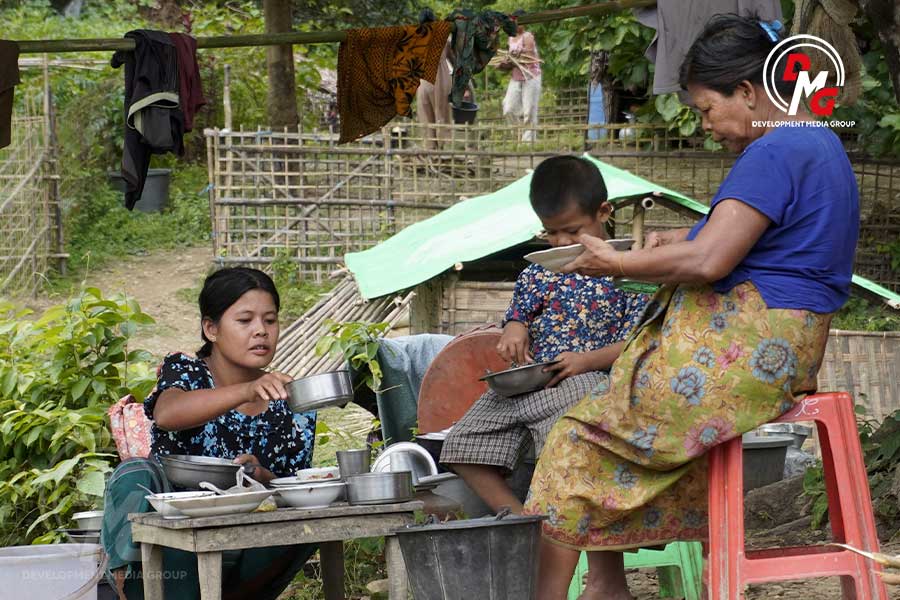
Ponnagyun residents displaced by fighting urgently need humanitarian aid
By Admin 23 Sep 2026
POW says junta soldiers offered cash, promotions and drugs before combat in Arakan
By Admin 23 Sep 2026
Arakan Army blocks junta offensive on key route into Arakan State
By Admin 23 Sep 2026

Junta airstrikes on Ponnagyun Twsp village kill two civilians
By Admin 23 Sep 2026
Two men arrested in Gwa Twsp over alleged sexual assault of three-year-old child
By Admin 22 Sep 2026


.jpg)