

- Arakan Army captures junta outposts as fighting intensifies near Sittwe
- Pro-junta ALP chair says NCA can shape Arakan’s future
- Extreme heat drives rise in clinic visits across Arakan
- Junta airstrikes on Ponnagyun IDP camps kill 15 civilians, injure 30: AAPP
- Myanmar junta airstrikes kill 163 civilians in September, Arakan hardest hit: MDSI
Myanmar trade with Bangladesh slumps: border business sources
Trade has declined this month due to poor quality products and mismatched trade prices, which have made it difficult to make cross-border deals with Bangladesh, according to businesspeople.
24 Feb 2022
DMG Newsroom
24 February 2022, Sittwe
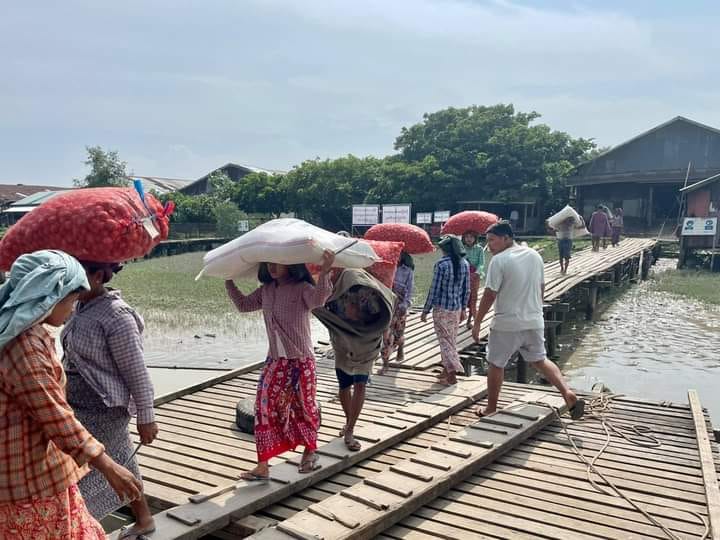
Trade has declined this month due to poor quality products and mismatched trade prices, which have made it difficult to make cross-border deals with Bangladesh, according to businesspeople.
“There are some prices that do not match with Bangladesh. The quality of the products in Myanmar is not very good. As a result, trade is not convenient,” U Aung Aung, secretary of the Arakan State Chamber of Commerce and Industry (ASCCI), told DMG. “The main thing is that when exporting goods to Bangladesh, the products need to be good and reasonably priced.”
Local goods from all over Myanmar are traded to Bangladesh through the Sittwe and Maungdaw border trade camps in Arakan State. Freshwater fish exports from Myanmar have typically accounted for up to 60% of Myanmar’s exports to Bangladesh.
Merchants said that although trade was good in December 2021, trade declined this month, and demand was weak due to the lack of a regular market in Bangladesh.
“It can be said that trade has now dropped by 70%. This is also due to the lack of regular market stability in Bangladesh. And at the moment, demand from Bangladesh is very low,” said U Kyaw Win Tun from Day Wah Nadi Company in Maungdaw.
He added that truck drivers and other workers who were operating irregularly as a result of declining cross-border trade were also experiencing some difficulties.
U Aung San Thein, vice chairman of the Maungdaw Border Merchant’s Association, told DMG that the drop in trade was hurting not only the state but also traders.
“This decline in trade is detrimental to the country. If you can send more goods, you will get more state tax. We are also trying to increase trade volume,” he said.
Previously, six boats a day were exporting goods to Bangladesh from the Maungdaw border trade camp, but now only three are plying the route, according to businesspeople.
Local assertions of a recent trade slump were disputed, however, by U San Shwe Maung, the Arakan State military government’s commerce minister.
“Trade has not declined. Trade between the two countries is the same as before,” he said.

Top News
Arakan Army captures junta outposts as fighting intensifies near Sittwe
By Admin 15 Oct 2026

Pro-junta ALP chair says NCA can shape Arakan’s future
By Admin 15 Oct 2026
Extreme heat drives rise in clinic visits across Arakan
By Admin 15 Oct 2026
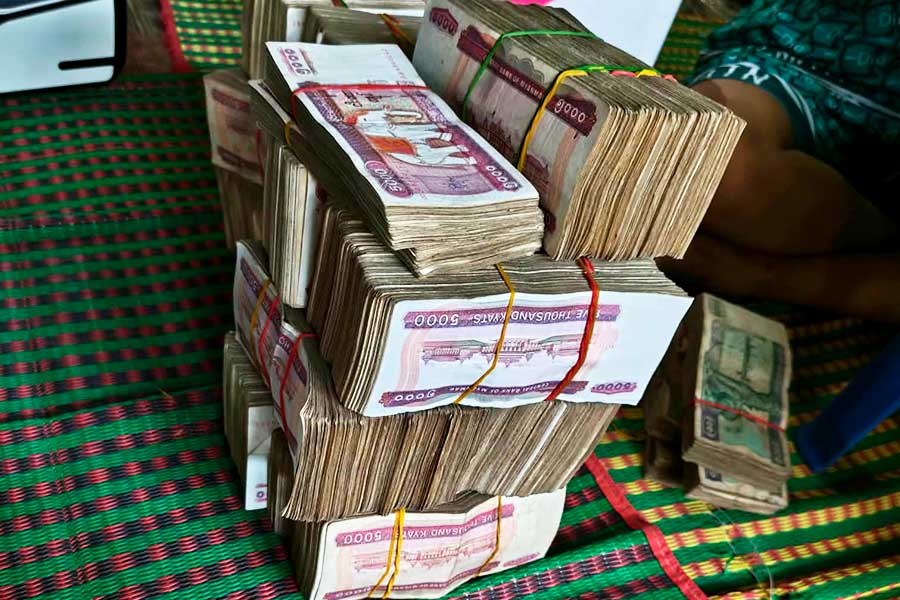
Cash withdrawal fees soar across Arakan State as trade with India slows
By Admin 14 Oct 2026

Military reshuffle may prolong junta rule and intensify war, analysts warn
By Admin 14 Oct 2026