
- Junta seeks foothold on strategic island in Kaladan River as Arakan Army counterattacks
- Begging nearly doubles amid livelihood crisis in southern Arakan
- Heavy fighting near junta-held Sittwe fuels fear as frontlines approach city
- Displaced civilians struggle to access healthcare after junta airstrike destroys Ponnagyun clinic
- Kyauktaw market closure disrupts trade and drives up prices across Arakan
Tatmadaw and AA hostilities continue in Ann Township
Hostilities in 2015 between the Tatmadaw and the AA began in Paletwa Township, Chin State, and then also spilled over into Ponnagyun Township, Arakan State, which initially saw an intensified conflict that has since subsided.
08 Jan 2020
Phadu Tun Aung | DMG
8 January, Sittwe
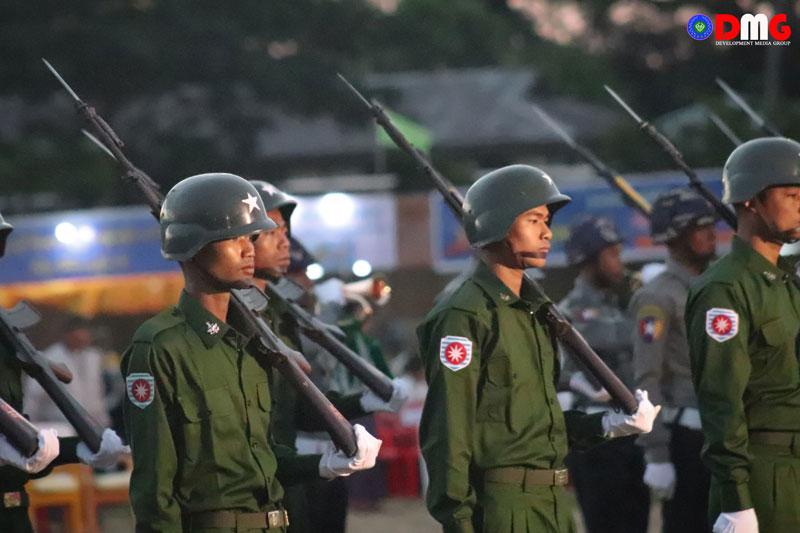
Clashes between the Tatmadaw and the Arakan Army (AA) in Ann Township, Arakan State, have continued over the past two months, according to AA spokesperson Khaing Thukha.
Fighting in the township began near Dar Let Chaung village, at the shared border of Myebon and Ann townships, and a fresh clash broke out on January 7 between Kan Chay and Pyin Wun villages in Ann, about 20 miles from the headquarters of the Tatmadaw’s Western Command.
“Fighting has intensified in the hill country, and at strategic areas between Dar Let Chaung and Yoe Chaung villages between Myebon and Ann townships,” Khaing Thukha told DMG.
Hostilities in 2015 between the Tatmadaw and the AA began in Paletwa Township, Chin State, and then also spilled over into Ponnagyun Township, Arakan State, which initially saw an intensified conflict that has since subsided.
DMG made multiple attempts to get comment from Brig-Gen Zaw Min Tun of the Tatmadaw True News Information Team and Colonel Win Zaw Oo from the military’s Western Command regarding the fighting in Ann Township, but they could not be reached.
Popular sentiment appears to endorse a dialogue to end the violence in the region, and the AA is reportedly attempting to proffer a ceasefire.
However, the Tatamadaw does not acknowledge the AA’s legitimacy in Arakan State — an obstacle to the signing of a bilateral ceasefire accord, according to AA affiliates and political analysts.

Top News
Begging nearly doubles amid livelihood crisis in southern Arakan
By Admin 12 Oct 2026
Heavy fighting near junta-held Sittwe fuels fear as frontlines approach city
By Admin 12 Oct 2026
Four civilians killed in junta shellings in Ayeyarwady Region
By Admin 11 Oct 2026