

- Junta column heading toward Kyindwe suffers heavy casualties in resistance ambushes
- Junta replaces Arakan State security minister amid escalating battles near Sittwe
- Junta Y-12 bombing raid injures two women in Anjanapura
- Two junta defectors urge conscripts to surrender to AA to save their lives
- NGO, INGO staff relocate to Yangon as fighting nears Sittwe
Can the UN Restore Trust in a Fractured World?
On 24 October 2026, the world marks United Nations Day at a time when international cooperation faces a profound test.
23 Oct 2026
By Nicholas Biswas
On 24 October 2026, the world marks United Nations Day at a time when international cooperation faces a profound test. Wars continue to endanger civilians, geopolitical rivalries obstruct collective action, human rights are protected unevenly, and the climate crisis weighs most heavily on vulnerable communities. Economic inequality, mounting debt and financial pressures are further undermining sustainable development.
Established in the aftermath of the Second World War, the United Nations (UN) embodied a historic ambition: to prevent future wars and enable nations to resolve disputes through dialogue rather than destruction. Eighty-one years after the UN Charter entered into force in 1945, that ambition remains indispensable. Yet the gap between the organisation's founding ideals and the realities experienced by millions raises a fundamental question: can the UN still fulfil its promise?
A Universal Institution, Yet Unequal Influence
Today, the United Nations has 193 member states, while the Holy See and the State of Palestine hold non-member observer state status. Founded in 1945 with 51 original member states, the UN has evolved into a nearly universal platform for international cooperation.
Myanmar, then known as Burma, joined the UN on 19 April 1948, just months after gaining independence. Bangladesh became a member on 17 September 1974, while South Sudan, admitted on 14 July 2011, remains the organisation's newest member.
Although every member state has one vote in the General Assembly, influence over major international decisions remains unequal, particularly within the Security Council, where five permanent members hold veto power.
The central challenge, therefore, is not whether the world needs the UN, but whether the organisation can become more effective, representative and accountable in addressing problems that no country can resolve alone.
Peace Cannot Remain a Distant Promise
The UN was established to spare succeeding generations the devastation of war. Yet the Security Council's ability to act decisively is frequently constrained by geopolitical competition and the veto power exercised by its five permanent members.
When strategic interests override collective responsibility, the credibility of the international system suffers, while civilians bear the consequences. Families lose their homes, children are deprived of education, and millions are forced to flee violence and persecution.
Peace must mean more than the absence of fighting. For people displaced by conflict, it means being able to return home voluntarily, safely and with dignity, rebuild their livelihoods and live without fear.
The UN must strengthen preventive diplomacy, early warning systems and mediation before tensions escalate into violence.
Security Council reform is equally essential. Fairer representation for underrepresented regions and meaningful restraint on the veto in situations involving mass atrocities could strengthen the Council's legitimacy and effectiveness. Such reforms, however, require political commitment from the world's most influential powers.
Rebuilding Trust in Multilateralism
Rising nationalism, political polarisation and declining confidence in international institutions are placing considerable pressure on multilateral cooperation.
Some governments regard international agreements as constraints on national sovereignty, while others question whether global institutions apply their principles consistently.
Trust cannot be restored through declarations alone. It requires fairness, transparency, accountability and measurable results. Powerful countries must also accept the standards of accountability they expect others to uphold.
These divisions were evident during the 81st session of the UN General Assembly in September 2026.
On 23 September, Argentine President Javier Milei sharply criticised the UN, reportedly describing it as a “useless organization” and its officials as “arrogant parasites.” He accused the organisation of failing to fulfil its responsibility to guarantee collective security.
Spanish Prime Minister Pedro Sánchez offered a contrasting perspective. Speaking before the General Assembly, he defended multilateralism and called for Security Council reform to ensure fair regional representation and abolish the veto power of permanent members.
These contrasting positions illustrate a fundamental debate over whether international institutions should be weakened or reformed to meet contemporary challenges.
Abrupt funding cuts and politically motivated restrictions can undermine humanitarian assistance, development programmes and essential services.
The solution is not weaker international cooperation, but more reliable cooperation based on predictable financing, fulfilled commitments and greater institutional transparency.
Pandemics, climate change, displacement and cybersecurity threats demonstrate why nations must cooperate even when their political interests diverge. Responsible multilateralism does not diminish national interests; it helps protect them.
Human Rights Must Be Universal
The Universal Declaration of Human Rights established a common standard of dignity, freedom and equality. Yet the protection of those rights remains inconsistent across countries and conflicts.
Governments sometimes invoke sovereignty to resist international scrutiny, while surveillance, censorship and digital repression pose growing threats to fundamental freedoms.
The UN's credibility depends on defending human rights consistently, regardless of political alliances or strategic interests.
Civilian protection, freedom of expression and equality before the law must never become bargaining chips in geopolitical negotiations.
Stronger monitoring, independent investigations and accountability for serious violations are essential. The Human Rights Council and other UN human rights mechanisms must have the independence and resources necessary to fulfil their mandates.
Governments must also safeguard civic space, protect journalists and human rights defenders, and ensure that technological advances do not undermine privacy and fundamental freedoms.
Sustainable Development Requires Global Solidarity
The 2030 Agenda and its 17 Sustainable Development Goals (SDGs) provide a shared framework for tackling poverty, inequality, inadequate healthcare, educational disparities and environmental degradation.
However, economic instability, unsustainable debt, inadequate development financing and climate change have slowed progress towards these goals.
Communities that have contributed least to global environmental pressures often possess the fewest resources to withstand their consequences.
For developing countries such as Bangladesh, international cooperation is closely connected to national development priorities, including accessible climate finance, technology transfer, capacity-building and fairer economic arrangements.
Reforming the international financial architecture, expanding concessional financing and addressing unsustainable debt must form part of a renewed global development agenda.
Wealthier countries must also translate climate commitments into adequate, accessible and predictable financial support.
Nevertheless, international assistance alone cannot guarantee sustainable development. Effective national leadership, sound governance, transparency and accountability remain equally important.
The UN should facilitate partnerships, support nationally determined priorities and ensure that development initiatives reach communities most at risk of being left behind.
From Declarations to Delivery
The theme of the 81st UN General Assembly, “Restoring Trust, Managing Transformation: A United Nations That Delivers for All,” captures the challenge confronting the organisation.
Significantly, the session is being presided over by Khalilur Rahman of Bangladesh, placing a representative of a developing country at the centre of international discussions on institutional reform and renewed multilateral cooperation.
Restoring trust requires visible improvements in people's lives.
The UN must strengthen coordination among its agencies, improve accountability for results and make more effective use of research, evidence and emerging technologies.
Artificial intelligence offers opportunities to improve early warning systems, humanitarian coordination and public services. However, its use must be governed by human rights principles, transparency and appropriate safeguards.
Responsibility for meaningful reform cannot rest with the UN Secretariat alone. An organisation created and sustained by sovereign states cannot overcome geopolitical divisions without their cooperation.
Civil society organisations, young people, researchers, journalists and local communities also have essential roles in monitoring commitments, demanding accountability and translating international agreements into practical action.
Bangladesh and other developing countries should move beyond participation in international meetings to building coalitions, advocating fairer global rules and ensuring that vulnerable communities have a meaningful voice in international decision-making.
A Renewed Commitment to Humanity
United Nations Day should be more than an annual commemoration. It should provide an opportunity to assess the distance between the world envisioned in the UN Charter and the world people experience today.
The UN is neither a substitute for national leadership nor a flawless institution. Nevertheless, the need for a global platform where nations can negotiate, cooperate and address shared challenges remains undeniable.
Abandoning multilateralism would not eliminate international problems; it would make collective solutions more difficult.
As UN High Commissioner for Refugees Barham Salih observed in October 2026, “Peace must be measured not only by agreements signed, but by the lives changed.”
His words capture an essential principle: international cooperation must ultimately be judged by its impact on human lives.
At 81, the United Nations needs a renewed commitment to its founding principles, supported by meaningful institutional reforms and a willingness among member states to place shared humanity above narrow political interests.
Its success should be measured not merely by the resolutions it adopts, but by its ability to reduce human suffering, protect fundamental rights, expand opportunities for developing countries and safeguard the planet for future generations.
The world needs a United Nations that does more than speak on behalf of all. It needs one that delivers for all.
Restoring international trust will require global leaders to move beyond promises, strengthen multilateral cooperation and turn their commitments into concrete, meaningful action.
Nicholas Biswas is a freelance journalist and a recipient of the United Nations Population Fund (UNFPA) Media Award. He can be reached at gonomaddzam@gmail.com.

Opinion
Can the UN Restore Trust in a Fractured World?
By Admin 23 Oct 2026
Arakan Amid the Storm: From Survival to Rebuilding a People
By Admin 22 Oct 2026
Surviving Amid the Bombs: Arakan's Quiet Resistance
By Admin 19 Oct 2026
Shadows Over Childhood: Confronting the Reality of Missing Children
By Admin 16 Oct 2026
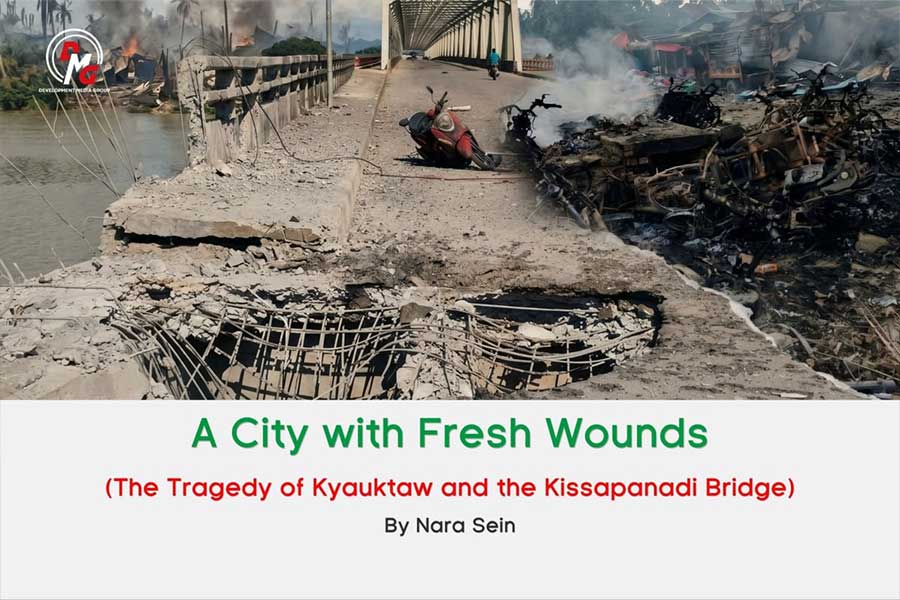
A City with Fresh Wounds (The Tragedy of Kyauktaw and the Kissapanadi Bridge)
By Admin 01 Oct 2026
Arakan Army’s Gains and the Changing Geopolitics of Arakan
By Admin 29 Sep 2026
POLITICS

BUSINESS
Industry to manufacture finished goods from coconut starting in early 2020
By Aung Kaung Zaw 20 Nov 2019