
- CAS documents over 3,200 cases of civilian harm in Arakan conflict
- Myanmar Navy threats leave Arakan fishing industry on the brink of collapse
- ULA pledges greater support for ethnic communities in Arakan
- Junta sends reinforcements to fiercely contested Sittwe-Ponnagyun front
- India's Kaladan project faces uncertain future amid Arakan conflict: CAS
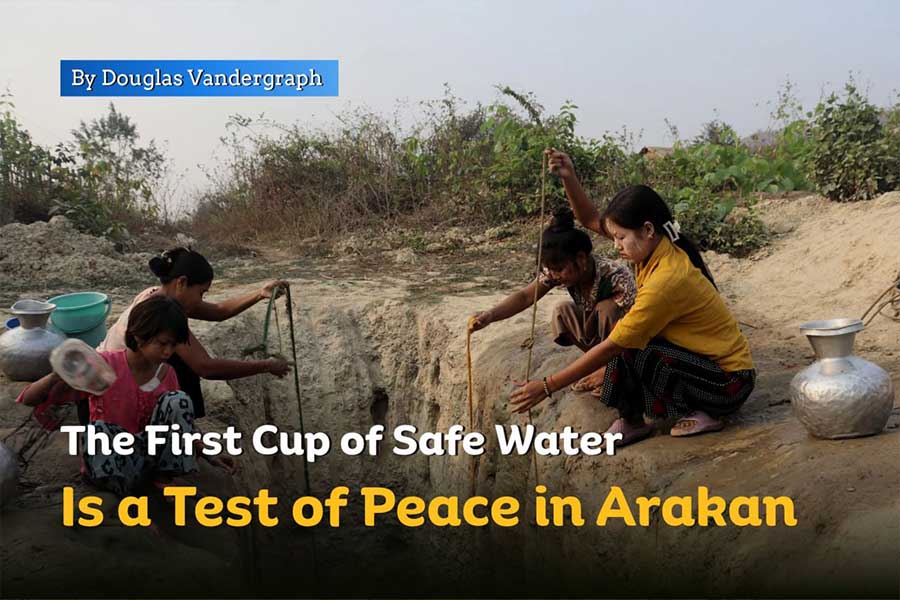
The First Cup of Safe Water Is a Test of Peace in Arakan
These figures come from humanitarian reporting, not from firsthand observations by the author. Nevertheless, they raise an important question: after the first emergency distributions and cleanup efforts, who ensures that every family can obtain its next cup of safe water?
28 Nov 2026
By Douglas Vandergraph
When floodwaters recede from a neighbourhood, the danger does not necessarily disappear with them. A family may return to a house that is still standing, only to discover that its nearest water source is contaminated. A market may reopen while the road to a functioning health clinic remains impassable. A child may hear that life is returning to normal, even as drinking water continues to pose a health risk.
In Arakan (Rakhine State), Myanmar, recovery must be measured by more than the disappearance of visible floodwaters. It must be measured by whether families can safely meet their most basic needs.
According to the United Nations Office for the Coordination of Humanitarian Affairs (OCHA), flooding in July 2026 affected an estimated 98,282 people in 22,195 households across parts of Arakan State. Among the hardest-hit townships were Buthidaung, Kyauktaw, Minbya, Mrauk-U and Ponnagyun.
The UN reported damage to homes, bridges, agricultural land and household property, alongside urgent needs for safe drinking water, sanitation, healthcare and livelihood support. Damaged roads, disrupted communications and humanitarian access restrictions further complicated relief efforts.
These figures come from humanitarian reporting, not from firsthand observations by the author. Nevertheless, they raise an important question: after the first emergency distributions and cleanup efforts, who ensures that every family can obtain its next cup of safe water?
Beyond emergency relief
Emergency assistance saves lives, but families need more than short-term relief.
A water container eventually empties. A temporary distribution point may close or relocate. A repaired well may still require water-quality testing. A household able to collect drinking water today may find its usual route blocked tomorrow.
Restoring access to safe water cannot therefore be measured solely by the number of containers distributed or facilities repaired. The real measure is whether people can obtain safe drinking water consistently, without exposing themselves to additional risks.
In a region already devastated by armed conflict and displacement, this responsibility becomes even more urgent.
Political control over roads, villages or territories must never become an excuse for denying civilians essential assistance. Displaced families, long-standing residents, people with disabilities, older people and children all deserve access to reliable information and basic services.
Families who have lost identification documents or moved repeatedly between communities must not be excluded.
No civilian should have to prove a particular political, religious or ethnic identity before receiving information about safe drinking water.
Information, accessibility and dignity
An effective humanitarian response begins with accurate, practical and accessible information.
Where security and local conditions permit, qualified health professionals, water specialists and humanitarian organisations should identify which water sources have been tested, what treatment methods are appropriate and where affected families can obtain assistance.
Information must be communicated in languages that local communities understand and updated as conditions change.
Public-health guidance should come from qualified professionals rather than rumours or unverified advice.
Equally important is identifying people who cannot easily reach assistance.
A water distribution point may appear accessible on a map but remain beyond a damaged bridge, flooded road or unsafe crossing. A person using a wheelchair may be unable to reach it. An older resident may struggle to carry water home, while a parent caring for young children may be unable to wait in a long queue.
Fairness does not simply mean providing everyone with identical information. It means recognising different barriers and ensuring that vulnerable households have meaningful access to assistance.
Local communities can contribute by identifying obstacles, sharing verified information and communicating concerns to qualified humanitarian responders.
They should not, however, be expected to replace trained engineers, healthcare workers or humanitarian organisations.
Community participation must strengthen professional assistance, not substitute for it.
Compassion beyond religious and ethnic divisions
For Christians, the obligation to help people in need is deeply rooted in faith.
In the Gospel of Matthew, Jesus speaks of giving drink to those who are thirsty (Matthew 25:35). The teaching places a basic human need at the centre of moral responsibility.
It does not ask Christians to determine a person's political affiliation, religion or ethnicity before offering assistance.
Instead, it calls for recognising the dignity and humanity of someone in need.
This Christian understanding of compassion does not erase the painful history, political disagreements or divisions affecting Arakan. Nor should it be used to impose religious beliefs on others.
Arakan is home to communities with different religions, languages, cultures and traditions. Buddhist, Muslim, Christian and other residents may approach humanitarian responsibilities through different moral and spiritual perspectives.
Yet the need for safe drinking water is shared by all.
Humanitarian assistance must never become an opportunity for religious pressure, political influence or discrimination.
A thirsty child deserves safe water regardless of identity.
When assistance is provided fairly and without conditions, compassion becomes more than an abstract principle. It becomes a practical expression of peace and mutual respect.
Recovery requires lasting responsibility
UNICEF's 2026 humanitarian reporting has highlighted the overlapping pressures of armed conflict, displacement, economic hardship and seasonal hazards across Myanmar.
These challenges place additional pressure on essential services, including healthcare, sanitation and safe drinking water.
Unsafe water and inadequate sanitation can increase the risk of preventable illness, particularly among children and other vulnerable groups.
No single community initiative can resolve these challenges.
Reliable water systems require adequate funding, technical expertise, safe humanitarian access, regular maintenance and sustained institutional responsibility.
Governments, authorities exercising territorial control, humanitarian organisations and qualified service providers all have responsibilities to ensure that civilian needs are addressed without discrimination.
Communities themselves must also have opportunities to identify gaps, raise concerns and participate meaningfully in decisions affecting their lives.
A recovery announcement is not the same as recovery.
A repaired bridge offers little benefit if families cannot safely cross it. A reopened clinic cannot fully serve its community if patients cannot reach it. A restored water source provides little protection if its water remains unsafe to drink.
And a neighbourhood cannot be considered fully recovered simply because flood marks are no longer visible on its walls.
For communities in Arakan, peace must mean more than the absence of immediate violence or visible destruction. It must include the ability to live with dignity, security and access to essential services.
After the floodwaters recede, one question remains both simple and demanding:
Can every household obtain its next cup of safe drinking water without fear, discrimination or humiliation?
No armed faction, political authority or religious community owns that question.
Its answer will be found in the daily experiences of families who deserve more than survival.
It will be found in the reliability of the next cup of safe water.
Sources and editorial references:
- United Nations/OCHA, Rakhine State, Western Myanmar: Flood Situation Update No. 1, 21 July 2026.
https://myanmar.un.org/en/319760-rakhine-state-western-myanmar-flood-situation-update-no1 - UNICEF Myanmar, Humanitarian Situation Report No. 1: Mid-Year, January–June 2026, 16 September 2026.
https://myanmar.un.org/en/322720-unicef-myanmar-humanitarian-situation-report-no-1-mid-year-january-june-2026 - UNICEF, Myanmar Humanitarian Action for Children 2026.
https://www.unicef.org/appeals/myanmar
About the author
Douglas Vandergraph is a Christian writer and speaker whose work explores compassion, human dignity, resilience and practical peace.
Website: https://douglasvandergraph.com

Opinion
The First Cup of Safe Water Is a Test of Peace in Arakan
By Admin 28 Nov 2026
India's Kaladan Project and the Need to Engage the Arakan Army
By Admin 14 Nov 2026
Diwali: Illuminating the Path Towards a More Inclusive Society
By Admin 09 Nov 2026
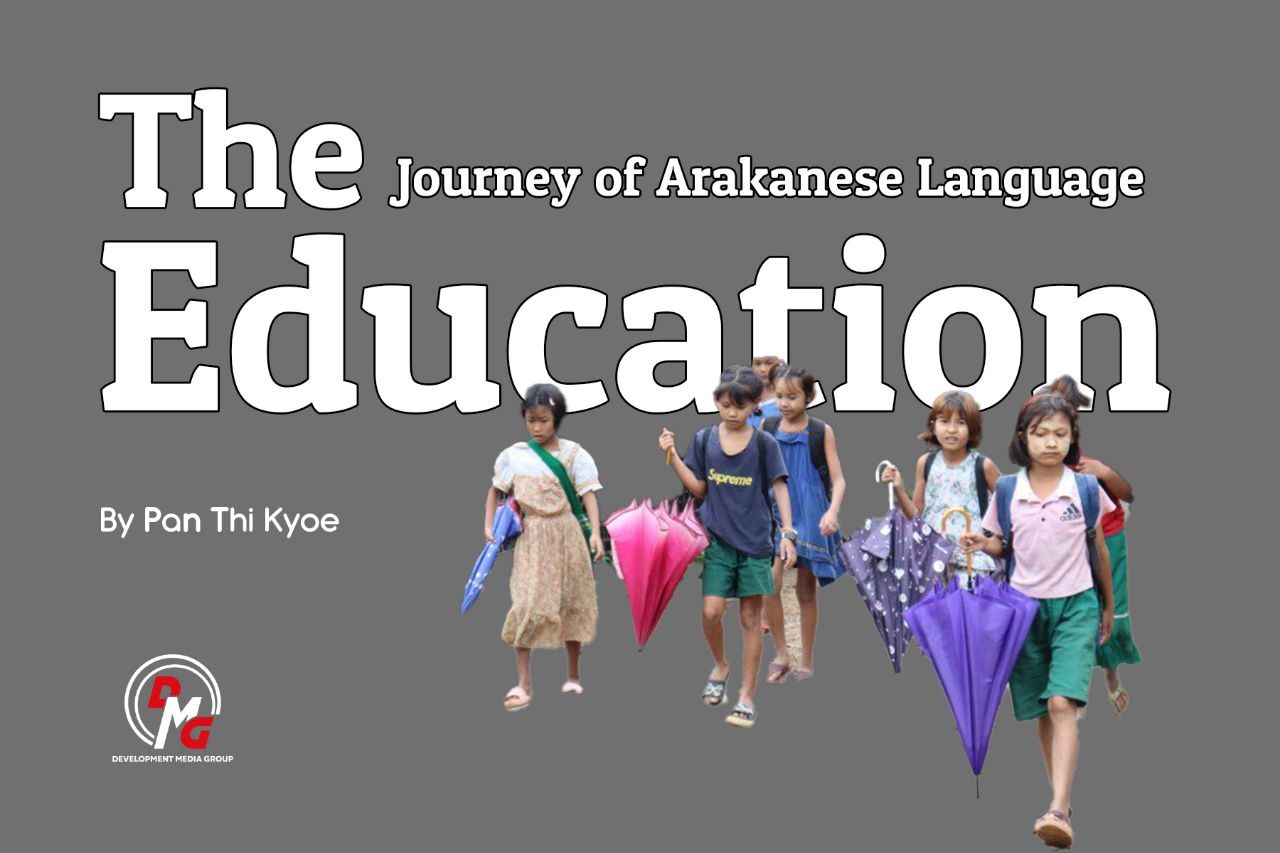
The Journey of Arakanese Language Education
By Admin 03 Nov 2026
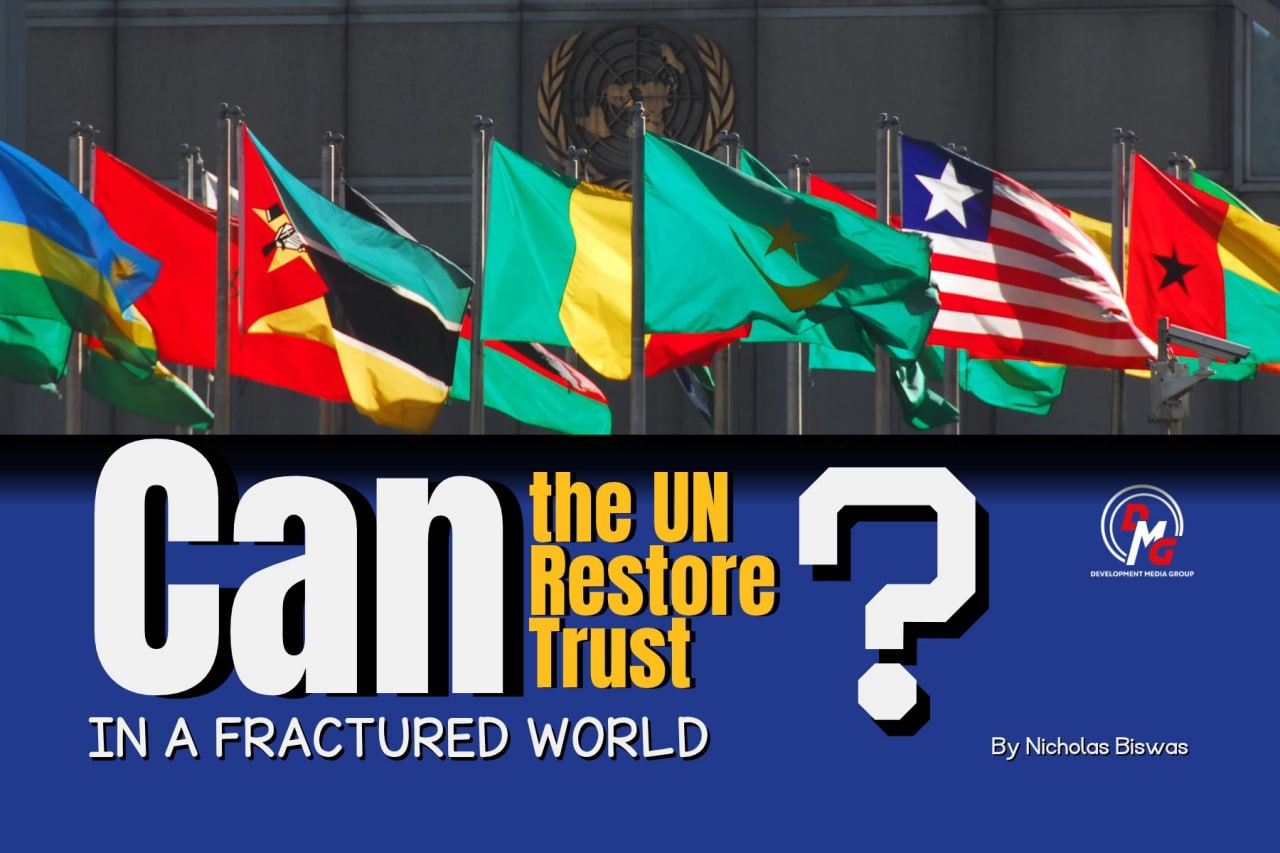
Can the UN Restore Trust in a Fractured World?
By Admin 23 Oct 2026
POLITICS
BUSINESS
Industry to manufacture finished goods from coconut starting in early 2020
By Aung Kaung Zaw 20 Nov 2019