

- Myanmar Navy threats leave Arakan fishing industry on the brink of collapse
- ULA pledges greater support for ethnic communities in Arakan
- Junta sends reinforcements to fiercely contested Sittwe-Ponnagyun front
- India's Kaladan project faces uncertain future amid Arakan conflict: CAS
- Myanmar records more than five landmine, ERW casualties daily
Myanmar Navy threats leave Arakan fishing industry on the brink of collapse
Although the winter fishing season has begun, fishing operations along the Arakan coast are facing severe difficulties getting underway this year due to threats from Myanmar Navy vessels, according to industry sources.
26 Nov 2026
DMG Newsroom
26 November 2026, Thandwe
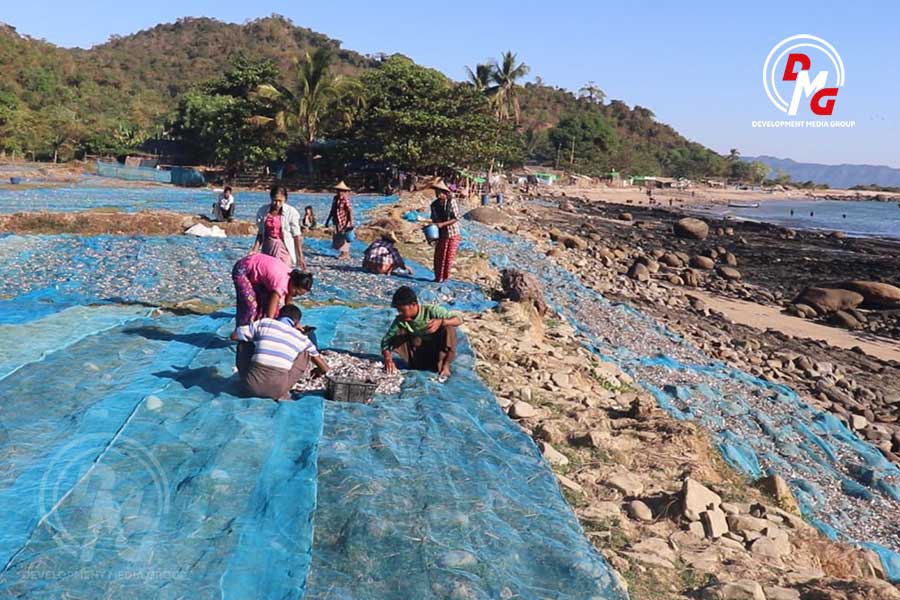
Although the winter fishing season has begun, fishing operations along the Arakan coast are facing severe difficulties getting underway this year due to threats from Myanmar Navy vessels, according to industry sources.
In Arakan State, fishermen typically head out to sea in motorboats for extended fishing trips from the beginning of winter in November through June. However, fishing operations across the state are now on the verge of a complete standstill.
"Normally during this season, both locals and people from other areas would arrive, making it bustling and lively. This year's fishing season is even worse. That is why I can only say: if possible, come and see for yourselves how severe the crisis has become," said Ko Soe Win, a Thandwe resident working in the fishing industry.
Fishing in the open sea and river estuaries is a primary livelihood for residents of Thandwe, Ramree, Kyaukphyu, Werathani, Manaung, Myebon and Sittwe townships. Residents in Gwa, Taungup and Maungdaw townships are also engaged in the trade.
In particular, fishing is the main source of livelihood in Jeittaw, Lintha and Hsinkhaung villages in Thandwe Township; villages on Phayonekar Island in Werathani Township; Kyunthayar, Pyinwun and Ngapathone villages in Myebon Township; Kyauknimaw and Zeetaw villages in Ramree Township; and Zinchaung and Kinchaung villages in Kyaukphyu Township.
As both local residents and migrant workers from across Arakan State settle in these areas to earn a living, the fishing sector also provides vital employment opportunities in a region where jobs are scarce.
A dried-fish trader from Kyauktaw said: "If there is no fresh fish, we cannot dry fish either. Normally at this time of year, when fresh fish is available, dried fish is cheap. Right now, even going around trying to buy at every fishing spot, we can barely get any. It is extremely scarce."
In the past, motorized fishing boats along the Arakan coast were able to set out to sea as soon as November arrived. However, conditions have steadily deteriorated since the Arakan Army's town-seizure offensive began.
According to DMG investigations, at least 40 fishermen from Thandwe, Kyaukphyu, Ramree and Taungup townships have been arrested and their motorboats confiscated since the offensive began.
Similarly, at least 40 fishermen have been arrested in Myebon, Werathani and Sittwe townships. Motorboats attempting to flee have been fired upon, destroyed or burned, while fishermen who have been captured have had their belongings seized and have been subjected to torture and extortion.
"Previously, although we had to fear the Myanmar Navy, we could still sneak out to fish when naval vessels were not around. Now, because naval vessels are present almost around the clock, things have gradually grown worse and worse for those working in the fishing industry," said U Maung Bu Chay, a fishing business owner from Kyauknimaw Village in Ramree Township.
Because offshore fishing requires trawl nets, purse seines and other equipment, individual business owners must invest tens to hundreds of millions of kyats. Each operator provides a livelihood for at least 20 to hundreds of workers.
In Thandwe Township alone, there are hundreds of fishing business owners. As operations stall, workers and their family members are now facing severe hardship in making ends meet.
In addition, shortages of ice for storing catches, soaring fuel prices, and transportation and market difficulties continue to pose major challenges for the fishing industry.
Furthermore, seafood caught in Arakan State was previously exported by air, road and sea to mainland Myanmar and abroad. The current challenges also threaten export revenues and regional food security.

Top News
Myanmar Navy threats leave Arakan fishing industry on the brink of collapse
By Admin 26 Nov 2026

ULA pledges greater support for ethnic communities in Arakan
By Admin 26 Nov 2026
ULA health department plans cholera vaccination campaign in seven townships
By Admin 25 Nov 2026
Junta sends reinforcements to fiercely contested Sittwe-Ponnagyun front
By Admin 25 Nov 2026
India's Kaladan project faces uncertain future amid Arakan conflict: CAS
By Admin 25 Nov 2026