

- Junta column heading toward Kyindwe suffers heavy casualties in resistance ambushes
- Junta replaces Arakan State security minister amid escalating battles near Sittwe
- Junta Y-12 bombing raid injures two women in Anjanapura
- Two junta defectors urge conscripts to surrender to AA to save their lives
- NGO, INGO staff relocate to Yangon as fighting nears Sittwe
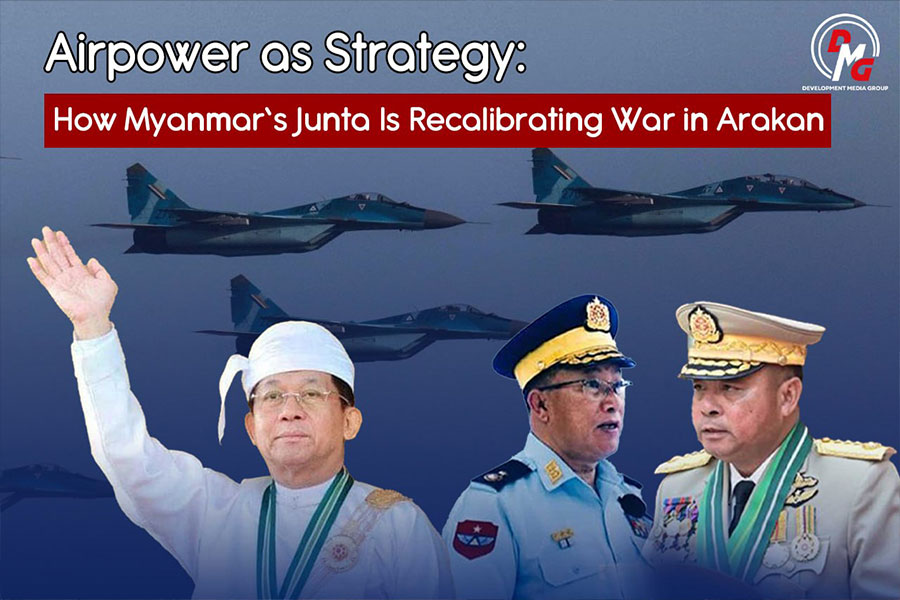
Airpower as Strategy: How Myanmar’s Junta Is Recalibrating War in Arakan
Myanmar’s military regime is intensifying its reliance on airpower in Arakan State, marking a strategic shift with significant humanitarian and political consequences.
10 May 2026
DMG | Policy Analysis
Myanmar’s military regime is intensifying its reliance on airpower in Arakan State, marking a strategic shift with significant humanitarian and political consequences. Recent monitoring by the airstrike tracking group EAR indicates that the junta is conducting sustained air operations from at least four major air bases, Magway, Meiktila (Shante), Naypyidaw (Aela), and Tada-U, targeting areas across Arakan with increasing frequency and coordination.
This evolution reflects both battlefield realities and a broader strategic recalibration. As ground control continues to erode particularly with the Arakan Army now holding 14 of 17 townships in Arakan State, along with Paletwa Township, the military is compensating through aerial dominance. Airpower has become the junta’s primary instrument for projecting force into areas it can no longer control on the ground.
From Tactical Tool to Strategic Lever
Historically, airstrikes in Myanmar’s conflicts were used intermittently to support ground operations. In Arakan today, however, they have evolved into a standalone strategy.
Evidence suggests a shift in operational patterns:
• Deployment of multiple aircraft in coordinated strikes, rather than single sorties
• Increased targeting of civilian-populated areas and infrastructure
• Expansion of strike frequency across multiple townships
These developments point to a doctrine of coercion rather than battlefield engagement. Airpower is being used not only to weaken armed resistance but also to impose sustained pressure on civilian populations in contested areas.
An Arakan human rights observer describes this dynamic succinctly: simultaneous offers of political dialogue alongside escalating bombardment function less as genuine negotiation and more as coercive signaling, a choice framed as compliance or continued violence.
Civilian Impact: Expanding the War’s Human Cost
The humanitarian consequences are severe and escalating. Civilian infrastructure including religious sites, schools, and health facilities, has increasingly become part of the strike landscape. A recent incident in Mrauk-U saw a monastery destroyed and multiple civilians injured following repeated airstrikes in a single day.
According to DMG data, between April 2024 and April 2026:
• At least 491 civilians have been killed
• More than 839 injured
• Numerous cases of amputation, displacement, and loss of livelihoods
Beyond physical harm, the psychological toll is profound. Civilians report persistent fear, sleep disruption, and avoidance of public spaces. Communities are adapting to a reality in which airstrikes are no longer sporadic events, but a constant threat.
Operational Reach and Escalation Risks
One of the most significant findings from EAR’s assessment is the speed and reach of junta aircraft. Fighter jets from Magway Air Base can reach parts of Arakan, such as Ann Township, in as little as six minutes.
This compressed response time has several implications:
• Minimal warning time for civilians
• Reduced effectiveness of informal alert systems
• Increased lethality of surprise strikes
Even aircraft from more distant bases can reach most parts of Arakan within an hour, underscoring the regime’s capacity to sustain operations across a wide geographic area.
This level of reach transforms airpower into a persistent, state-wide threat environment rather than a localized tactical tool.
Strategic Logic: Lessons from Northern Shan
The junta’s approach in Arakan closely mirrors its earlier use of airpower in northern Shan State. There, sustained aerial pressure contributed to shifting conflict dynamics, including ceasefire outcomes under duress.
In Arakan, the replication of this model suggests a clear objective:
to force political concessions through sustained civilian pressure, rather than achieving decisive military victory.
However, the effectiveness of this strategy remains uncertain. Unlike northern Shan, Arakan’s conflict dynamics involve:
• More consolidated territorial control by a single armed actor (the Arakan Army)
• Emerging local administrative structures under non-state governance
• Deep-rooted grievances that may resist coercive settlement
Policy Implications for the International Community
The escalation of air warfare in Arakan presents urgent challenges for international actors.
1. Protection Gap
Civilian populations face near-constant exposure to airstrike risks without adequate protective infrastructure.
• Community-level shelters remain limited
• Early warning systems are fragmented or non-existent
Policy priority: Support scalable, community-based early warning systems and protective infrastructure.
2. Accountability Deficit
The increasing targeting of civilian areas raises serious concerns under international humanitarian law.
• Patterns of strikes suggest systematic rather than incidental harm
Policy priority: Strengthen documentation mechanisms and support international accountability efforts.
3. Humanitarian Access Constraints
Ongoing air operations compound existing barriers to aid delivery, particularly in areas outside junta control.
Policy priority: Expand cross-border and non-state humanitarian delivery mechanisms.
4. Strategic Misalignment
The junta’s reliance on airpower may deepen humanitarian crises without achieving durable political outcomes.
Policy priority: Reassess engagement strategies that assume military leverage will produce negotiation incentives.
Conclusion: Airpower Without Resolution
The junta’s intensified use of airpower in Arakan reflects both adaptation and limitation. It demonstrates the military’s ability to project force despite territorial losses but also its inability to regain control through conventional means.
For civilians, the result is a war that has shifted from the ground to the sky less visible in territorial maps, but more pervasive in daily life.
Without effective intervention whether through protection, accountability, or political pressure, the trajectory is clear:
continued escalation, deepening humanitarian impact, and an increasingly entrenched conflict dynamic.

Opinion
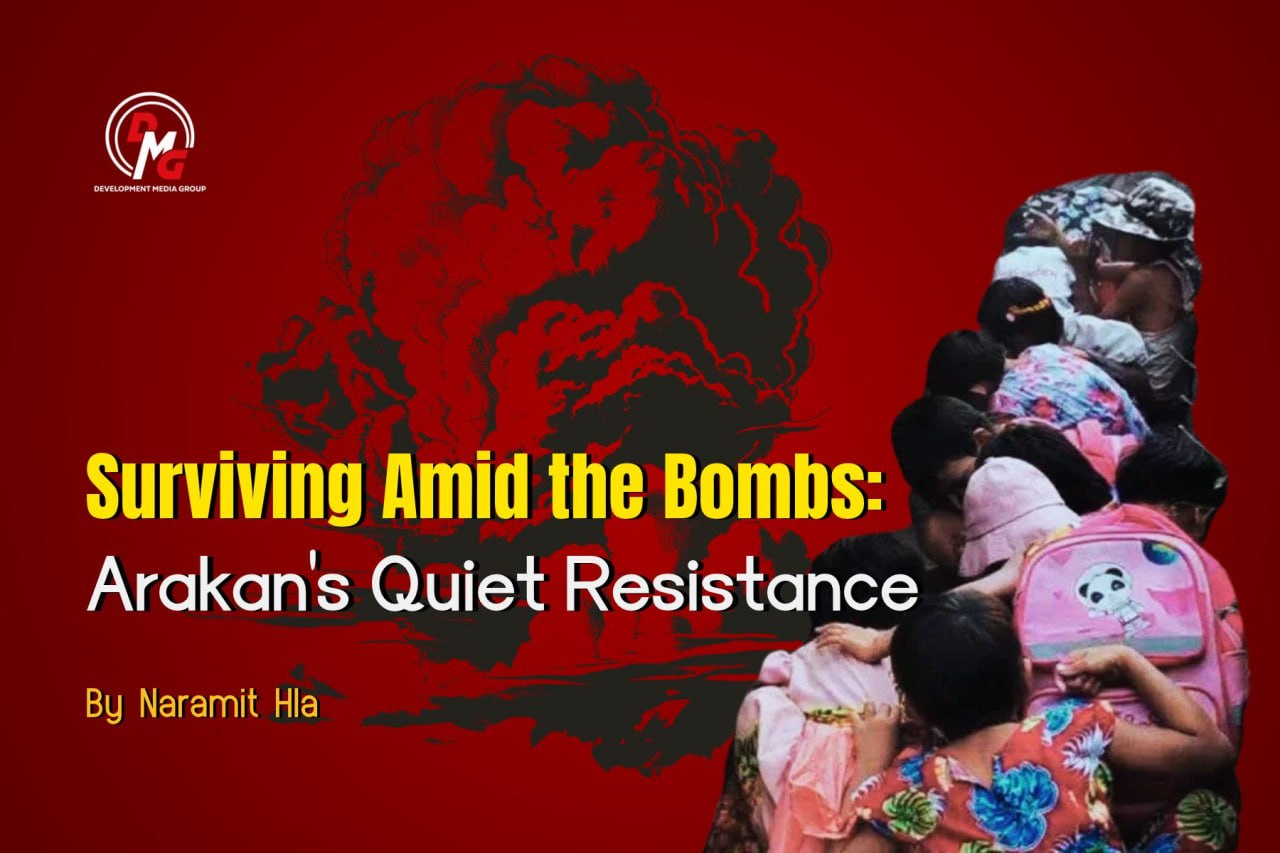
Surviving Amid the Bombs: Arakan's Quiet Resistance
By Admin 19 Oct 2026

Shadows Over Childhood: Confronting the Reality of Missing Children
By Admin 16 Oct 2026
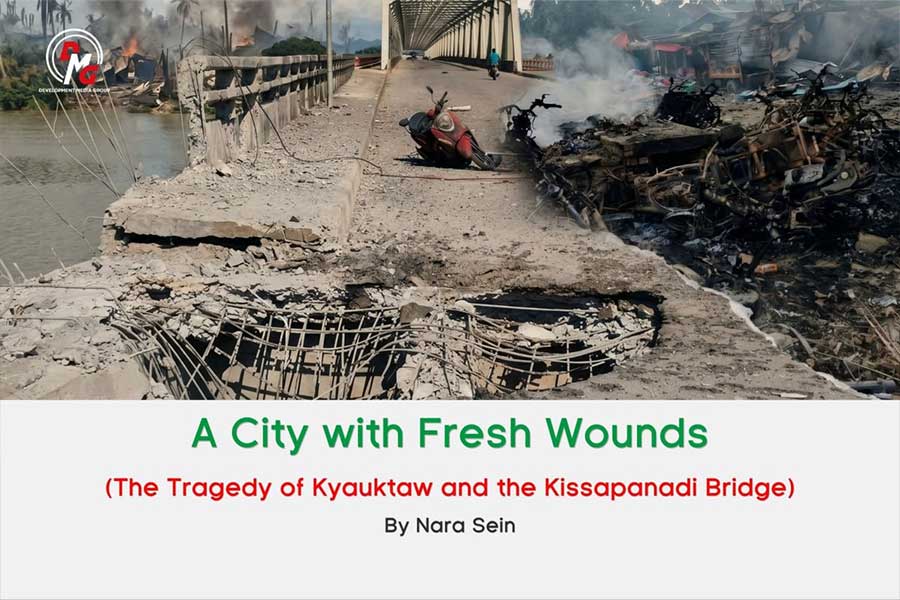
A City with Fresh Wounds (The Tragedy of Kyauktaw and the Kissapanadi Bridge)
By Admin 01 Oct 2026
Arakan Army’s Gains and the Changing Geopolitics of Arakan
By Admin 29 Sep 2026
Beyond Military Victory: What Is Myanmar’s Ultimate Political Objective?
By Admin 26 Sep 2026
UN at a Crossroads: Six Priorities for a Shared Future
By Admin 23 Sep 2026
POLITICS

BUSINESS

Industry to manufacture finished goods from coconut starting in early 2020
By Aung Kaung Zaw 20 Nov 2019