
- One killed, four injured as junta bombs Pannilar IDP camp, Aungphyupyin Village in Ponnagyun
- RICE report says Mon state faces deepening socioeconomic, security crisis
- IPCM offers emergency support to Myanmar journalists facing threats, exile
- Victims’ families demand justice over Kyauktaw airstrike massacre
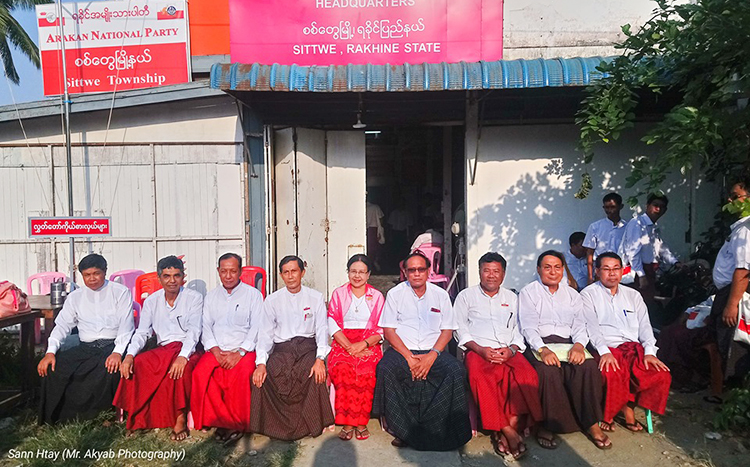
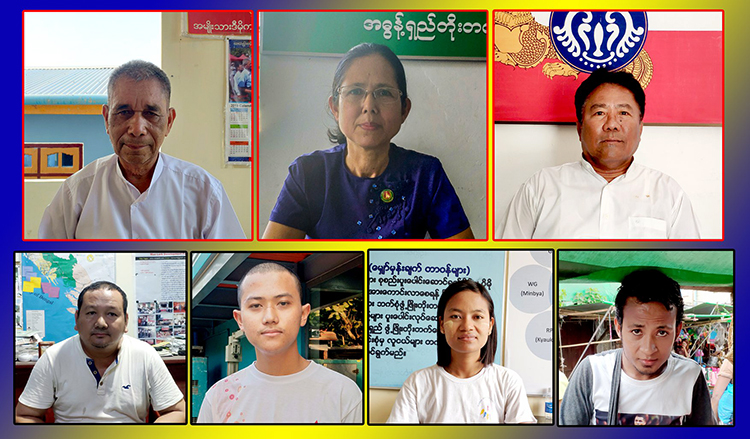
- Arakanese political parties face criticism over silence on Kyauktaw mass killing
DMG Editorial: A Generation Living Under the Sound of Bombs
For millions of children across Myanmar, the sky is no longer a symbol of hope, but a source of terror. In regions like Arakan, Sagaing, Chin, and Mandalay, childhood is being redefined by the roar of jet engines rather than the sound of school bells.
16 May 2026
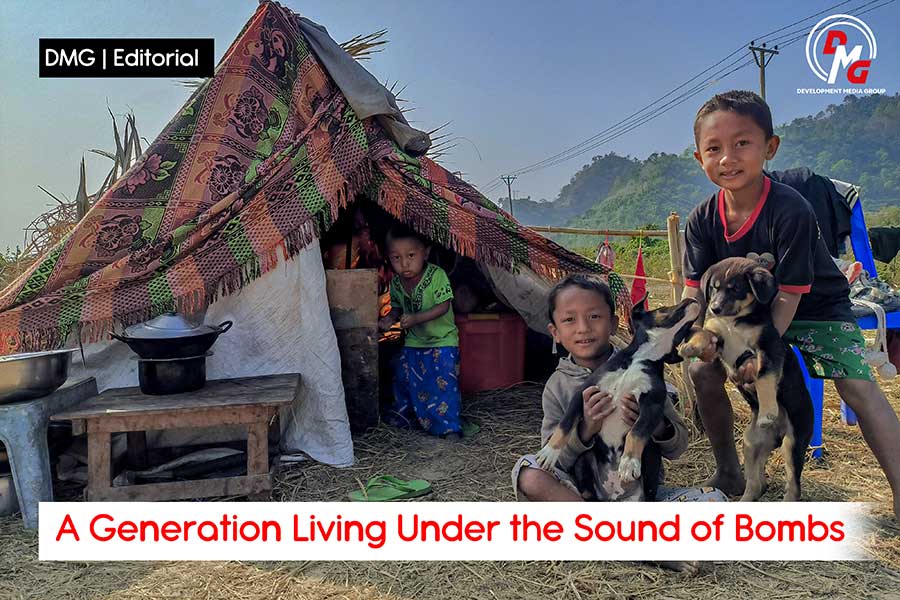
For millions of children across Myanmar, the sky is no longer a symbol of hope, but a source of terror. In regions like Arakan, Sagaing, Chin, and Mandalay, childhood is being redefined by the roar of jet engines rather than the sound of school bells. As confirmed by the United Nations Independent Investigative Mechanism for Myanmar (IIMM), the military junta has shifted to a systematic strategy of aerial warfare, targeting the very foundations of civilian life: schools, hospitals, and displacement camps.
The Strategy of Aerial Terror
This escalation is not a series of battlefield accidents; it is a calculated political and military maneuver. Having suffered significant territorial losses to groups like the Arakan Army (AA), the junta has turned to the air to project a power it can no longer maintain on the ground.
By bombing civilian infrastructure, the regime aims to:
• Undermine Local Governance: Destroying administrative hubs in liberated zones to make civilian life unmanageable.
• Collective Punishment: Targeting populations living near territories outside junta control to weaken social resilience.
• Project Authority through Fear: Using violence to compensate for a total collapse of political legitimacy.
The Erosion of Social Fabric
The constant threat of airstrikes has fundamentally altered the rhythm of daily life. Markets are avoided, religious ceremonies are cancelled, and public gatherings once the glue of Myanmar’s communal society have become high-risk liabilities. This atmosphere of perpetual insecurity has forced communities into survival routines centered on evacuation drills and bunker living.
The humanitarian toll is compounded by the destruction of critical infrastructure. When clinics and water systems are leveled, the damage lasts long after the smoke clears. With humanitarian access heavily restricted, families are left to navigate displacement cycles with little more than what they can carry, moving from one "safe" zone to the next, only to find the bombs following them.
The Invisible Wounds of a Generation
The most heartbreaking casualty of this conflict is the psychological well-being of the youth. A child who spends their formative years in a bomb shelter is a child inheriting a legacy of trauma.
The long-term effects on Myanmar’s children include:
• Developmental Disruption: Chronic anxiety and sleep disorders that hinder cognitive growth.
• The Loss of Education: When schools become targets, children lose the stability and continuity necessary for a healthy future.
• Normalized Violence: Growing up in an environment where explosions are more common than play, leading to a deep-seated distrust of social and political institutions.
A Call for Accountability
This is no longer just a struggle for territory; it is a battle for the soul and future of a nation. If an entire generation is psychologically broken by years of bombardment, the path to rebuilding a cohesive society will be fraught with difficulty.
The international community must move beyond "expressions of concern." There is a dire need for stronger accountability mechanisms to address documented war crimes and sustained pressure to halt the targeting of non-combatants. Domestically, the expansion of air-raid warning networks and trauma support systems is no longer a luxury, it is a survival necessity.
No child should grow up believing that thunder is a sign of an impending massacre. The world must act before the "invisible wounds" of this generation become an incurable scar on Myanmar’s future.

Opinion
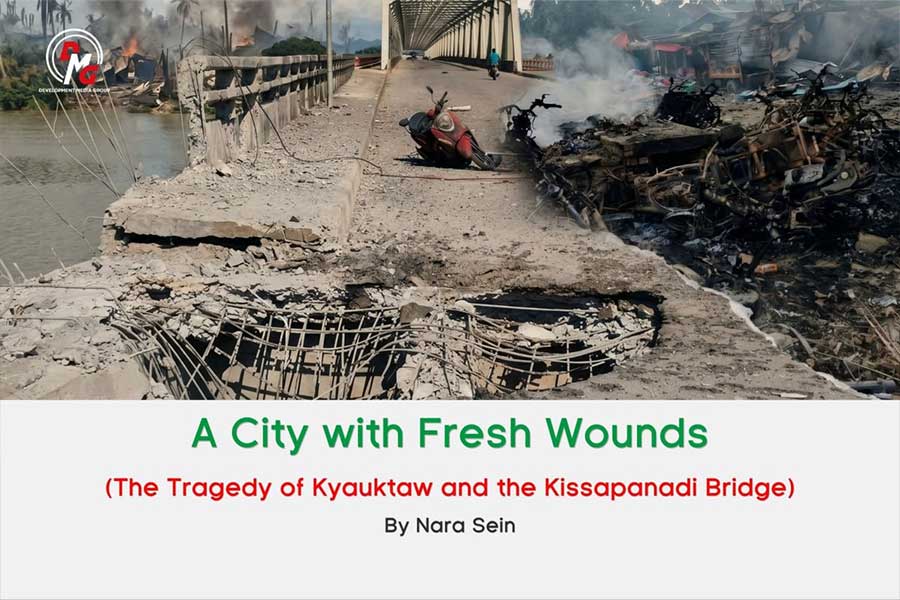
A City with Fresh Wounds (The Tragedy of Kyauktaw and the Kissapanadi Bridge)
By Admin 01 Oct 2026

Arakan Army’s Gains and the Changing Geopolitics of Arakan
By Admin 29 Sep 2026
Beyond Military Victory: What Is Myanmar’s Ultimate Political Objective?
By Admin 26 Sep 2026
UN at a Crossroads: Six Priorities for a Shared Future
By Admin 23 Sep 2026
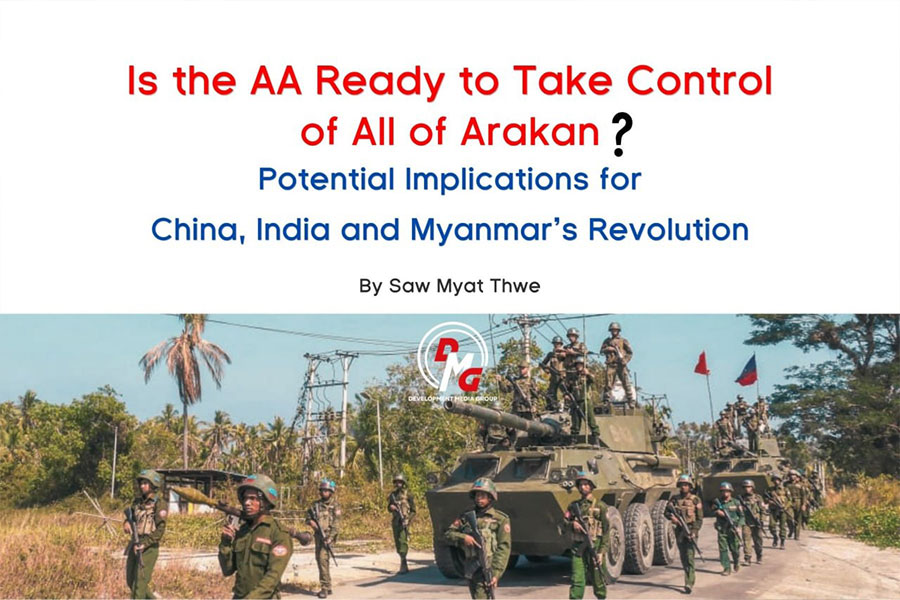
.jpg)
How Can Myanmar’s Political Crisis Be Brought to an End?
By Admin 13 Sep 2026
POLITICS

BUSINESS
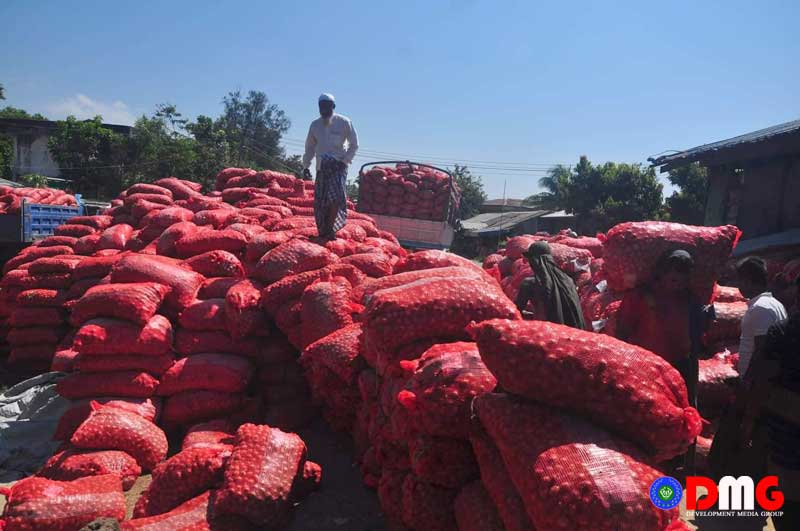
Industry to manufacture finished goods from coconut starting in early 2020
By Aung Kaung Zaw 20 Nov 2019