


- POWs say junta orders troops to fight without retreat in Arakan counteroffensive
- Junta airstrike hits Anjanapura Twsp village, forcing residents to flee
- Junta airstrike kills woman, injures another in Werathani
- Over 150 Kyauktaw villagers face displacement as Kaladan River erodes banks
- Malaria cases surge across Ann Twsp as residents struggle to access healthcare
Editorial: Arakan at the Crossroads of Trade, Security, and Regional Power Politics
India's recent invitation to junta leader Min Aung Hlaing highlights a growing reality: Arakan State has become one of the most strategically important regions in Myanmar and an increasingly significant focal point in the geopolitical competition shaping South and Southeast Asia.
02 Jun 2026
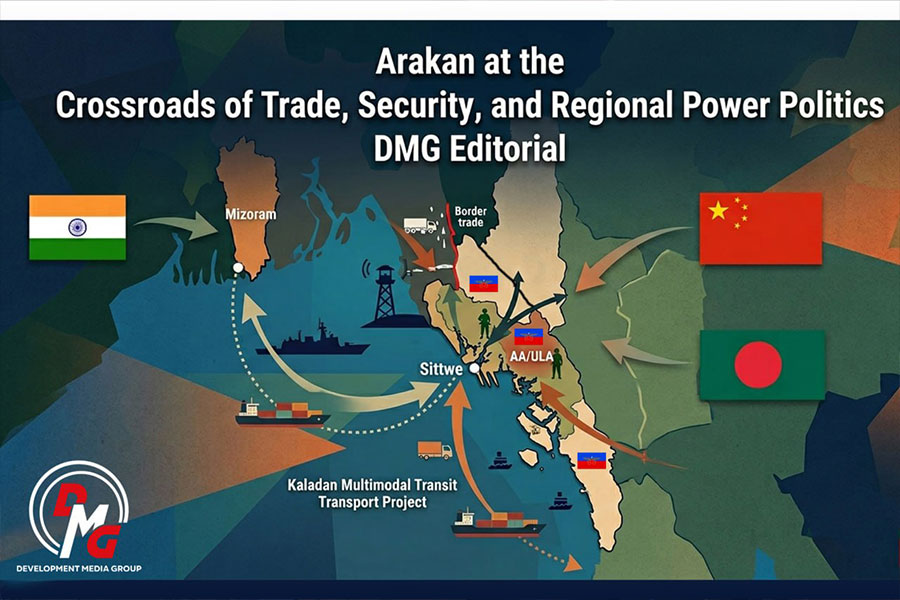
India's recent invitation to junta leader Min Aung Hlaing highlights a growing reality: Arakan State has become one of the most strategically important regions in Myanmar and an increasingly significant focal point in the geopolitical competition shaping South and Southeast Asia.
Today, Arakan sits at the intersection of border security, trade, maritime interests, strategic infrastructure, and regional power politics. The conflicts unfolding across Arakan, Chin, Kachin, and Shan states are no longer purely domestic affairs. They increasingly affect the interests of neighboring countries, particularly India, China, Bangladesh, and Thailand.
For India, concerns over border stability, insurgent activity, arms and narcotics trafficking, refugee movements, and access to strategic resources have become central to its Myanmar policy.
Arakan occupies a key place in this equation. India's flagship Kaladan Multimodal Transit Transport Project, a cornerstone of its Act East Policy, passes through Arakan State and is intended to connect India's northeastern region to the Bay of Bengal. Yet years of armed conflict and shifting territorial control have complicated its implementation and future viability.
Min Aung Hlaing's visit therefore carries significance beyond diplomacy. For the junta, it represents an opportunity to reduce international isolation and strengthen ties with a major regional power. For revolutionary organizations, particularly the Arakan Army (AA), Chin resistance forces, and other ethnic armed groups, it raises important questions about future regional approaches to border security and strategic infrastructure.
However, realities on the ground place clear limits on any policy focused solely on Naypyidaw. Large parts of Arakan and extensive sections of the India-Myanmar border are no longer effectively controlled by the military regime. Revolutionary organizations now exercise significant influence across many border areas, making them an unavoidable part of the region's future political and security landscape.
The broader lesson is that sustainable border security cannot be achieved through military means alone. For decades, successive governments relied primarily on force to manage Myanmar's borderlands, often producing conflict, underdevelopment, and mistrust. Lasting stability requires effective governance, economic opportunity, public confidence, and political inclusion.
This is particularly true in Arakan, where border trade has long been a lifeline for local communities. Trade supports livelihoods, facilitates access to food and medicine, creates employment, and strengthens economic ties across borders. When legitimate trade routes are disrupted, smuggling networks and illicit markets frequently fill the vacuum. The restoration and expansion of lawful cross-border trade should therefore be viewed not only as an economic objective but also as a foundation for long-term peace and security.
Arakan's strategic significance also extends to Bangladesh. Developments along the Naf River frontier remain closely linked to regional stability, humanitarian conditions, and future refugee repatriation efforts. Meanwhile, growing international interest in Myanmar's natural resources, including rare earth minerals and other strategic commodities, adds another layer of geopolitical competition to an already complex landscape.
Today, much of Arakan is administered by the United League of Arakan/Arakan Army (ULA/AA), which has established governance structures, public service systems, and administrative mechanisms across large parts of the state. As a result, the future of Arakan will be shaped not only by military developments or diplomatic engagement between governments, but also by how effectively emerging governance institutions respond to the needs and aspirations of local communities.
Ultimately, the success of any governing authority in Arakan will be judged not by military achievements alone, but by its ability to provide security, livelihoods, public services, economic opportunity, and accountable governance.
For Arakan and Myanmar as a whole, lasting stability will require political solutions, economic connectivity, responsible governance, and meaningful participation by the people who live in these borderlands. Only then can Arakan fulfill its potential as a gateway for regional cooperation and development rather than a frontier defined by conflict.

Opinion
.jpg)
How Can Myanmar’s Political Crisis Be Brought to an End?
By Admin 13 Sep 2026

By Cutting Trees, We Are Killing Ourselves
By Admin 06 Sep 2026

A Modern August We Must Never Forget
By Admin 31 Aug 2026
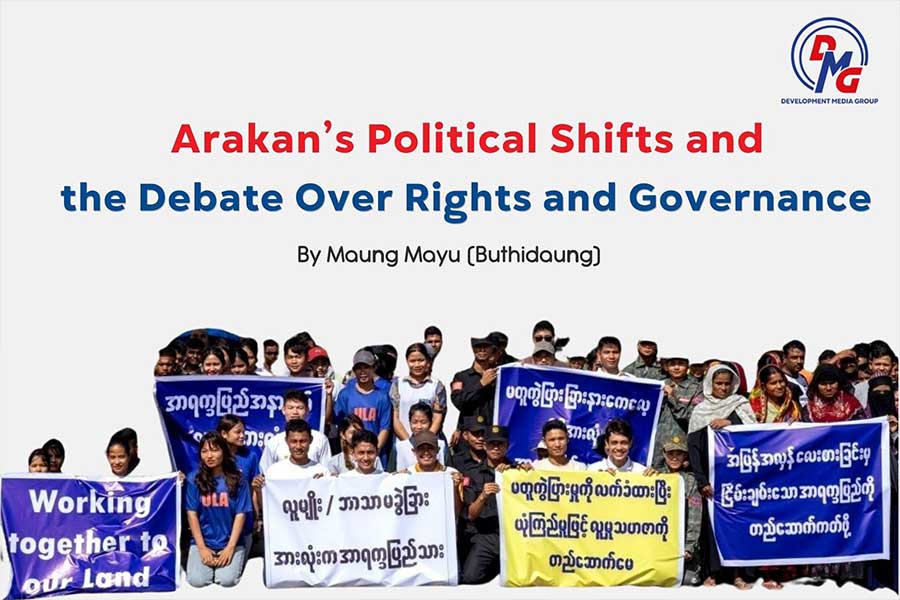
Arakan’s Political Shifts and the Debate Over Rights and Governance
By Admin 27 Aug 2026
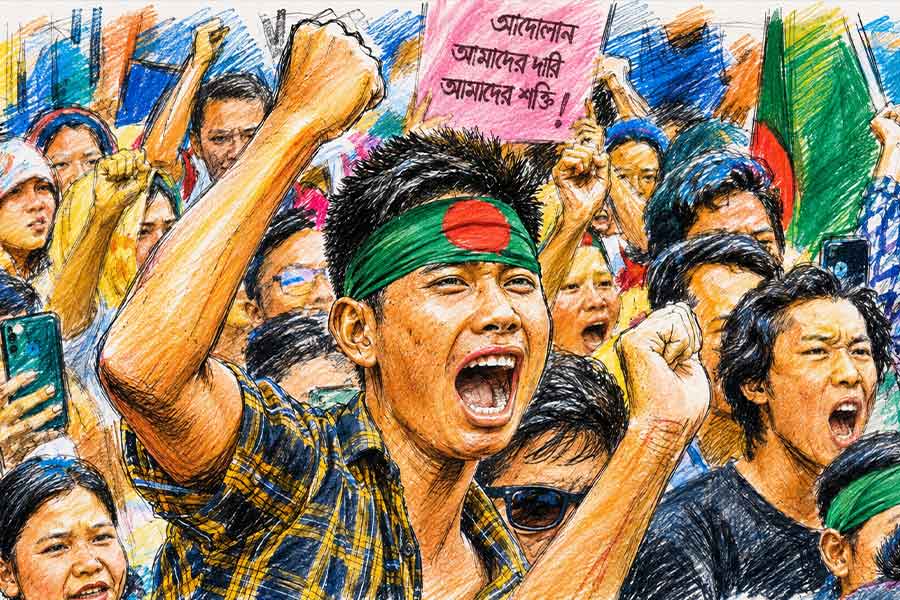
Securing Rights for Bangladesh's Indigenous Peoples is Indispensable
By Admin 09 Aug 2026
POLITICS



BUSINESS
Industry to manufacture finished goods from coconut starting in early 2020
By Aung Kaung Zaw 20 Nov 2019