
- Y-12 aircraft, drones circle over Sittwe as clashes intensify
- Panic grips Sittwe after deadly reported Y-12 airstrike
- At least six killed, 37 injured in reported Y-12 bombing of downtown Sittwe
- Junta column heading toward Kyindwe suffers heavy casualties in resistance ambushes
- Junta replaces Arakan State security minister amid escalating battles near Sittwe
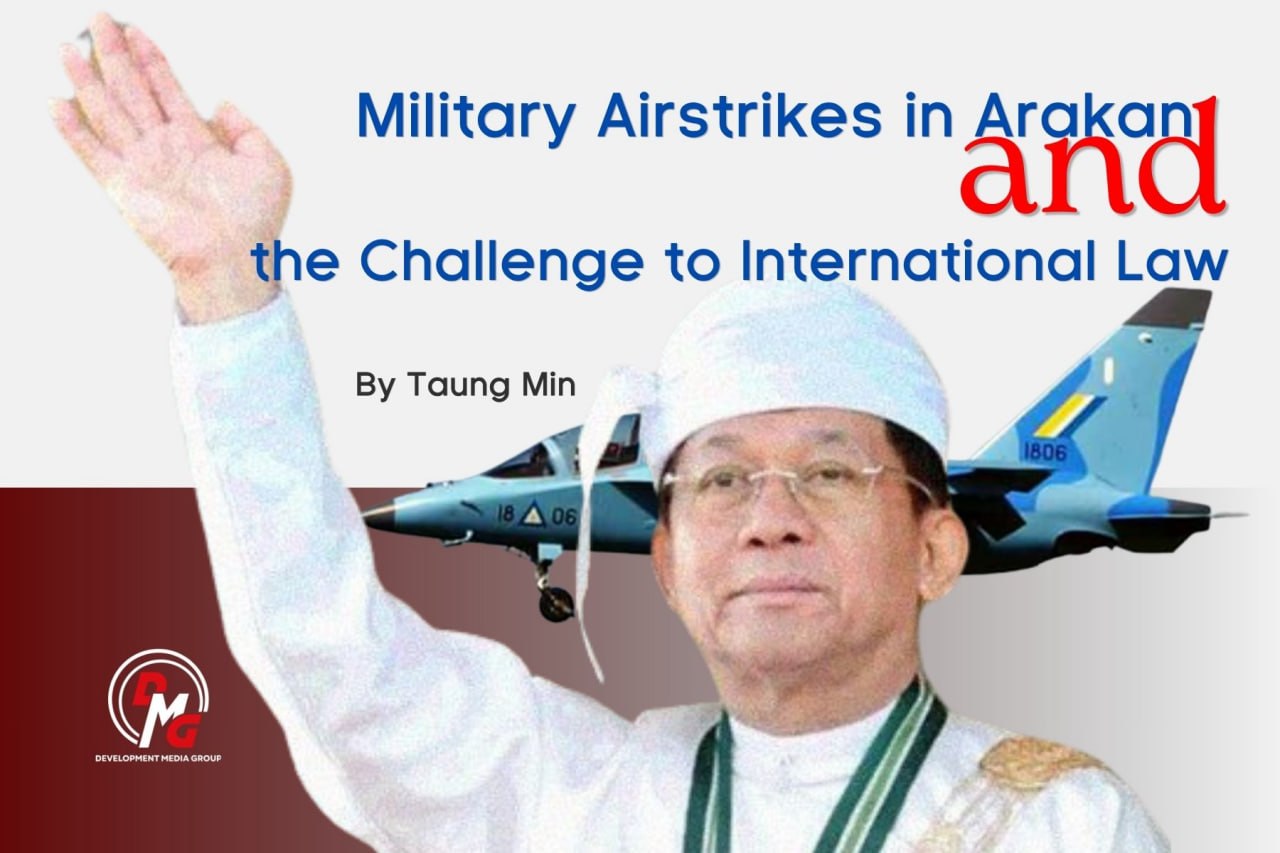
Military Airstrikes in Arakan and the Challenge to International Law
An examination of the military’s airstrikes suggests, based on evidence cited in this analysis, that they are not merely isolated incidents or operational errors but form part of a broader pattern of violence against civilian areas.
03 Oct 2026
By Taung Min
Introduction
The political and military crises that have unfolded in Myanmar since the February 2021 military coup have reached a particularly significant and intense turning point in Arakan. Since November 2023, the United League of Arakan/Arakan Army (ULA/AA) has intensified major offensives not only across Arakan but also, in cooperation with Chin allies, in southern Chin State. These operations have significantly eroded the Myanmar military’s advantage on the ground, with the ULA/AA taking full control of 14 of Arakan State’s 17 townships as well as Paletwa Township in Chin State. The military has been left holding only a small number of areas, including Sittwe, Kyaukphyu and Manaung.
As the military suffered major battlefield setbacks and lost battalion headquarters, strategic positions and key territories one after another, it fundamentally shifted its military strategy. Rather than attempting to regain territorial control primarily through ground operations, the military has increasingly relied on its advantage in air power, adopting what can be described as scorched-earth and terror tactics. A particularly disturbing feature of this strategy has been the increasing use of aerial bombardment against civilian-populated towns and villages, as well as markets, hospitals, schools and religious buildings with no apparent connection to military objectives.
A Shift in Military Strategy and Violence Against Civilian Targets
An examination of the military’s airstrikes suggests, based on evidence cited in this analysis, that they are not merely isolated incidents or operational errors but form part of a broader pattern of violence against civilian areas.
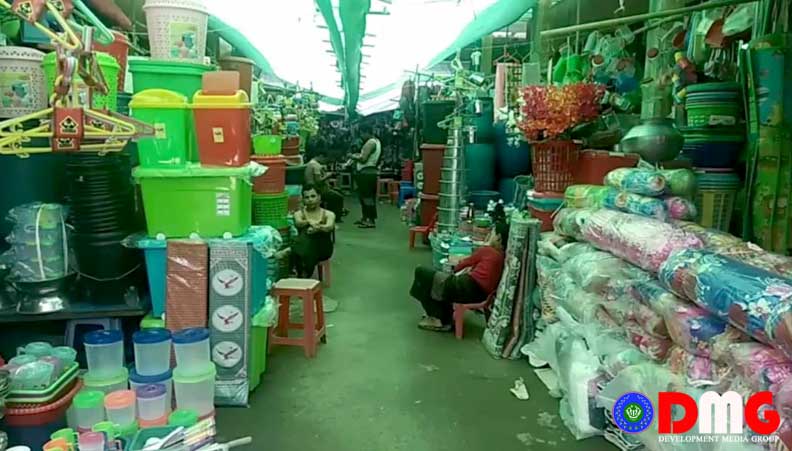
One of the most prominent and devastating incidents occurred in Kyauktaw on September 28, 2026. A military fighter jet dropped two bombs on India Market, Kyauktaw’s main wholesale market, and the area around the Kissapanadi Bridge at one of the busiest times of the day. Kyauktaw is firmly controlled by the ULA/AA.
The attack initially killed 49 civilians and injured 58 others. Twenty-two of those wounded were initially reported to be in critical condition. One subsequently died while receiving medical treatment, bringing the death toll to 50.
Those killed included vendors, shoppers and travellers. Nearby shops and numerous vehicles were burned or destroyed, while part of the Kissapanadi Bridge was blasted open and damaged. The attack on a major commercial hub used by traders from different areas, where the source says there was no military activity, raises serious concerns about its impact on civilian livelihoods and the local economy.
There have also been particularly disturbing attacks on facilities where captured military personnel: prisoners of war and members of their families were being held. At Kan Ni village in Minbya Township, an airstrike on a ULA/AA detention facility reportedly killed as many as 116 prisoners of war and civilians. Similarly, an airstrike on a POW facility in Ponnagyun Township reportedly killed 21 people and injured around 30. In the Daletchaung area of Ann Township, another ULA/AA POW facility was heavily attacked by eight aircraft, reportedly killing hundreds of prisoners as well as two doctors who had been providing medical treatment to them.
Likewise, in December 2025, an airstrike on Mrauk-U General Hospital reportedly killed at least 33 to 34 civilian patients and medical personnel and injured nearly 80 others.
Violations of International Law and Serious International Crimes
The actions described above raise serious questions under international humanitarian law (IHL) and, in the author’s analysis, may engage several categories of serious crimes under international law.
1. Human Rights Violations
Bombing hospitals, markets and civilian residential areas implicates fundamental human rights, including the right to life and the right to health recognised under international human rights standards.
2. War Crimes
Customary international humanitarian law requires parties to an armed conflict to distinguish between civilians and combatants under the principle of distinction and to respect the principle of proportionality.
Deliberately directing attacks against protected medical facilities or prisoners of war, if established through independent investigation and where the applicable legal requirements are met, could constitute serious violations of international humanitarian law and war crimes.
3. Crimes Against Humanity
The reported deaths of 982 civilians in airstrikes during 2025 alone, according to figures cited in this analysis, raise questions about whether the attacks can be viewed simply as isolated incidents.
Under the Rome Statute, crimes against humanity require, among other elements, certain prohibited acts committed as part of a widespread or systematic attack directed against a civilian population, with knowledge of the attack. The author argues that the pattern of airstrikes described here warrants scrutiny under that legal framework.
4. Genocide
The most serious allegation discussed in this analysis concerns testimony reportedly given by captured military personnel that orders had been issued to “kill and eliminate all Arakan civilians.”
If such testimony and the circumstances surrounding it were independently substantiated, they would require particularly careful investigation. Genocide carries a high legal threshold and requires proof of specific intent to destroy, in whole or in part, a protected national, ethnic, racial or religious group. The author argues that the reported testimony should therefore be examined in relation to the specific-intent requirement under the Genocide Convention.
Aviation Fuel Networks and Sanctions Evasion
The military’s ability to sustain large-scale air operations depends heavily on continued access to aviation fuel.
Investigations by Amnesty International and Justice For Myanmar cited in the original article report that the military has used various methods, including so-called “ghost ships,” to circumvent international sanctions and maintain aviation fuel supplies. According to Myanmar Port Authority data cited by Amnesty International, at least 109,604 metric tonnes of aviation fuel were imported during 2025, representing a 69 percent increase from the previous year.
The reported shipment of fuel through Vietnam’s Cai Mep petroleum terminal aboard the HUITONG 78, imports involving the vessel NOBLE via the United Arab Emirates, and the use of Singapore-based companies as intermediaries illustrate what the author describes as weaknesses in international sanctions enforcement.
International Accountability Mechanisms
Recent developments involving international justice mechanisms represent potentially significant steps toward accountability for serious crimes committed in Myanmar.
On November 27, 2024, International Criminal Court Prosecutor Karim Khan applied for an arrest warrant for Myanmar military leader Min Aung Hlaing. The application relates to alleged crimes against the Muslim internationally known as Rohigya associated with the 2017 violence and deportation to Bangladesh, but the author argues that the development also carries broader implications for accountability over subsequent military conduct.
On February 14, 2025, an Argentine federal court also ordered international arrest warrants for senior Myanmar military figures under the principle of universal jurisdiction.
The Independent Investigative Mechanism for Myanmar (IIMM) has meanwhile gathered information from more than 1,600 sources for investigations into deliberate attacks against civilians and other serious international crimes. UN Special Rapporteur on the situation of human rights in Myanmar Tom Andrews has also urged the international community not to overlook the crisis and to take effective action.
ULA/AA and Transitional Justice
Against this backdrop, the ULA/AA has increasingly assumed responsibilities associated with governing the territories under its control. The ULA’s Humanitarian and Development Coordination Office (HDCO) has been documenting deaths and injuries resulting from military attacks. According to figures cited in this analysis, 426 civilians were killed and more than 1,000 injured between November 2023 and March 2024. Such documentation could become important evidence for future transitional justice processes.
The ULA/AA has also been replacing former military-controlled institutions in areas under its control with its own administrative, judicial and law-enforcement mechanisms. Since 2021, it has established its own judicial system, including mechanisms allowing members of the public to submit complaints online. The author argues that these institutions have gained a degree of public confidence, while acknowledging that significant challenges remain, including issues concerning the Muslim population and the longer-term task of building trust.
Conclusion
The author argues that the Myanmar military’s airstrikes across Arakan increasingly reflect a strategy intended to compensate for battlefield setbacks and exert pressure on civilian populations through fear. Continued access to aviation fuel remains crucial to sustaining these operations, highlighting the need for stronger and better-coordinated international measures to prevent sanctions evasion.
At the same time, systematic documentation by the ULA/AA and the development of administrative institutions in areas under its control could play an important role in Arakan’s future, including possible transitional justice processes.
Protecting civilians and ending impunity will require credible documentation, independent investigation and effective accountability mechanisms. The international community also faces the continuing challenge of ensuring that measures intended to restrict the military’s capacity to conduct unlawful attacks are effectively enforced, while supporting humanitarian access and the protection of civilians affected by the conflict.

Opinion
Can the UN Restore Trust in a Fractured World?
By Admin 23 Oct 2026
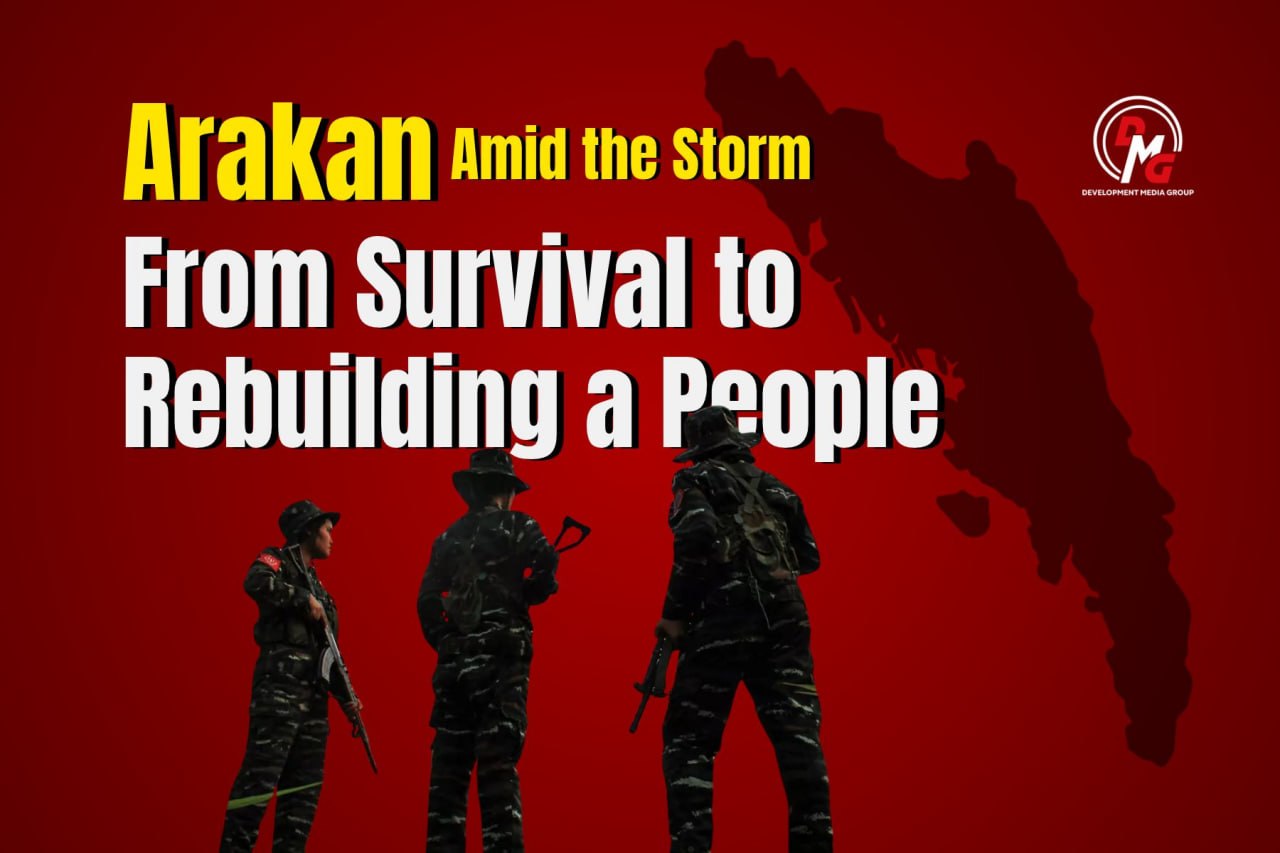
Arakan Amid the Storm: From Survival to Rebuilding a People
By Admin 22 Oct 2026
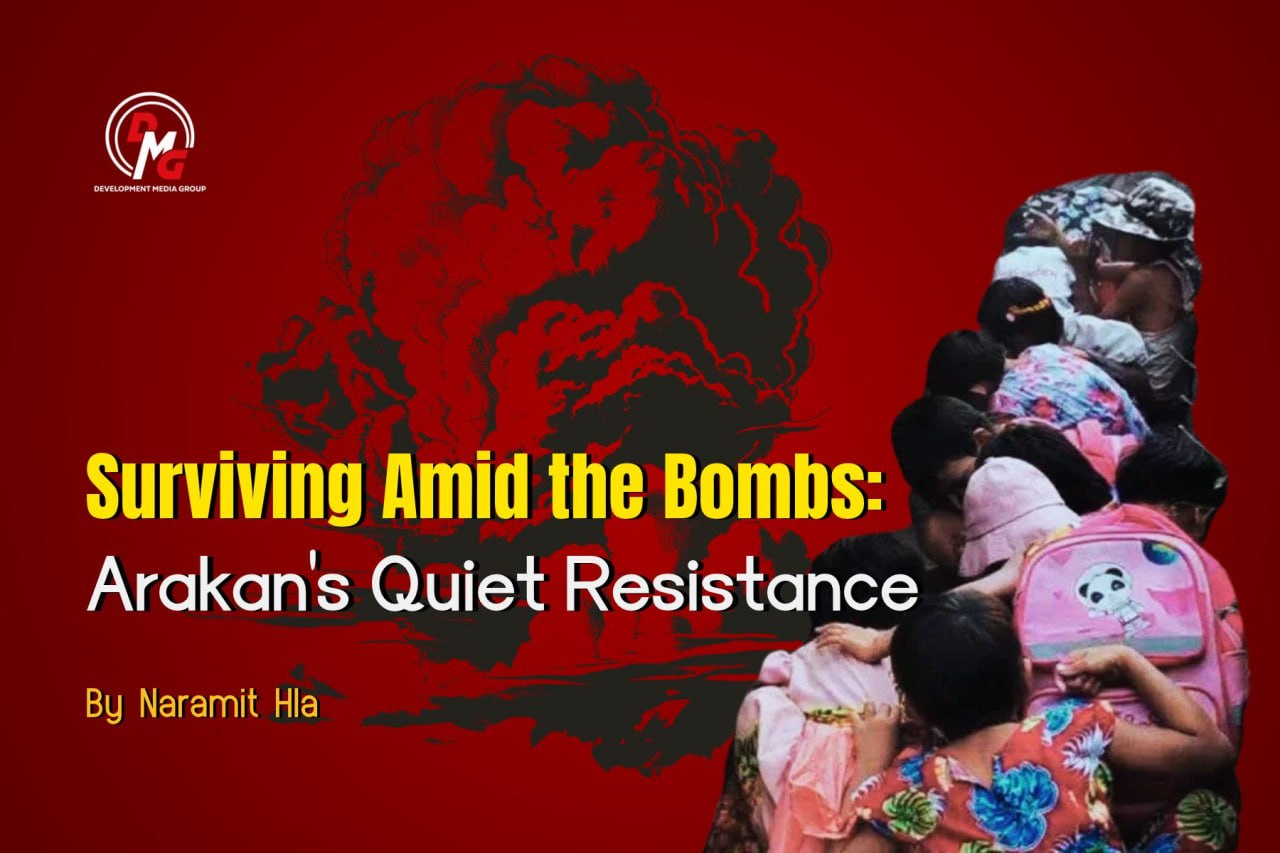
Surviving Amid the Bombs: Arakan's Quiet Resistance
By Admin 19 Oct 2026
Shadows Over Childhood: Confronting the Reality of Missing Children
By Admin 16 Oct 2026
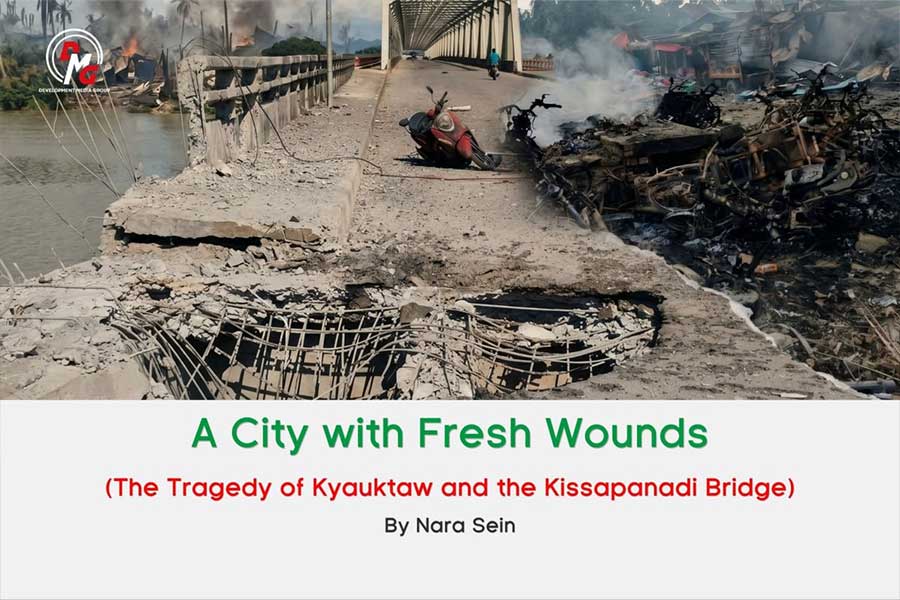
A City with Fresh Wounds (The Tragedy of Kyauktaw and the Kissapanadi Bridge)
By Admin 01 Oct 2026
Arakan Army’s Gains and the Changing Geopolitics of Arakan
By Admin 29 Sep 2026
POLITICS

BUSINESS
Industry to manufacture finished goods from coconut starting in early 2020
By Aung Kaung Zaw 20 Nov 2019