

- Junta sends reinforcements to fiercely contested Sittwe-Ponnagyun front
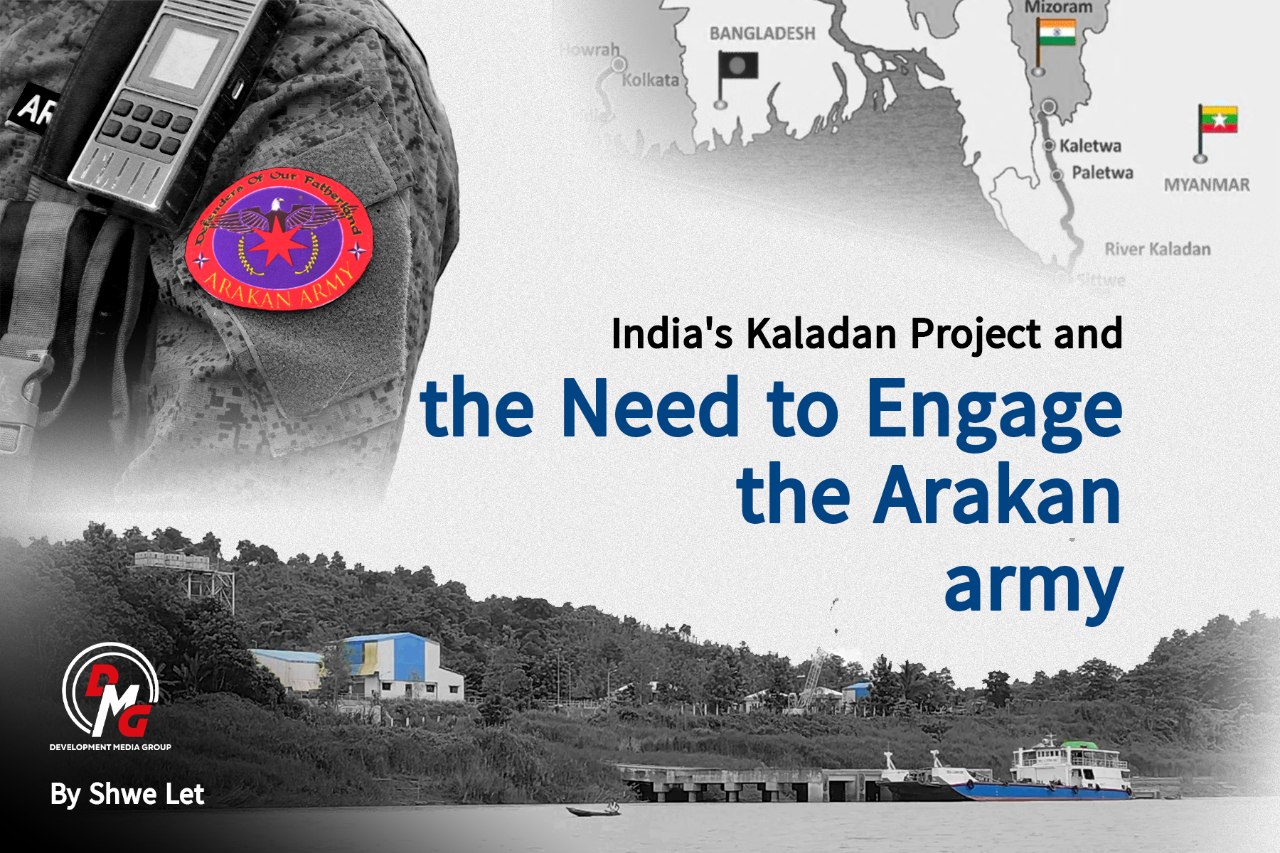
- India's Kaladan project faces uncertain future amid Arakan conflict: CAS
- Myanmar records more than five landmine, ERW casualties daily
- Injured IDPs in Ponnagyun face mounting medical costs, seek financial aid
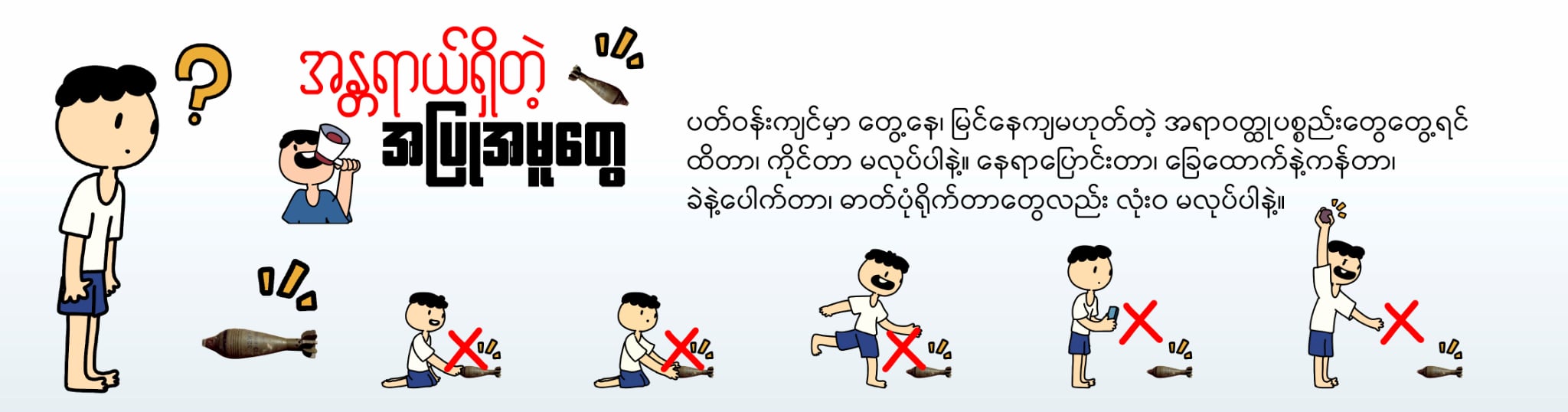
- Children's handling of abandoned ammunition in Arakan raises safety concerns
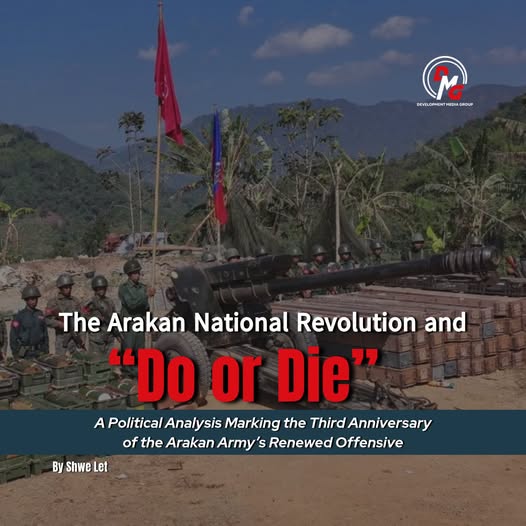
The Arakan National Revolution and “Do or Die” : A Political Analysis Marking the Third Anniversary of the Arakan Army’s Renewed Offensive
According to a June 2025 assessment cited in the original analysis from the International Crisis Group (ICG), the AA controlled most of Arakan State and exercised administrative influence over more than one million people.
22 Nov 2026
By Shwe Let
From Three Years of Fighting to Political Authority
November 13, 2026, marked the third anniversary of the Arakan Army's (AA) renewed offensive against Myanmar's military in Arakan (Rakhine) State, an offensive that has fundamentally reshaped the region's military and political landscape.
Since November 13, 2023, the AA has captured numerous Myanmar military battalion bases, divisional headquarters, and major command facilities, significantly weakening the military's longstanding presence in western Myanmar.
The AA's military successes during 2024, particularly in Pauktaw, Kyauktaw, Mrauk-U, Minbya, and Ann townships, substantially expanded its territorial control. The capture of the Myanmar military's Western Command headquarters in Ann was especially significant, undermining one of the military's principal command structures in the region.
Yet the defining feature of the contemporary Arakan revolution is not military success alone. It is the simultaneous pursuit of military objectives, political authority, and administrative institution-building.
The United League of Arakan (ULA), the AA's political wing, has progressively expanded administrative structures, judicial mechanisms, taxation systems, and public services across territories under its control.
According to a June 2025 assessment cited in the original analysis from the International Crisis Group (ICG), the AA controlled most of Arakan State and exercised administrative influence over more than one million people.
Although Myanmar's military has retained positions in locations including Sittwe, Kyaukphyu, and Manaung, the AA has established control over most of Arakan State. It also controls Paletwa, a strategically important township in neighboring Chin State.
These developments represent a major transition in the Arakan national movement: from an armed struggle focused primarily on territorial gains toward the more complex challenge of establishing political authority and functioning governing institutions.
Proto-State Formation and De Facto Governance
In political science, a proto-state generally refers to a political entity that has developed certain characteristics of statehood, including territorial control and governing institutions, without necessarily possessing internationally recognized sovereignty.
These characteristics may include a defined territory, a resident population, administrative institutions, judicial mechanisms, security structures, and public services.
De facto governance, by contrast, refers to the actual exercise of governing authority over a territory, regardless of whether that authority enjoys formal legal or international recognition.
Although closely related, the two concepts are not interchangeable. Proto-state formation concerns the emergence of state-like political structures, while de facto governance focuses on the practical exercise of authority.
The ULA/AA's evolving political and administrative structures exhibit characteristics relevant to both analytical frameworks.
Since approximately 2019, the ULA has progressively developed administrative and judicial mechanisms. Its activities have expanded into education, healthcare, taxation, municipal administration, transportation, natural resource management, and other public services.
Efforts to train administrative personnel through institutions such as the Arakan School of Public Policy and Administration (ASPPA) also reflect an emphasis on developing the human resources required for long-term governance.
Nevertheless, establishing administrative institutions does not automatically guarantee effective, legitimate, or accountable government.
The rule of law, public participation, transparency, institutional accountability, and the quality of essential services remain crucial indicators of governance performance.
International examples such as Somaliland, Taiwan, Kosovo, Transnistria, and Abkhazia offer different perspectives on the relationship between territorial authority, political status, and international recognition.
However, these cases differ substantially in their historical backgrounds, legal circumstances, political institutions, and international relationships. They should not be treated as directly equivalent to Arakan or as belonging to a single political or legal category.
For Arakan, the central challenge is therefore not simply maintaining territorial control but transforming that control into sustainable political institutions capable of delivering security, justice, and essential services.
“Do or Die” and the Determination Behind the Arakan Revolution
The expression “Do or Die” conveys an unwavering determination to pursue a political objective despite formidable obstacles.
It became particularly prominent during India's struggle for independence from British colonial rule.
On August 8, 1942, Mahatma Gandhi invoked the phrase during a meeting of the All-India Congress Committee in Bombay, now Mumbai, as part of the Quit India Movement.
Gandhi's campaign was grounded in the principle of nonviolent resistance, making its methods fundamentally different from those of the Arakan Army's armed struggle.
The comparison, therefore, concerns political determination rather than an equivalence between the movements' methods, ideologies, or historical circumstances.
In the context of the Arakan national movement, the author interprets “Do or Die” as an expression of the determination to pursue national liberation and self-determination without abandoning long-term political aspirations.
AA Commander-in-Chief Major General Twan Mrat Naing has repeatedly expressed his commitment to Arakanese national aspirations and the recovery of territories regarded by the movement as historically belonging to Arakan.
In an interview with The Irrawaddy, he also articulated a firm position concerning what he described as Arakan's ancestral territories.
From the author's perspective, such statements reflect the AA leadership's commitment to national liberation and correspond to the political determination expressed by “Do or Die.”
The AA's territorial advances represent a major turning point in the history of Arakanese nationalist and revolutionary movements.
The aspiration to restore the sovereignty lost following the Konbaung dynasty's conquest of the Kingdom of Mrauk-U in 1784–1785 has remained an influential theme in Arakanese political thought.
However, historical claims, contemporary territorial boundaries, and the political rights of communities living in these areas are distinct questions that require careful consideration.
The author argues that the movement must preserve its military and political achievements while continuing to pursue its broader national aspirations.
Yet “Do or Die” should not be interpreted solely in terms of military victory.
The ability to transform military gains into sustainable political institutions, accountable governance, and meaningful improvements in people's lives is equally important to the movement's long-term objectives.
Lessons from the History of Arakanese Resistance
Arakanese aspirations for political autonomy and national liberation long predate the emergence of the present-day Arakan Army.
In 1784–1785, the Konbaung dynasty conquered the Kingdom of Mrauk-U, bringing an end to the kingdom's independent rule. This event became a defining turning point in Arakanese political history.
In subsequent years, resistance movements emerged under figures identified in Arakanese historical accounts, including Taung Min Kyaw Htwe, Dapaing Gyi Kyaw Pon, Thet San Shwe, Hla Shwe Chit, Bo Chin Byan, and others.
Among them, Bo Chin Byan became particularly prominent for organizing armed resistance against Konbaung authority.
Although his movement challenged the ruling power, it did not succeed in establishing lasting military control or a sustainable administrative system.
These experiences suggest that courage, sacrifice, and aspirations for liberation, while important, are insufficient by themselves to secure enduring political objectives.
Organizational capacity, effective political leadership, public support, administrative competence, and long-term strategic planning are also essential.
Following the First Anglo-Burmese War of 1824–1826, Arakan came under British colonial rule.
Subsequent generations continued to pursue different forms of Arakanese political mobilization, ranging from nationalist activism to armed resistance.
After the Second World War, several political and armed organizations emerged, including the Arakan People's Liberation Party (APLP), associated with the Buddhist monk U Seinda.
Other organizations that subsequently played roles in Arakanese political and revolutionary history included the Arakan National Liberation Party (ANLP), Communist Party of Arakan (CPA), Arakan Independence Organization (AIO), Arakan Liberation Party (ALP), and National United Front of Arakan (NUFA).
These organizations differed considerably in their ideologies, political objectives, strategies, organizational structures, and historical circumstances.
Their achievements and failures cannot therefore be explained simply by the strength of their commitment to national liberation.
A more comprehensive assessment must consider the prevailing balance of military power, political conditions, internal organization, public support, and the role of external actors during each period.
Nevertheless, one recurring lesson emerges from these experiences: aspirations for national liberation must be supported by effective institutions, coherent leadership, and strategies capable of sustaining political authority.
For the contemporary Arakan movement, this historical experience underscores the importance of transforming military achievements into durable political and administrative foundations.
The Myanmar Military's Strategic Calculations and Geopolitical Interests
Any assessment of the Arakan national movement's future must consider the Myanmar military's strategic calculations and the region's wider geopolitical significance.
For Myanmar's military leadership, Arakan is more than a territory of military importance. It is also central to major economic, energy, and regional connectivity interests.
The Kyaukphyu deep-sea port project, the proposed Special Economic Zone, offshore natural gas fields, oil and gas pipelines connecting Myanmar and China, and India's Kaladan Multi-Modal Transit Transport Project illustrate the region's strategic importance.
Arakan's coastline along the Bay of Bengal and its proximity to Bangladesh and India further connect it to the competing and overlapping interests of regional powers, particularly China and India.
These factors help explain why Myanmar's military leadership is unlikely to relinquish its remaining strategically important positions without resistance.
Sittwe, Kyaukphyu, and Manaung remain particularly significant in the continuing military and political contest.
The Myanmar military retains air and naval capabilities, as well as other military resources, that may enable it to defend its remaining positions and continue operations against AA-controlled areas.
Meanwhile, the activities of other armed organizations, shifting alliances, and cross-border security developments add complexity to the conflict.
The future of Arakan therefore cannot be assessed solely through a comparison of military strength.
Regional geopolitics, economic interests, international relations, humanitarian conditions, and civilian security must also be taken into account.
Although the AA's advances have substantially weakened the Myanmar military's position in Arakan, the remaining military strongholds and the challenges of governing newly controlled territories continue to shape the region's political future.
From Military Victory to Sustainable Governance
The continuing conflict has imposed severe costs on civilians across Arakan State.
Myanmar military airstrikes have caused civilian casualties and damaged hospitals, clinics, roads, bridges, markets, schools, religious buildings, and sites sheltering internally displaced people.
These conditions demonstrate that controlling territory militarily does not necessarily mean being able to guarantee the safety and security of its population.
Military achievements may create opportunities for political transformation, but their long-term significance depends on whether they can be translated into effective and accountable governance.
The success of a governing authority cannot be measured solely by the geographical extent of its control.
It must also be assessed through its ability to uphold the rule of law, protect civilians, provide education and healthcare, restore economic activity, and deliver essential public services.
Equally important is the protection of the fundamental rights and security of all communities living in Arakan.
The region is home to diverse ethnic and religious populations, including Rakhine, Rohingya, and other minority communities, whose rights, security, and access to services must be considered in any sustainable political settlement.
An inclusive governance system must ensure that public institutions serve residents without discrimination based on ethnicity, religion, or political affiliation.
National self-determination and the rights of individuals and communities should not be treated as competing principles.
A durable political future requires both meaningful self-governance and the protection of fundamental rights, human dignity, and equal access to justice.
The broader meaning of national liberation must therefore extend beyond the transfer or consolidation of political authority.
It must also include the creation of conditions in which people can live securely, participate in decisions affecting their communities, and shape their own futures.
For the Arakan national movement, transforming military success into political legitimacy and sustainable governance has consequently become one of its defining challenges.
The Continuing “Do or Die” Journey
National liberation and political self-determination are rarely achieved through a single battle or within a short period.
Historical experiences from national liberation movements around the world demonstrate the importance of coherent political objectives, institutional development, public participation, and long-term strategic planning.
Over three years of renewed offensives, the Arakan Army has brought about profound changes in the military and political balance of power in western Myanmar.
These developments represent an important turning point in the history of Arakanese political movements.
Yet substantial challenges remain in building a stable, inclusive, and sustainable political future.
For the author, “Do or Die” expresses a determination not to abandon the aspirations for national liberation and self-determination, regardless of the difficulties encountered.
These aspirations include the restoration of political rights, the pursuit of self-governance, and the ability of the people of Arakan to shape their own political future.
However, political determination should not be measured solely by military achievements.
It must also be reflected in the ability to preserve existing gains while building durable institutions, accountable governance, and development that benefits the population.
The historical experiences of Arakanese resistance movements demonstrate that courage and sacrifice alone are insufficient.
Effective political leadership, strong institutions, public confidence, and a realistic long-term strategy are equally essential.
National liberation is not merely about addressing historical grievances or reversing past political losses.
It is also about establishing a secure, dignified, and stable future for coming generations.
The next stage of the Arakan national movement will therefore require military achievements, political vision, administrative capacity, and public participation to reinforce one another.
Its most consequential challenge is no longer simply the capture of additional territory.
Rather, it is whether territorial gains can be transformed into sustainable political authority, meaningful self-determination, and an inclusive system of governance that serves the public interest.
Ultimately, the historical significance of the Arakan national revolution's “Do or Die” determination will depend not only on the military victories it achieves, but also on the political institutions it builds, the rights it protects, and the future it creates for all communities living in Arakan.

Opinion
India's Kaladan Project and the Need to Engage the Arakan Army
By Admin 14 Nov 2026

Diwali: Illuminating the Path Towards a More Inclusive Society
By Admin 09 Nov 2026
The Journey of Arakanese Language Education
By Admin 03 Nov 2026
Can the UN Restore Trust in a Fractured World?
By Admin 23 Oct 2026
Arakan Amid the Storm: From Survival to Rebuilding a People
By Admin 22 Oct 2026
POLITICS


BUSINESS
Industry to manufacture finished goods from coconut starting in early 2020
By Aung Kaung Zaw 20 Nov 2019