
- Arakan Army captures junta outposts as fighting intensifies near Sittwe
- Pro-junta ALP chair says NCA can shape Arakan’s future
- Extreme heat drives rise in clinic visits across Arakan
- Junta airstrikes on Ponnagyun IDP camps kill 15 civilians, injure 30: AAPP
- Myanmar junta airstrikes kill 163 civilians in September, Arakan hardest hit: MDSI
Weekly Highlights from Arakan (May 4 to 10, 2026)
In an era when daily news from Arakan is often fragmented and fast-changing, DMG's Weekly Highlights of Arakan brings clarity, depth, and context to the stories that matter most.
11 May 2026
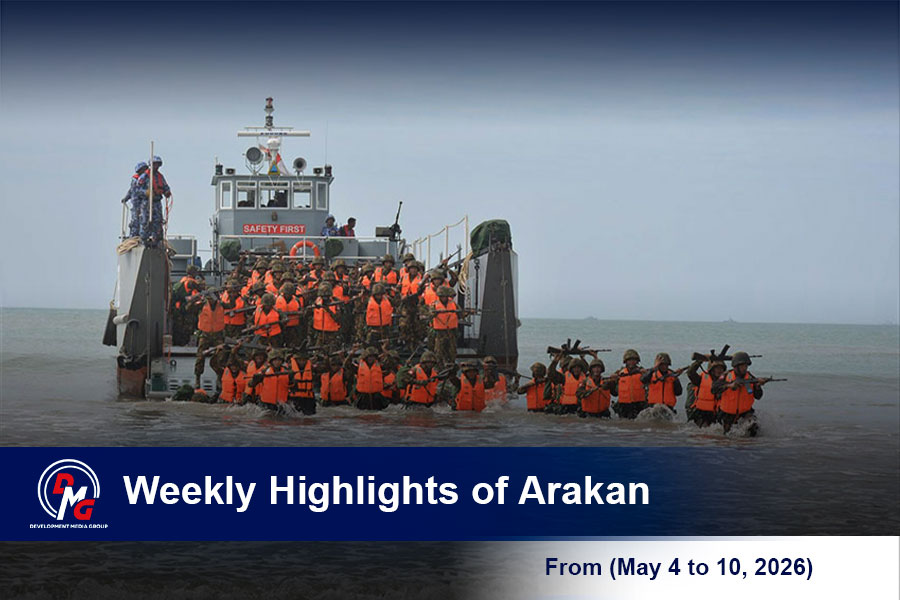
In an era when daily news from Arakan is often fragmented and fast-changing, DMG's Weekly Highlights of Arakan brings clarity, depth, and context to the stories that matter most.
Each week, we round up key political, military, social, and humanitarian developments across Arakan State - connecting the dots between events and offering analysis to help audiences see the bigger picture.
This series is designed for readers and viewers seeking a concise yet comprehensive understanding of how ongoing conflict, governance shifts, and community issues continue to shape lives across Arakan.
Regime steps up airstrikes across Arakan State with jet squadrons
Despite its recent invitation for peace talks with ethnic armed organizations and People’s Defence Forces, the regime has continued conducting sustained airstrikes using jet squadrons, marking a clear escalation in its aerial warfare campaign.
Around 2:00 PM on 7 May, the regime deployed eight aircraft to carry out an intensive 90-minute bombing raid over the mountain ranges near Kyaukkhote and Thit Pote Taung villages in Minbya Township, leaving local residents in a state of heightened fear.
The regime reportedly launched another air raid near the mountain ranges of Kyauktaw Township at approximately 10:00 PM the same night.
According to local sources, the operation involved three to four jet fighters along with a Y-12 aircraft, which circled the area and dropped bombs over an extended period.
The surge in airstrikes across Arakan State has triggered widespread panic among civilians, with many fearing that further attacks may follow.
On 6 May, the regime also used two jet fighters to bomb the vicinity of the former Light Infantry Battalion 563 site in Gwa Township.
Military observers note that as the regime increasingly relies on airpower as its primary offensive tool, aerial attacks are likely to expand further across the country, including Arakan State.
In a recent interview with The Diplomat, the chief of the Arakan Army stated that as long as the regime continues to bomb civilians, there can be no progress in the peace process.
Regime reinforces Kyaukphyu front, deploys troops near battalions and headquarters
Regime forces are reportedly deploying large reinforcements to Kyaukphyu Township, where active fighting continues, and have stationed troops around several battalions and military headquarters.
The regime has been using both air and sea routes to strengthen its presence. A person familiar with the ground situation said that reinforcements have been deployed around the Danyawadi Naval Base, No. 32 Police Battalion, and areas near the Onshore Gas Terminal (OGT).
To transport personnel, weapons, and military equipment to the Kyaukphyu front, the military is using naval vessels as well as commercial passenger aircraft.
Until early May, the regime showed limited offensive activity and even abandoned some previously controlled areas. Instead, it appears to be focusing on reinforcing defensive positions and strengthening rear bases.
Military observers assess that although only occasional small arms fire is currently heard in Kyaukphyu, the troop buildup and mutual monitoring by both sides suggest that a major battle could break out in the near future.
Monsoon threat worsens shelter crisis for thousands of IDPs in Thandwe
More than 3,700 internally displaced persons in Thandwe Township, Arakan State, who are currently sheltering in forests and mountainous areas, are in urgent need of assistance to secure safe housing, according to aid workers.
Aid workers assisting displaced residents said the approaching monsoon season could create severe hardships for IDPs who remain without adequate shelter.
The displaced residents were previously taking refuge in schools and monasteries but were forced to move into nearby forests due to the regime’s continued airstrikes targeting civilian areas, including towns, villages, and religious buildings.
Local residents said many IDPs have built temporary huts through collective efforts, but a shortage of roofing materials has left them vulnerable to harsh weather conditions.
Although the Arakan Army took full control of Thandwe Township on 5 September 2024, many residents remain unable to return home due to ongoing regime airstrikes and worsening socio-economic hardships.
Thousands of displaced residents from Thandwe are currently scattered across other townships, including Rathedaung and Kyauktaw, as well as areas in mainland Myanmar.
Recent rainfall across Arakan State has already caused major difficulties for displaced communities, including damage to more than 500 shelters in Ponnagyun Township over the past week.
Shortage of doctors deepens healthcare crisis in Arakan State
Residents in areas controlled by the Arakan Army are facing a worsening healthcare crisis due to a severe shortage of doctors, compounded by ongoing trade blockades and economic restrictions imposed by the regime.
In Arakan State, only three to four specialists are currently available to provide obstetric and gynecological care, creating serious challenges for women, particularly expectant mothers. Observers say at least one such specialist is needed in every township.
With road and trade routes blocked, the cost of medicine has surged alongside rising commodity prices, further limiting access to healthcare.
Frequent airstrikes targeting civilian infrastructure, including hospitals and clinics, have made it even harder to maintain healthcare services. On 10 December 2025, a regime airstrike on Mrauk-U Public Hospital killed at least 33 people and injured nearly 80 others, while largely destroying the facility.
Despite these challenges, the Arakan Army and the United League of Arakan (ULA) have begun efforts to strengthen the health sector in areas under their control, including plans to open a medical school and nursing training programs.
DLEPS fails to apprehend Pauktaw child rape suspect after nearly two months
Local residents report that the Department of Law Enforcement and Public Security (DLEPS) under the United League of Arakan has yet to apprehend a suspect in a child rape case that occurred nearly two months ago in Pauktaw Township, Arakan State, an area under the control of the Arakan Army.
The suspect is identified as U Tun Aung Chay, 45, from Thit Pote Chaung Village in Pauktaw Township. Although he was initially captured the day after the crime, he escaped due to the negligence of DLEPS and remains at large.
The incident occurred on the evening of March 3, after 4:00 p.m., when an 8-year-old girl from Phaduchay Village, Alel Phayonekar Island in Pauktaw Township, was sexually assaulted by U Tun Aung Chay.
According to the details of the event, the young victim had accompanied her aunt to the outskirts of the village earlier that evening but returned alone without her aunt's knowledge. On the path between Phayarchaung and Phaduchay Villages, she encountered U Tun Aung Chay, who then raped her. Villagers discovered the crime in progress, causing the suspect to flee.
Local residents stated that the perpetrator had been working as a hired hand on a fishing boat in Phayarchaung Village, Pauktaw Township.
Family members of the victim are demanding the immediate arrest of the perpetrator and effective action to ensure justice is served.
Cases of child rape are increasing in areas controlled by the Arakan Army in Arakan State, with at least six cases reported between January and the current month of this year.
Child rape cases are gradually rising, making the safety of women more concerning than before. On the other hand, women’s rights activists argue that weaknesses in taking action against perpetrators pose a direct threat to the security of women.
Textbook prices surge ahead of school season in Arakan State
As the school season approaches, textbook prices in townships controlled by the Arakan Army in Arakan State have risen sharply, creating additional challenges for children from displaced families and low-income households.
According to booksellers, a set of kindergarten (KG) textbooks is currently priced at around K25,000. Prices for Grades 1 to 3 are approximately K35,000 per set, while Grades 4 to 8 cost about K40,000. Textbooks for Grades 7 to 9 are being sold for K50,000, and high school sets for Grades 10 to 12 have reached as high as K70,000.
Booksellers noted that prices have increased significantly compared to previous years, while shortages are also becoming more severe.
High school textbooks, in particular, are difficult to obtain, and retailers face challenges restocking due to high procurement costs.
While some school supplies can be imported from India, textbooks must be sourced from mainland Myanmar. However, the suspension of trade along the Saw Road has made transportation and procurement extremely difficult.
The rising cost of textbooks, combined with daily economic hardships, has left displaced families and low-income households deeply concerned about their children’s education.
Parents also reported that prices of notebooks, pens, pencils, and other school supplies are increasing, adding further financial strain. Some families are seeking second-hand textbooks, but even used books are now being sold at nearly the same price as new ones.

Opinion
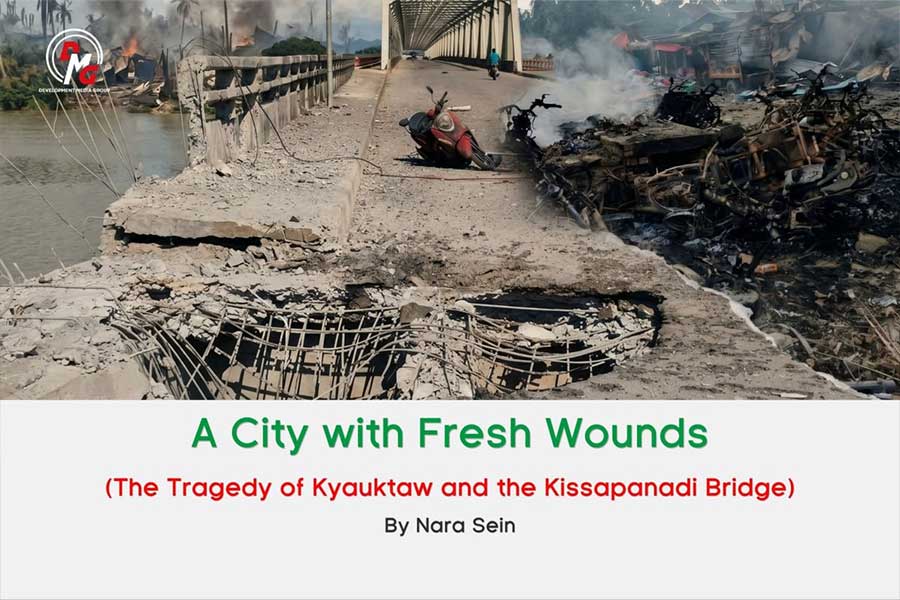
A City with Fresh Wounds (The Tragedy of Kyauktaw and the Kissapanadi Bridge)
By Admin 01 Oct 2026

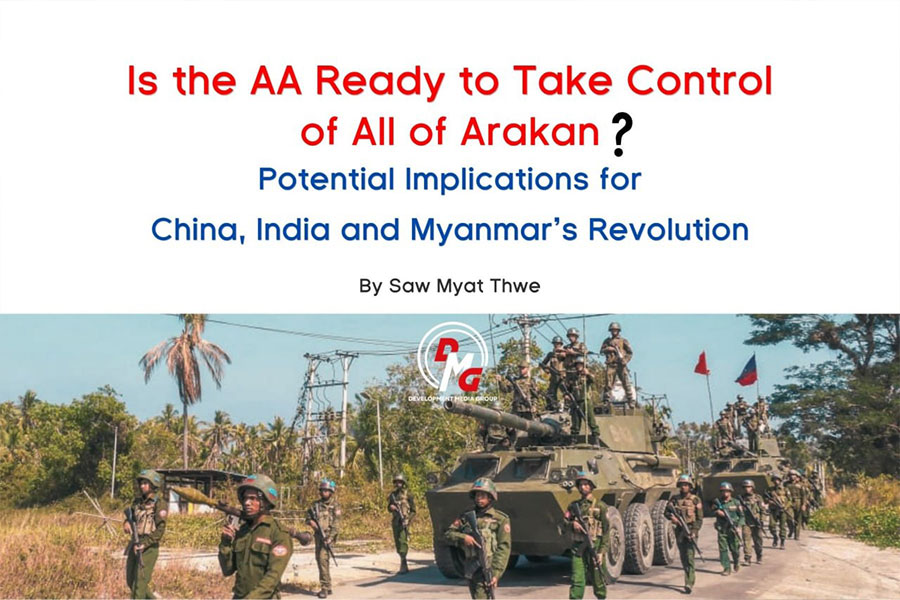
Arakan Army’s Gains and the Changing Geopolitics of Arakan
By Admin 29 Sep 2026

Beyond Military Victory: What Is Myanmar’s Ultimate Political Objective?
By Admin 26 Sep 2026

UN at a Crossroads: Six Priorities for a Shared Future
By Admin 23 Sep 2026
.jpg)
How Can Myanmar’s Political Crisis Be Brought to an End?
By Admin 13 Sep 2026
POLITICS

BUSINESS
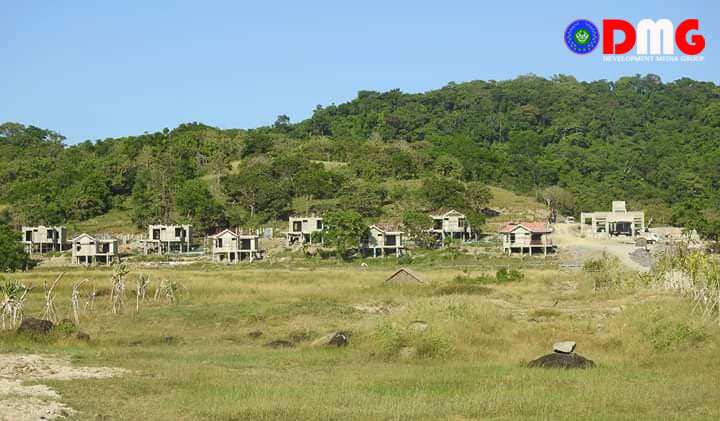
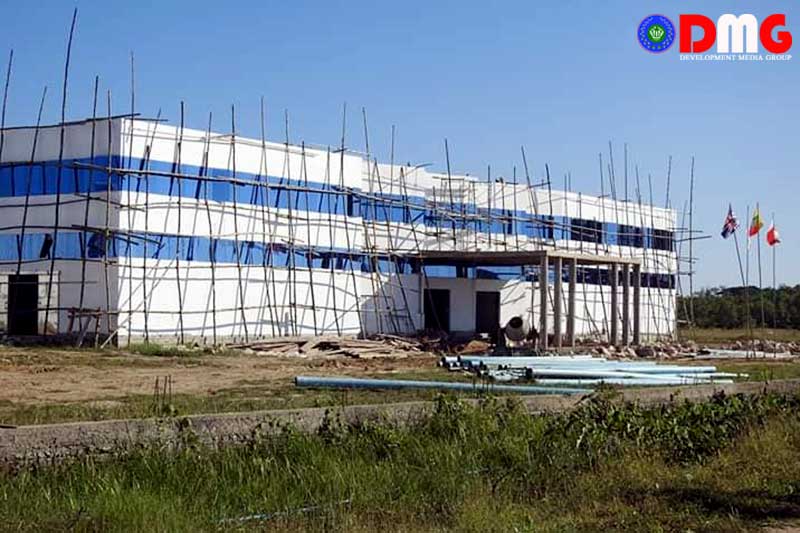
Industry to manufacture finished goods from coconut starting in early 2020
By Aung Kaung Zaw 20 Nov 2019