
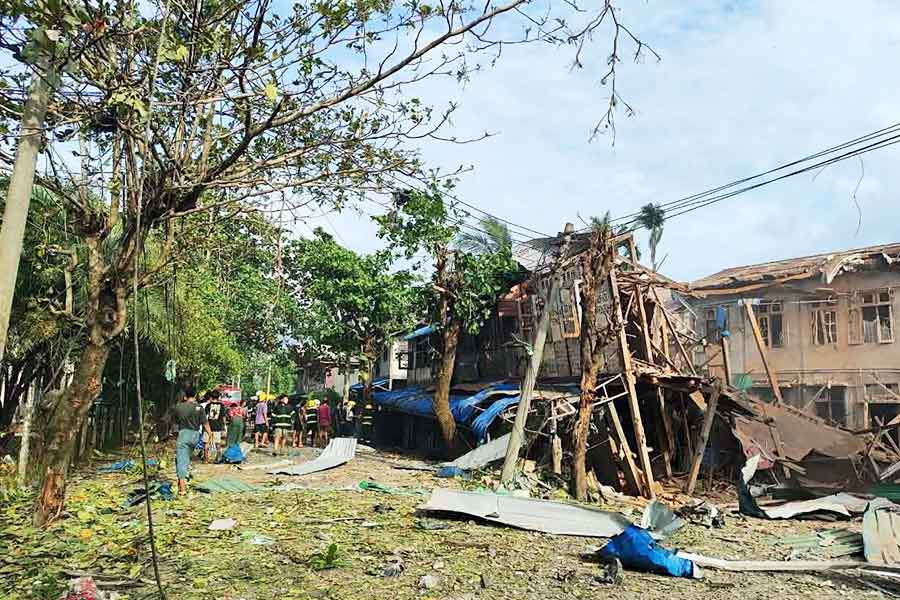
- At least four civilians injured, 20 houses damaged in junta airstrike on Ngapali Beach resort
- The Great Counteroffensive Along the Arakan Roma
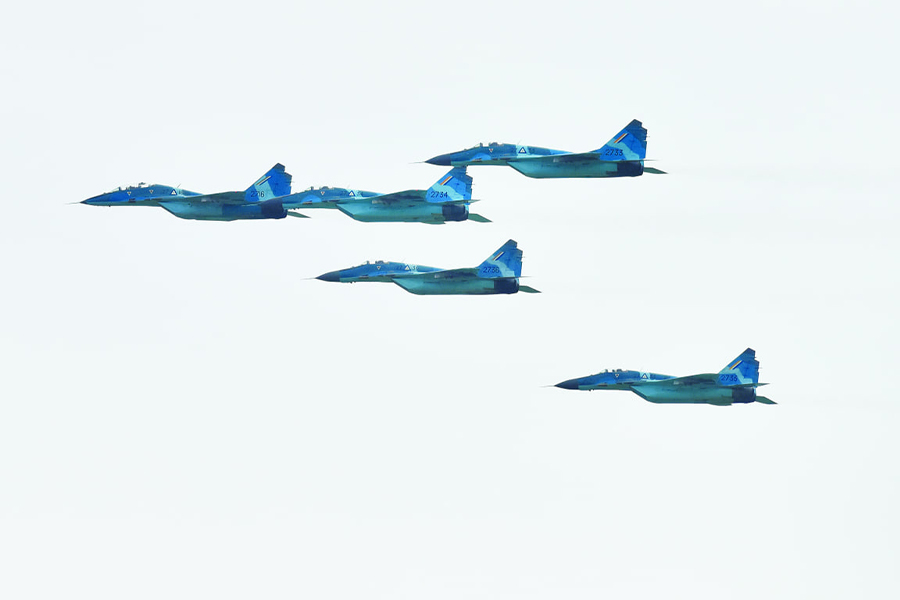
- Junta launches airstrikes with fleet of aircraft in Thandwe Twsp
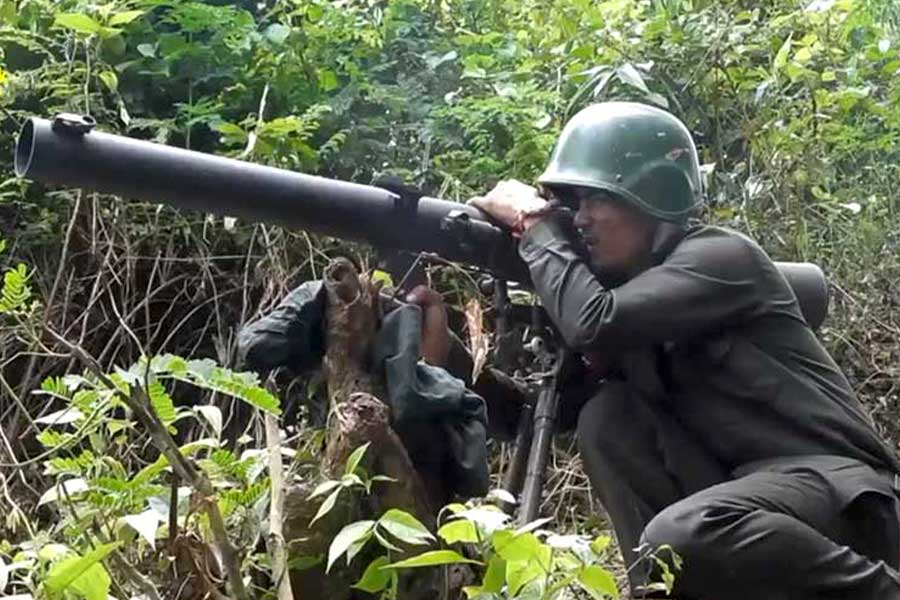
- Arakan Army launches offensive near regime-held Sittwe
- No progress in Pauktaw child rape case leaves family fearing injustice
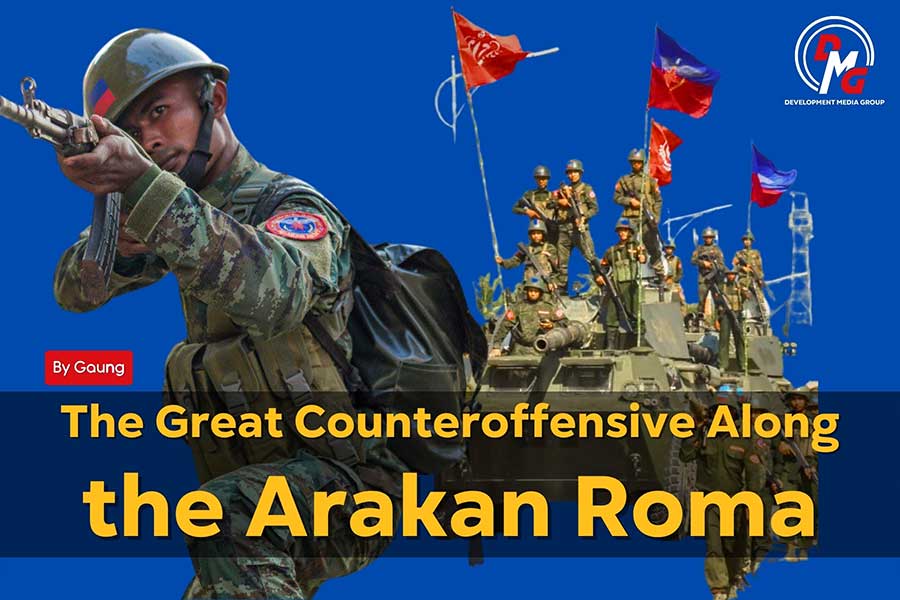
The Great Counteroffensive Along the Arakan Roma
This article examines each of these operational fronts, drawing upon frontline accounts, military sources and political analysts to assess the evolving balance of power along the Arakan Roma.
23 Jul 2026
By Gaung
Part I: The Battle for the Arakan Roma Begins
The Arakan Army (AA) today administers almost the entirety of Arakan (Rakhine) State and neighbouring Paletwa Township in southern Chin State. What began as a regional insurgency has evolved into one of the most significant shifts in Myanmar's civil war, fundamentally altering the country's military and political landscape.
For Myanmar's military junta, the loss of most of Arakan represents far more than a territorial setback. It threatens the regime's military credibility, weakens its strategic position along Myanmar's western frontier, and places key regional infrastructure including access to the Bay of Bengal under increasing uncertainty.
In response, the junta has launched what is arguably its largest coordinated counteroffensive since losing control of much of Arakan. Rather than relying on a single axis of attack, it is attempting to re-enter the state simultaneously through multiple fronts stretching across Chin State, Magway Region, Bago Region and Ayeyarwady Region.
At the heart of this campaign lies the Arakan Roma.
Far more than a mountain range separating Arakan from central Myanmar, the Arakan Roma has historically served as both a natural defensive barrier and a strategic military corridor. Today, it has once again become one of the country's most decisive battlefields.
The conflict unfolding across these mountains is no longer simply about recapturing individual towns or military bases. It is a struggle over strategic access, logistics, territorial control and, ultimately, the future balance of power in western Myanmar.
Following the junta's post-election political transition in early 2026 with Senior General Min Aung Hlaing assuming the presidency while General Ye Win Oo became Commander-in-Chief of the Defence Services, the military significantly intensified its operations around Arakan. Since March and April, troop deployments, aerial bombardments and coordinated ground offensives have expanded across nearly every region bordering AA-administered territory.
According to military observers, the junta is currently attempting to penetrate Arakan through at least five principal operational axes.
The strategy is clear: reopen land corridors into Arakan, relieve isolated military positions, and gradually restore a permanent military presence inside territory now administered by the AA.
For the AA, however, the objective is equally clear.
Rather than merely defending recently captured towns, it seeks to secure the mountain corridors connecting Arakan with central Myanmar, preventing any future large-scale military re-entry while consolidating its administrative control throughout the state.
Political analyst U Myo Kyaw summarized the strategic significance in an interview with DMG: "Previously, Arakan had three principal routes connecting it with central Myanmar. Today there are effectively four, because northern Arakan now connects through Paletwa into Magway Region. Although these corridors are currently under AA influence, their long-term security depends heavily on the strength of allied revolutionary forces operating east of the Arakan Roma."
His observation highlights an increasingly important reality. The battle for Arakan is no longer confined to Arakan itself.
Military operations now extend across western Myanmar, linking the conflict in Arakan to developments in Chin State, Magway, Bago and Ayeyarwady. Each front influences the others, creating an interconnected theatre of operations stretching hundreds of kilometres along the Arakan Roma.
According to a statement issued by the Arakan Army on 27 June, junta forces have launched coordinated offensives from every neighbouring region bordering Arakan in an effort to regain access to the state. Fierce fighting continues across multiple sectors as both sides attempt to secure key mountain passes, transportation corridors and supply routes.
This article examines each of these operational fronts, drawing upon frontline accounts, military sources and political analysts to assess the evolving balance of power along the Arakan Roma.
1. The Magway Front: The Battle for the Ann–Padan Corridor
Among the junta's various counteroffensives, the campaign along the Ann–Padan axis in Magway Region has become one of the most strategically significant.
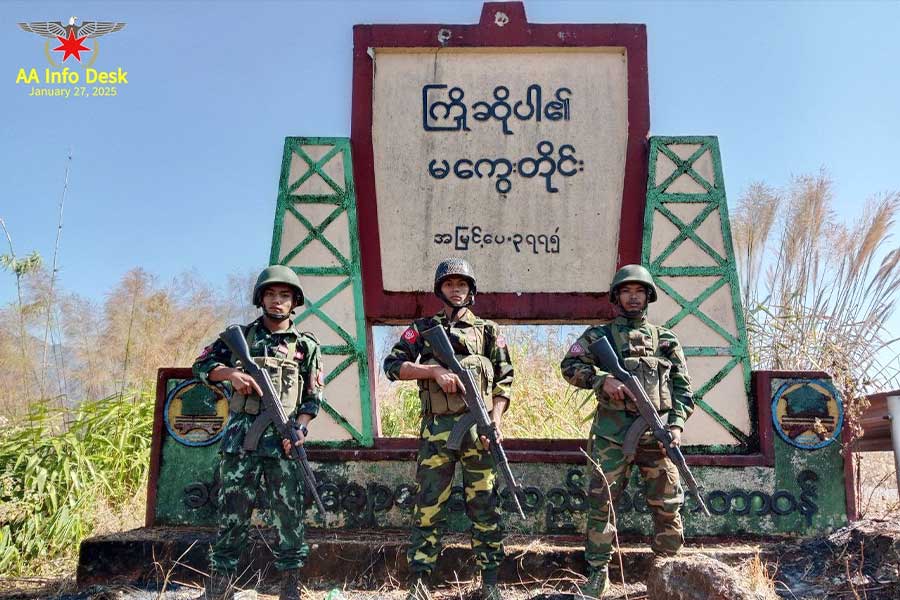
Following the AA's capture of Ann Township and the Western Command headquarters in December 2024, the military lost its principal command centre in Arakan. That defeat not only transformed the military balance inside the state but also exposed the junta's western defensive line.
Since then, the military has concentrated considerable resources on attempting to reopen the Ann–Padan corridor through the Arakan Roma.
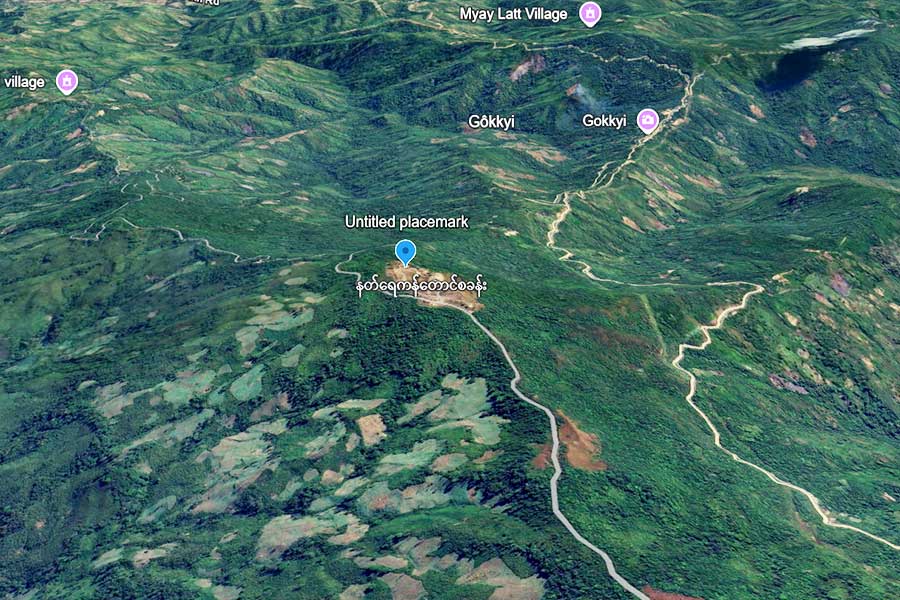
The focal point of these efforts is Nat Yae Kan Strategic Base, located approximately 22 miles west of Ngape Township along the Minbu–Padan–Ann highway.
Situated at an elevation of more than 4,000 feet above sea level, Nat Yae Kan commands one of the most important mountain corridors linking Magway Region with central Arakan. Whoever controls this position effectively controls one of the principal gateways into the state.
For more than a year, according to frontline sources, AA and allied resistance forces have maintained pressure on the base, surrounding it from multiple directions and severing most of its ground supply routes.
Several military sources report that repeated shortages of food, ammunition and medical supplies have weakened junta forces stationed inside the base, while an increasing number of soldiers have surrendered or defected during prolonged fighting.
Recognising Nat Yae Kan's strategic importance, the junta has repeatedly attempted to reinforce the base using troops and supplies transported from Military Operations Command (MOC) No. 905 at Padan and Defence Industries (KaPaSa-14) near Ngape.
Beginning in the third week of June, large reinforcement columns advanced westward under heavy artillery support and continuous air cover.
Yet according to resistance sources, these movements were repeatedly intercepted by AA-led allied forces before reaching their destination.
One frontline source familiar with the operations told DMG: "The military has been trying continuously to reinforce Nat Yae Kan. Fighter aircraft, artillery and drones were used to clear the route, but our forces repeatedly intercepted them and forced them to withdraw."
Earlier in June, another reinforcement convoy consisting of approximately 150 troops travelling in six military vehicles attempted to advance through the Goke Gyi route. According to resistance sources, the convoy also came under attack from AA forces and allied revolutionary groups including the Chin Defence Force–Asho (CDF-Asho) forcing another retreat.
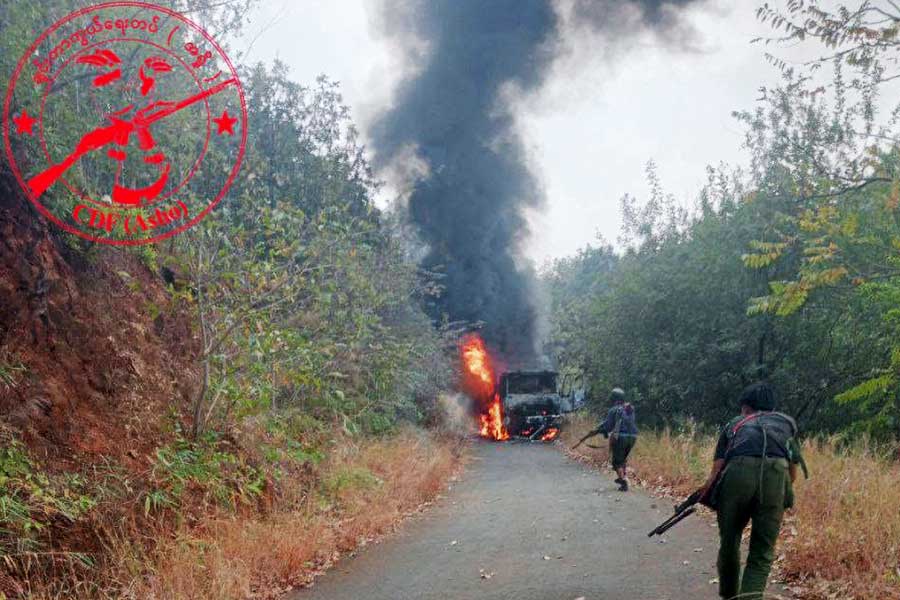
With ground access increasingly restricted, the junta has become progressively more dependent on air operations.
Military transport aircraft, including Y-12s, together with fighter jets and armed drones, are now reportedly delivering supplies while simultaneously carrying out repeated airstrikes around Goke Gyi, Pazi and neighbouring villages in an effort to weaken resistance positions surrounding Nat Yae Kan.
According to military observers, the operation is currently being directed by a divisional commander transferred from Mongpan in southern Shan State, an indication of the importance the junta attaches to the campaign.
Despite sustained offensives over recent months, fighting remains highly fluid.
Several forward positions around Nat Yae Kan have reportedly changed hands multiple times as both sides continue to contest control of the surrounding high ground.
A former junta conscript, Private Aung Naing Oo (Service No. 177458), who later defected to the AA after escaping from Nat Yae Kan, described the conditions inside the base:
"Some positions were captured by the AA, then retaken by the military, and then lost again. Food was rationed. Rice was cooked early in the morning, but we often did not eat until the afternoon. Heavy artillery from the rear around Padan constantly supported us, and whenever our situation deteriorated, air support was immediately called in."
Originally from Loilem Township in southern Shan State, Aung Naing Oo said he had been forcibly recruited in Yangon under the military conscription law before receiving training at Light Infantry Battalion 574 and being deployed to Nat Yae Kan.
He added that many reinforcement troops attempting to reach the base had either been killed, wounded or dispersed during repeated ambushes by AA and allied resistance forces.
Military analysts believe Nat Yae Kan represents far more than an isolated military outpost.
Should the junta permanently lose control of the base, the entire western defensive line protecting Magway's military infrastructure including artillery positions around Padan and defence industries near Ngape could face increasing pressure.
Conversely, if the military succeeds in reopening the corridor, it would regain one of the few remaining land routes capable of supporting future operations toward Ann Township and central Arakan.
For that reason, the battle for Nat Yae Kan is not simply about holding one mountain base.
It is a struggle over one of the principal gateways through the Arakan Roma and, potentially, the future direction of the wider counteroffensive.
Part II: The Mindon Front and the Expanding Battlefield
If the battle for Nat Yae Kan represents the junta's attempt to reopen the central gateway into Arakan, the fighting further south around Mindon Township illustrates a broader military objective: establishing multiple avenues of advance across the Arakan Roma to dilute the Arakan Army's defensive strength.
Military planners have long recognised that relying on a single offensive corridor exposes attacking forces to concentrated resistance. The junta therefore appears to be pursuing a strategy of simultaneous pressure across several sectors, compelling the AA to distribute its forces over an increasingly wide front.
2. The Mindon Front: Contesting the Mountain Corridor
The mountain corridor linking Mindon Township in Magway Region with Arakan has become another key battlefield in the junta's counteroffensive.
Since the AA captured Ann Township and expanded its control across much of Arakan, Mindon has assumed greater strategic importance. For the military, it represents another possible route through the Arakan Roma. For the AA, preventing any breakthrough along this corridor is essential to maintaining the security of its eastern defensive line.
According to military observers, the junta has gradually reinforced its positions around Mindon by deploying additional infantry battalions, artillery units, drones and newly conscripted soldiers. People's Militia Forces (Pyu Saw Htee) have also reportedly been incorporated into local security operations.
Rather than attempting a rapid breakthrough, the military appears to be incrementally strengthening its presence while probing resistance positions throughout the surrounding mountains.
Resistance forces, however, have adopted a different approach.
Working closely with local People's Defence Forces (PDFs), AA units have repeatedly ambushed military patrols, attacked reinforcement columns and disrupted logistical movements before they could reach frontline positions.
A resistance source familiar with the operations told DMG: "The military is trying to establish a continuous corridor from the Magway plains toward Arakan. But every advance into the mountains meets coordinated resistance from both the AA and allied revolutionary forces."
The geography heavily favours the defenders.
Unlike open terrain where conventional formations can manoeuvre freely, the Arakan Roma consists of steep ridges, dense forests and narrow mountain tracks. These conditions restrict vehicle movement, complicate artillery deployment and make supply lines vulnerable to ambush.
Military analysts therefore argue that the conflict in Mindon has evolved into a war of endurance rather than rapid territorial manoeuvre.
Although the junta retains overwhelming superiority in aircraft and heavy weapons, sustaining military operations deep inside mountainous terrain remains an enormous logistical challenge.
The AA and its allies, by contrast, operate in smaller, highly mobile units that require fewer supplies and can disperse quickly after each engagement.
One retired military officer observed: "In mountain warfare, logistics often matter more than firepower. A force that cannot sustain supplies cannot hold territory, regardless of how many aircraft it possesses."
This assessment helps explain why the fighting around Mindon has continued without producing decisive territorial changes.
Neither side has achieved a breakthrough, yet both continue investing substantial manpower and resources in controlling the mountain approaches.
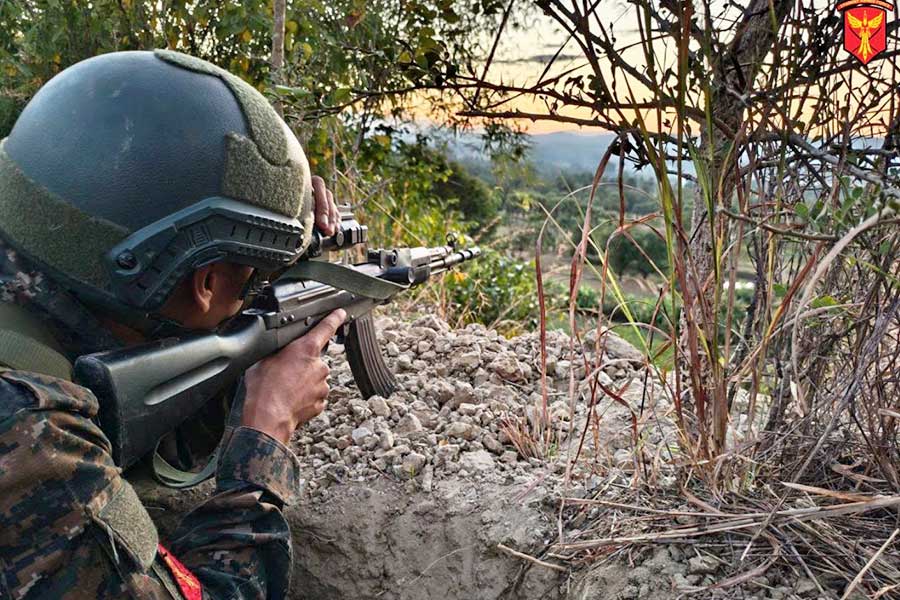
3. The Bago Front: Expanding the War Beyond Arakan
The junta's counteroffensive extends beyond Magway Region.
Further south, military activity has also intensified along the Bago Region side of the Arakan Roma, demonstrating that the conflict has evolved into a much broader regional campaign.
Historically, the Arakan Roma has formed the natural boundary between Arakan and central Myanmar. Today, however, the mountains have become a continuous military theatre stretching across several administrative regions.
Military observers believe the junta hopes to widen the battlefield by opening multiple operational fronts simultaneously.
Rather than concentrating exclusively on Arakan itself, the military appears to be attempting to pressure the AA from different directions, forcing it to divide its manpower and defensive resources.
Resistance organizations operating in eastern Bago have reported increased troop movements, road security operations, aerial reconnaissance and logistical preparations aimed at strengthening the military's positions along the mountain range.
At the same time, AA-allied revolutionary organizations have expanded cooperation with local resistance forces throughout Bago, enabling them to target military supply lines before they reach the Arakan Roma.
A political analyst explained the strategic logic behind the junta's approach: "The military wants to create simultaneous pressure across several regions. By expanding the battlefield, it hopes to stretch the AA's resources. But that strategy also places enormous pressure on the military's own logistics and manpower."
This illustrates one of the defining characteristics of Myanmar's current civil war. The conflict is no longer composed of isolated regional battles.
Instead, operations in Magway, Chin, Bago, Ayeyarwady and Arakan have become increasingly interconnected.
Success or failure in one theatre directly affects military operations elsewhere.
A successful ambush against a reinforcement column in Magway may weaken an offensive hundreds of kilometres away.
Likewise, heavy casualties sustained in Bago can reduce the military's capacity to reinforce positions along the Arakan Roma.
Military analysts increasingly describe western Myanmar as a single operational theatre rather than a collection of separate battlefields.
The Arakan Roma functions as its central spine, linking each front through a shared network of mountain passes, supply routes and strategic corridors.
For this reason, the junta's counteroffensive should not be understood merely as an attempt to recapture Arakan.
It represents a broader effort to re-establish strategic mobility across western Myanmar.
Whether that objective can be achieved remains uncertain.
Despite repeated offensives supported by air power, artillery and reinforcements, the military has yet to reopen a secure land corridor into AA-administered territory.
Instead, resistance forces continue to exploit difficult terrain, local knowledge and increasingly close cooperation among revolutionary organizations to slow, disrupt and, in many cases, repel the junta's advances.
The fighting along the Mindon and Bago fronts therefore reflects a wider transformation in the conflict.
The struggle is no longer primarily over individual villages or isolated military bases.
It has become a contest over mobility, logistics, strategic access and the ability to sustain prolonged military operations across one of Myanmar's most challenging geographical landscapes.
Part III: The Southern Front — Gwa, the Battle for Southern Arakan, and the Humanitarian Consequences of War
If Magway and Mindon represent the junta's efforts to reopen central access routes into Arakan, Gwa Township has emerged as the southern pillar of its counteroffensive.
Located on Arakan's southern frontier bordering Ayeyarwady Region, Gwa occupies a strategically important position. It serves not only as the southern gateway into Arakan but also as an important link between the state's coastal corridor and central Myanmar.
Military analysts believe that the junta regards Gwa as essential to any long-term strategy for regaining influence in southern Arakan. Maintaining pressure in this area could eventually support future military operations toward Taungup and central Arakan, while preventing the AA from fully consolidating control over the southern coastline.
For the AA, however, holding Gwa is equally critical.
Securing southern Arakan would strengthen the continuity of its territorial administration while protecting one of the state's principal transportation corridors along the Bay of Bengal.
4. The Gwa Front: Air Power Replaces Ground Control
Unlike the intense ground battles witnessed in Ann and parts of Magway Region, recent developments around Gwa suggest a different military pattern.
Unable to establish sustained ground advances, the junta has increasingly relied on air power.
According to military observers, repeated aerial bombardments appear intended to disrupt local administration, intimidate civilian populations and weaken resistance-held territory rather than support immediate territorial advances.
The pattern has become particularly evident during July.
On 10 July, a junta fighter aircraft bombed Kular Chaung Village, killing three civilians, including three-year-old Maung Pho Thar, while seriously injuring two others.
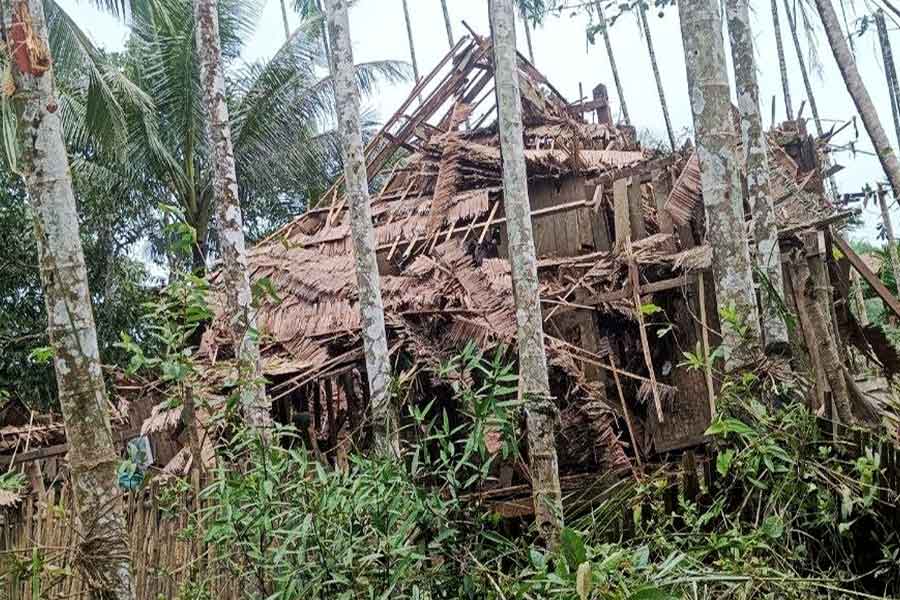
Only three days later, on the night of 13 July, the military reportedly launched approximately ten separate airstrikes on Kwin Hlar Shae, Yahaikwin and Kyaunggon villages, dropping more than 50 bombs within roughly one hour.
Then, on 14 July, junta aircraft struck Gwa Town twice within minutes.
Four bombs fell on Myo Ma Ward and Khin Rone Ward, injuring 39-year-old U Kyaw Thu and damaging residential buildings.
Taken together, these incidents suggest an increasingly intensive air campaign despite the absence of large-scale ground offensives.
Military analysts argue that this reflects the junta's growing dependence on air superiority to compensate for its limited ability to regain territory through conventional land operations.
One security analyst explained: "The military still possesses overwhelming air power, but controlling territory ultimately requires soldiers on the ground. Airstrikes may inflict damage and create fear, but they cannot by themselves restore effective territorial control."
This observation reflects a broader trend visible across Arakan.
Although major ground combat has declined in many areas now administered by the AA, military aircraft continue to pose one of the greatest threats to civilian safety.
The conflict has therefore entered a new phase in which territorial control and aerial dominance increasingly exist side by side.
War Amid Floods
The military operations in Gwa have unfolded against the backdrop of another crisis.
Since early July, continuous monsoon rains have caused severe flooding across much of Arakan.
Gwa has been among the hardest-hit townships.
Floodwaters have inundated numerous villages, forcing thousands of residents to seek temporary refuge on higher ground.
Families already displaced by conflict suddenly found themselves displaced once again by natural disaster.
Temporary shelters, many constructed from bamboo, tarpaulins and salvaged materials, have offered only limited protection against heavy rain and strong winds.
Roads have become impassable.
River transport has been disrupted.
Livelihoods dependent upon fishing, farming and daily wage labour have largely come to a standstill.
Under such circumstances, humanitarian needs have expanded rapidly.
Yet instead of finding temporary relief from the flooding, communities have continued to experience repeated airstrikes.
The convergence of armed conflict and natural disaster has created one of the most complex humanitarian emergencies currently facing Myanmar.
Military operations now intersect directly with climate-related disasters, dramatically increasing civilian vulnerability.
One humanitarian worker familiar with conditions in southern Arakan observed: "Floods alone would already overwhelm many communities. Airstrikes during the same period multiply the suffering because people cannot focus on recovery while they remain under constant threat."
Civilian Protection Becomes Increasingly Difficult
The humanitarian implications extend well beyond immediate casualties.
Flooding has contaminated water supplies, damaged sanitation facilities and increased the risks of dengue fever, malaria and diarrhoeal disease.
Transportation disruptions have made access to medical care more difficult, while rising commodity prices have further reduced household purchasing power.
For internally displaced people, conditions have become especially severe.
Many camps already faced shortages of food, medicines, mosquito nets and clean drinking water before the floods began.
Continued military operations have complicated humanitarian access even further.
Children remain among the most vulnerable.
Many have already experienced prolonged interruptions to their education because of conflict and displacement.
Now they face additional health risks arising from flooding while continuing to live under the constant possibility of aerial attack.
The death of three-year-old Maung Pho Thar in Gwa illustrates the tragic human cost of these overlapping crises.
His death represents more than an isolated casualty.
It symbolises the vulnerability of civilians caught between war and natural disaster.
Military analysts note that while air power may seek to weaken an adversary's morale, repeated attacks on civilian-populated areas during a humanitarian emergency risk generating broader political and humanitarian consequences.
Such operations may deepen local displacement, increase humanitarian needs and further attract international concern regarding civilian protection.
Southern Arakan Beyond the Battlefield
The importance of southern Arakan extends beyond current military operations.
The region forms part of the broader coastal corridor connecting Arakan with Ayeyarwady Region and the Bay of Bengal.
Further north lie strategic infrastructure projects, including the Kyaukphyu Deep Sea Port, the Special Economic Zone, and the China–Myanmar oil and gas pipelines.
To the west, the coastline faces major maritime routes linking South Asia and Southeast Asia.
For these reasons, military stability in southern Arakan carries implications extending beyond Myanmar itself.
A prolonged conflict could affect regional trade, humanitarian access and future economic development throughout the Bay of Bengal.
As one political analyst told DMG: "Southern Arakan is no longer simply a local battlefield. It has become part of a wider strategic environment where military developments, humanitarian conditions and regional economic interests increasingly intersect."
The fighting around Gwa therefore illustrates more than a tactical military contest.
It reflects the growing complexity of Myanmar's western conflict where military strategy, civilian protection, humanitarian emergencies and regional geopolitics have become inseparable.
Part IV (Final): The Southern Chin Front, Regional Implications and the Future of the Counteroffensive
5. The Southern Chin Front: Protecting the Northern Gateway
The junta's counteroffensive extends beyond Arakan itself. Another important front has emerged in southern Chin State, where Paletwa Township has become a critical strategic gateway linking northern Arakan with central Myanmar and India's northeastern frontier.
Since the Arakan Army captured Paletwa in late 2023, the township has become one of western Myanmar's most strategically significant locations. Control of Paletwa not only secures the northern approaches to Arakan but also places the AA along the route of the Kaladan Multi-Modal Transit Transport Project, a major regional connectivity initiative linking India's eastern seaboard with Myanmar.
Military analysts believe the junta fully recognizes Paletwa's importance.
Unable to retake the township directly, the military has instead sought to increase pressure through operations launched from neighbouring parts of Chin State while relying heavily on artillery and air power.
Resistance sources report that junta reinforcements have periodically moved into southern Chin in coordination with units operating from Magway Region. Rather than seeking an immediate breakthrough, the military appears to be attempting to stretch AA resources by forcing it to defend multiple fronts simultaneously.
However, the strategy has encountered growing resistance.
AA forces have increasingly coordinated operations with Chin resistance organizations and local People's Defence Forces (PDFs), creating an interconnected defensive network that extends well beyond Arakan itself.
One resistance commander explained: "The military wants to force revolutionary forces to fight everywhere at once. But cooperation among the resistance has also grown much stronger. No single front is fighting alone anymore."
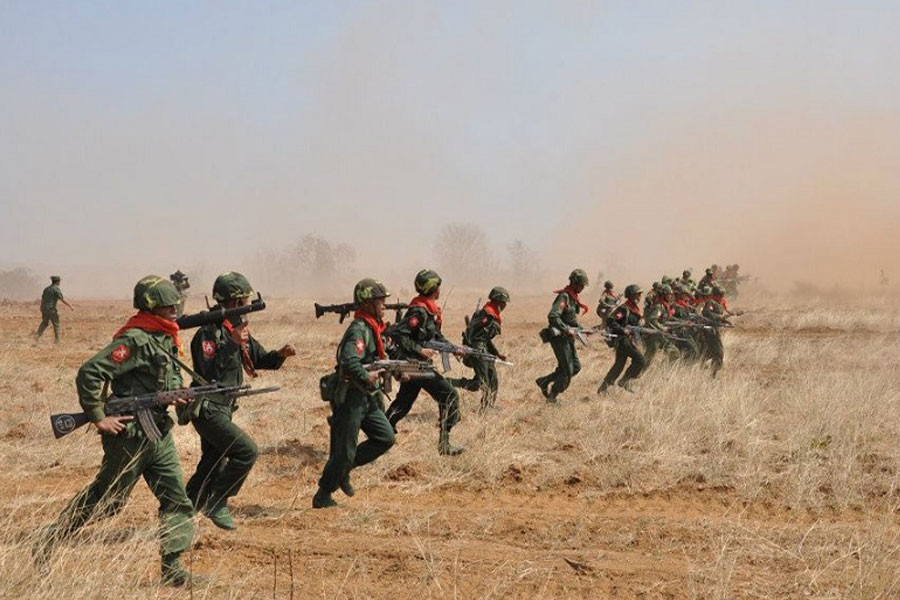
This growing coordination represents one of the most significant military developments since the nationwide resistance movement began.
Joint planning, intelligence sharing and operational cooperation have enabled resistance organizations to respond more effectively to increasingly complex military operations.
Rather than fighting isolated local battles, revolutionary forces are now operating across an increasingly integrated theatre stretching from southern Chin through the Arakan Roma into Magway, Bago and southern Arakan.
The Arakan Roma: The Decisive Strategic Frontier
Although individual battles often dominate daily headlines, military analysts increasingly argue that the true strategic prize is not a single town, military base or transportation corridor.
It is the Arakan Roma itself.
For centuries, these mountains have defined the relationship between Arakan and central Myanmar.
They have served as a natural defensive barrier, a military frontier and a vital transportation corridor linking the coastal region with the country's interior.
Today, they once again occupy the centre of Myanmar's military geography.
For the Arakan Army, the Arakan Roma provides strategic depth, secure lines of communication and terrain ideally suited to highly mobile defensive operations.
For the Myanmar military, however, the same landscape presents enormous logistical challenges.
Every offensive requires transporting troops, ammunition, food, fuel and heavy equipment through narrow mountain roads that remain vulnerable to ambushes and repeated attacks.
Military planners have long recognised that mountain warfare is determined as much by logistics as by battlefield firepower.
Control of a mountain pass often matters more than control of a nearby village.
As one military analyst observed: "Whoever controls the mountain corridors ultimately controls military access to Arakan."
This reality explains why fighting has intensified simultaneously across Magway, Chin, Bago and Ayeyarwady.
Although geographically separated, these fronts remain strategically interconnected through the Arakan Roma.
Progress achieved on one front inevitably influences operations elsewhere.
Regional Implications Beyond Myanmar
The significance of the Arakan campaign extends well beyond Myanmar's internal conflict.
Arakan borders Bangladesh, overlooks the Bay of Bengal, and occupies an increasingly important position in the strategic calculations of both India and China.
For Bangladesh, developments along the frontier directly affect border security, refugee management and future prospects for the voluntary repatriation of more than one million Rohingya refugees.
For India, stability around Paletwa is closely linked to the success of the Kaladan Multi-Modal Transit Transport Project, a key component of its "Act East" policy and regional connectivity strategy.
China likewise has substantial interests in Arakan through the Kyaukphyu Deep Sea Port, the Special Economic Zone, and the oil and natural gas pipelines linking the Bay of Bengal to Yunnan Province.
These projects were conceived during a very different political landscape.
Today, much of the surrounding territory is administered by the Arakan Army.
As political realities on the ground continue to evolve, regional governments may increasingly find themselves distinguishing between formal diplomatic recognition and practical engagement with the authorities exercising effective control.
International practice has long recognised such distinctions in conflict-affected regions around the world.
Humanitarian access, infrastructure protection, cross-border trade and border management often require practical cooperation without necessarily implying formal political recognition.
Arakan increasingly presents such a reality.
The Counteroffensive Has Become a Long War
The military campaign unfolding along the Arakan Roma demonstrates that Myanmar's western conflict has entered a fundamentally new phase.
The junta's objective is no longer merely to defend its remaining positions.
It seeks to reopen strategic land corridors, re-establish military mobility and gradually recover access to Arakan.
The AA, meanwhile, is no longer fighting solely to capture territory.
Its objective has evolved into securing the mountain frontier, protecting newly established administrative structures and preventing the military from regaining a permanent foothold inside Arakan.
Military analysts believe neither side is likely to achieve a decisive victory in the immediate future.
The Myanmar military retains overwhelming superiority in aircraft, artillery and conventional firepower.
The AA and its allies, however, have demonstrated increasing operational coordination, local intelligence, mobility and logistical resilience.
The conflict is therefore becoming less a contest of firepower than one of endurance.
Whichever side proves more capable of sustaining long-term military operations may ultimately determine the future balance of power.
Beyond the Battlefield
Yet the consequences extend far beyond military strategy.
Years of conflict have devastated livelihoods, displaced hundreds of thousands of civilians and severely disrupted education, healthcare and local economies throughout Arakan.
Recent monsoon flooding has further compounded humanitarian needs, while continuing airstrikes have placed additional pressure on communities already struggling to recover.
The military contest unfolding across the Arakan Roma therefore carries profound humanitarian consequences.
Every renewed offensive creates additional displacement. Every damaged road delays humanitarian assistance. Every airstrike deepens civilian suffering.
Conclusion
The battles now unfolding along the Arakan Roma are no longer simply about recapturing territory or defending military positions.
They represent a struggle over the future political, military and administrative landscape of western Myanmar.
For the first time in decades, the geography of Arakan has become inseparable from the country's wider political transformation.
Mountain corridors, transportation routes and border regions are no longer merely physical spaces; they have become decisive strategic assets whose control will shape future governance, regional security and international engagement.
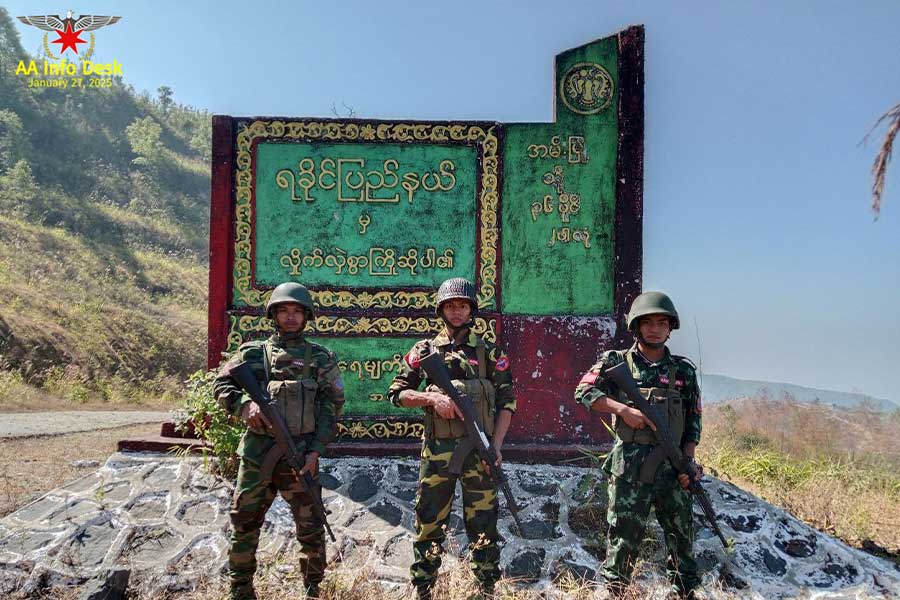
Whether the junta ultimately succeeds in reopening land access to Arakan, or whether the Arakan Army consolidates its current territorial control, the implications will extend well beyond the battlefield.
They will influence humanitarian access, regional connectivity, cross-border trade, infrastructure development and the strategic calculations of neighbouring states.
One conclusion, however, is already becoming increasingly clear.
The Arakan Roma is no longer simply the mountain range separating Arakan from central Myanmar.
It has become the defining strategic frontier of Myanmar's western conflict.
And the outcome of the battles being fought there today is likely to shape not only the future of Arakan, but also the wider political and security landscape of Myanmar for many years to come.

Top News
Junta launches airstrikes with fleet of aircraft in Thandwe Twsp
By Admin 23 Jul 2026
Arakan Army launches offensive near regime-held Sittwe
By Admin 23 Jul 2026
No progress in Pauktaw child rape case leaves family fearing injustice
By Admin 23 Jul 2026
Financial hardships keep many children out of school in Arakan State
By Admin 23 Jul 2026