
- Critical blood shortages threaten patients injured in junta airstrikes across Arakan
- Deadly junta airstrike leaves Kyauktaw daily-wage earners jobless
- India pushes to accelerate work on Kaladan road project in 2027 working season
- Junta launches fresh multi-aircraft bombardment of Kyauktaw mountain ranges
- Fierce combat erupts in Kyindwe, southern Chin State as resistance forces capture junta troops
Critical blood shortages threaten patients injured in junta airstrikes across Arakan
Hospitals and clinics in areas controlled by the Arakan Army in Arakan State face critical emergency blood shortages for civilians injured in escalating junta airstrikes and military conflict.
09 Oct 2026
DMG Newsroom
9 October 2026, Kyauktaw
Hospitals and clinics in areas controlled by the Arakan Army in Arakan State face critical emergency blood shortages for civilians injured in escalating junta airstrikes and military conflict.
Severe telecommunications blackouts and the displacement of residents amid continuous aerial bombardment have caused serious delays in contacting blood donors during life-threatening emergencies.
In addition, local humanitarian workers report that blood brokers demanding exorbitant fees of up to K50,000 per unit of blood have exploited emergency situations, discouraging voluntary donors and worsening supply shortages.
“Blood brokers are operating widely now,” said Ko Naing Win Lwin, emergency response officer at the Phyu Sin Myitta Philanthropic Association in Kyauktaw Town. “Before even finding a donor, people must pay K50,000 just to broker a single unit of blood. This exploitation has made genuine voluntary donors increasingly scarce. Previously, people donated altruistically, but now many hesitate, feeling their donated blood is being commercialized.”
While health services are being expanded across territory controlled by the Arakan Army, medical facilities face severe strain due to staffing shortages, a lack of medical equipment and essential medicines, and acute shortages of blood supplies.
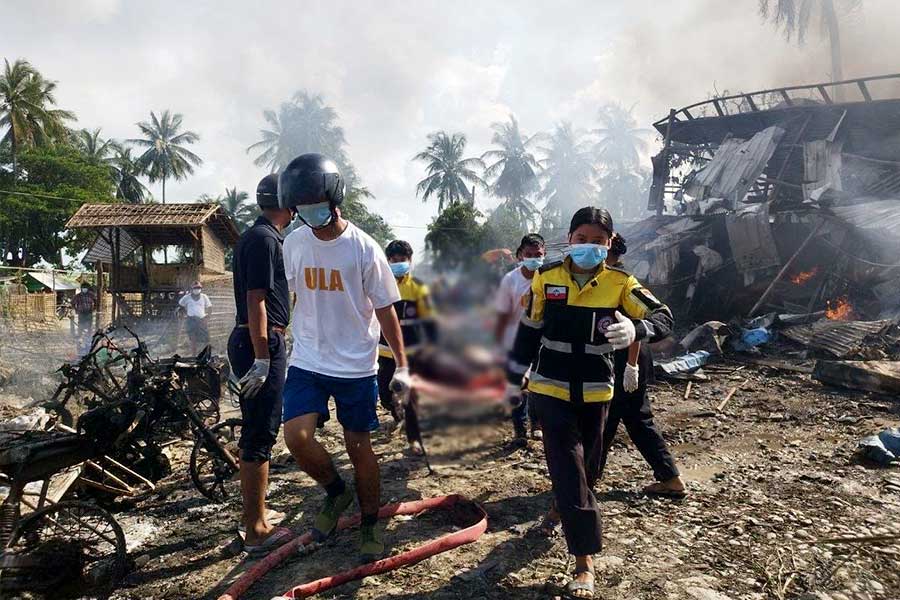
Patients suffering severe blast injuries from airstrikes face life threatening risks because health facilities lack blood reserves for immediate use.
“A severely injured patient was bleeding heavily and required an immediate blood transfusion,” said a family member of a victim injured during a junta airstrike in Kyauktaw. “Because the hospital lacked emergency blood reserves, the patient was in critical danger. Since multiple casualties arrived simultaneously that day, medics could only perform basic emergency triage.”
Historically, members of donor associations regularly donated blood at hospital blood banks and organized special donation drives on commemorative days. However, voluntary walk-in donations have dropped precipitously.
Furthermore, economic hardship caused by the conflict has driven many local youths abroad, shrinking active membership across local blood donation networks.
Local donor networks struggle to maintain operations due to dwindling funds, the displacement of core members, and communication barriers hampering donor outreach during crises.
“As this is an active war zone, we cannot reach donors as easily as before,” said Ko Tun Win, chairman of the Rakhine Community Development Foundation (RCDF). “People are displaced from their homes, and telecommunications rely heavily on Starlink satellite internet, making contact difficult. Moreover, many young people work in public administration departments, making them unavailable during duty hours.”
“When blood reserves run low, patients in emergency conditions face immediate threats to their lives because blood is life itself,” Ko Tun Win added. “Searching for donors on the ground is extremely difficult, particularly due to the constant threat of airstrikes. Donors naturally fear traveling when military aircraft are active overhead.”
Local donor organizations state that immediate aid and financial support are essential to sustain ground operations and save lives in emergency situations.
Humanitarian workers emphasize that as the military regime continues daily aerial bombardments across Arakan State townships, civilian casualties and the demand for emergency blood transfusions continue to rise rapidly.

Top News
Critical blood shortages threaten patients injured in junta airstrikes across Arakan
By Admin 09 Oct 2026
Arakan Army, allied resistance forces ambush junta columns in Indaw
By Admin 08 Oct 2026
Junta amphibious landing attempt fails on AA-held island in Werathani Twsp
By Admin 08 Oct 2026
Deadly junta airstrike leaves Kyauktaw daily-wage earners jobless
By Admin 08 Oct 2026
India pushes to accelerate work on Kaladan road project in 2027 working season
By Admin 08 Oct 2026