
- Junta airstrike hits high school in AA-held Maungdaw village
- Junta renews offensive to recapture Arakan Army-held Ponnagyun
- Arakan records most junta airstrikes in Myanmar, BNI report finds
- Family seeks rearrest of rape suspect who escaped ULA custody in Ann
- Junta claims 28 AA, PDF and PLF members surrendered in Pathein
Myanmar military recruitment rises nearly eightfold as parliament avoids conscription debate, ISP reports
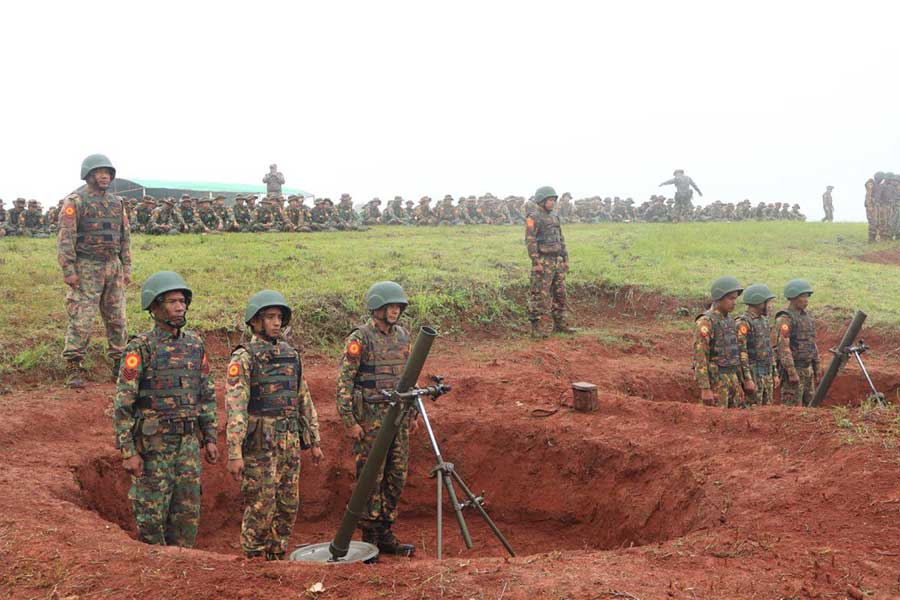
Myanmar's military has increased its annual recruitment of new soldiers nearly eightfold since enforcing its conscription law, while lawmakers have largely avoided debating the policy despite widespread concerns over forced recruitment, according to a new report by ISP-Myanmar.
30 Oct 2026
DMG Newsroom
30 October 2026, Yangon
Myanmar's military has increased its annual recruitment of new soldiers nearly eightfold since enforcing its conscription law, while lawmakers have largely avoided debating the policy despite widespread concerns over forced recruitment, according to a new report by ISP-Myanmar.
The report, published on October 29, found that only three questions concerning compulsory military service were raised in the Pyithu Hluttaw, Myanmar's lower house of parliament, between March and October 2026.
Lawmakers submitted at least 495 questions to the government led by Min Aung Hlaing during the assembly's third regular session, but only three addressed conscription. No related questions or debates were recorded in the Amyotha Hluttaw, the upper house, or the Union Parliament.
Five additional questions were raised in regional and state legislatures in Mandalay, Magway, Bago, Mon and Shan.
According to ISP-Myanmar, the military had conducted 29 conscription training intakes between February 2024 and October 2026.
Citing research by the Myanmar Defence and Security Institute (MDSI), the report estimated that each intake involved more than 4,700 recruits, suggesting that over 136,300 people may have been recruited.
Annual recruitment rose from approximately 7,200 soldiers before the conscription law took effect to more than 56,400, nearly eight times the previous level.
These estimates exclude graduates from military officer-training institutions.
ISP-Myanmar attributed the recruitment surge partly to coercive practices, including alleged arbitrary arrests, forced enlistment, extortion and the activities of groups accused of abducting civilians and transferring them into military service.
Lawmakers raised concerns about allegations that students, travellers and other civilians had been detained under the pretext of conscription.
In Mandalay, a regional legislator questioned the activities of armed militia groups accused of abducting young people and transferring them elsewhere for recruitment.
However, ISP-Myanmar found that parliamentary questions generally focused on enforcing existing recruitment regulations rather than suspending the conscription law.
The report also highlighted the broader human cost of Myanmar's conflict since the February 2021 military coup.
ISP-Myanmar documented at least 12,893 civilian deaths in armed conflicts between February 2021 and September 30, 2026.
It separately recorded at least 2,183 civilian deaths associated with the suppression of anti-coup protests and deaths following detention during the early post-coup period.
Looking ahead, ISP-Myanmar warned that the military could intensify recruitment in towns and rural areas outside active conflict zones as it seeks to rebuild its forces.
The research organisation questioned whether parliament was willing or able to hold the military accountable, warning that continued inaction could deepen the divide between lawmakers and the public.
ISP-Myanmar said its findings were based on publicly available sources and could be affected by limitations in data collection.

Top News
70 Arakan civil society groups call for no-fly zone, emergency humanitarian aid
By Admin 30 Oct 2026
ARSA steps up military activities in Maungdaw amid Sittwe fighting
By Admin 30 Oct 2026
Junta airstrike hits high school in AA-held Maungdaw village
By Admin 30 Oct 2026
Junta renews offensive to recapture Arakan Army-held Ponnagyun
By Admin 29 Oct 2026