
- Kyauktaw market closure disrupts trade and drives up prices across Arakan
- Arakan has Myanmar’s highest multidimensional poverty, 1.66 million affected: UNDP
- Arakan records most armed incidents, second-highest civilian casualty toll in Myanmar: NLTA
- Junta fails to regain territory despite major Arakan offensive: ISP-Myanmar
- Two Myebon fishermen missing after junta troops throw fishermen into sea
Media outlets can verify Arakan State news through Justice For Arakan: ULA official
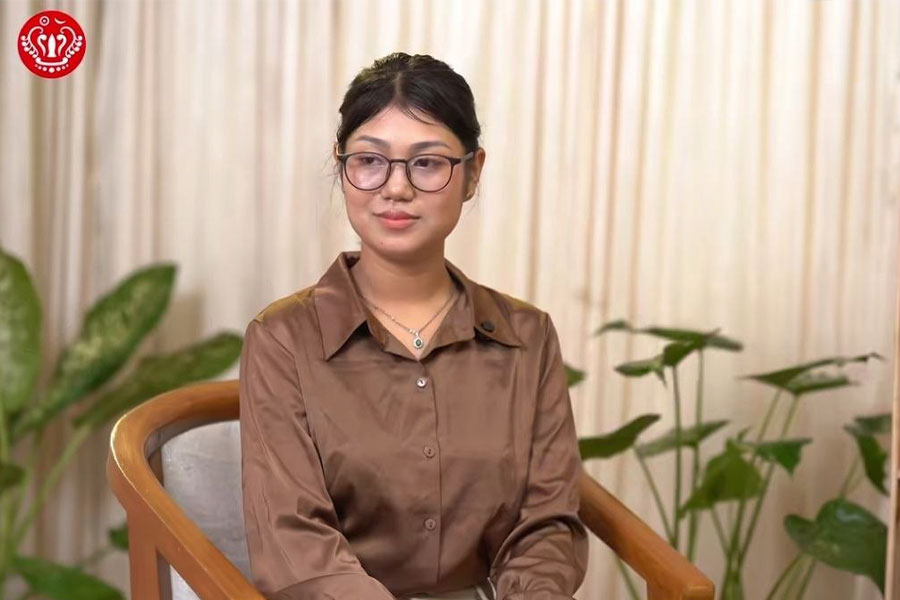
Domestic and international media outlets reporting on Arakan State news can contact Justice For Arakan to verify the accuracy of information, according to Daw Mya Zan Wai, Deputy Director of the United League of Arakan (ULA) Permanent Secretariat.
20 Sep 2026
DMG Newsroom
20 September 2026, Mrauk-U
Domestic and international media outlets reporting on Arakan State news can contact Justice For Arakan to verify the accuracy of information, according to Daw Mya Zan Wai, Deputy Director of the United League of Arakan (ULA) Permanent Secretariat.
Speaking on September 19 regarding the role of Justice For Arakan, she stated that publishing unverified news or rumors abuses public trust and emphasized the need for media accountability.
She added that the government hopes to see only reliable, ethically compliant news organizations operating to serve the Arakanese people with accurate reporting.
"If there are unclear details or unverified sources in the information gathered, media outlets can contact Arakan Army spokesperson U Khaing Thukha or reach out to Justice For Arakan to confirm the facts," Daw Mya Zan Wai said during an interview with APV.
She further cautioned the public regarding news coverage during the conflict. "During this challenging revolutionary period, people must remain cautious. Some reporters present themselves as representatives of the public in interviews while inserting loaded language to undermine trust between the government and the people, seeking to disrupt the revolution."
Justice For Arakan is an online Telegram channel established by the ULA between late 2020 and early 2021 to assist Arakanese people seeking justice for criminal matters and other grievances.
Established under ULA guidance to listen directly to the public and submit needs and difficulties to central headquarters, the channel aims to secure justice for the people of Arakan State, she added.
Ground reporters welcomed the official release of contact points by the ULA for fact-checking news.
"The official announcement from the Arakan Army is a welcome development," a local reporter in Arakan State told DMG. "Previously, there were times when we could not reach anyone for verification. As a result, news could not be published quickly, leading to confusion among the public. We urge the information department to provide timely responses."
However, local journalists also pointed out practical limitations, noting frequent difficulties in reaching ULA spokesperson U Khaing Thukha.
"Reaching the information officer presents many challenges, primary among them being contact availability," another local reporter said. "Having Justice For Arakan verify news is a positive step toward reducing misinformation. However, obtaining accurate news requires not only official verification but also continuous cross-checking with local testimonies and independent sources."
Justice For Arakan allows Arakanese people to submit complaints, inquiries, and issues intended for the ULA.
Members of the public can report service issues, corruption, or poor conduct in administrative departments. Submissions require detailed information and the complainant's signature.
Complaints submitted to Justice For Arakan are documented, classified by type, and forwarded via official correspondence to relevant departments.
Based on departmental findings, the initiative provides legal guidance and directs complainants on appropriate next steps depending on the situation.
Between January 2021 and August 31, 2026, Justice For Arakan received 741 complaints. These included 252 cases submitted to the Judiciary Department, 142 to the Political Department, 123 to Military Headquarters, 68 regarding land disputes, 56 to the Department of Humanitarian Assistance and Development (HDCO), 25 to the Administrative Department, and 17 to the NDEP Implementation Committee. Other cases involved intelligence, the secretariat, legal affairs, military affairs, health, technology, religious affairs, border relations, and customs.

Top News
Man sentenced to death for rape and murder of nine-year-old girl in Anjanapura
By Admin 10 Oct 2026
Junta troops suffer heavy casualties in failed landings on AA-held Ngapyi Island
By Admin 10 Oct 2026
Kyauktaw market closure disrupts trade and drives up prices across Arakan
By Admin 10 Oct 2026
Arakan has Myanmar’s highest multidimensional poverty, 1.66 million affected: UNDP
By Admin 10 Oct 2026