
- Heavy junta casualties reported in month-long Indaw battles; tactical commander captured
- Athan report highlights restrictions on freedom of expression in resistance-held areas
- Arakan records Myanmar’s highest combined civilian death and injury toll: NLTA
- Junta honours 38 conscripts amid intense fighting in Sittwe
- High farming costs, falling yields hit Arakan farmers
25 bodies exhumed in village near Kachin jade mining hub
Villagers in Hmaw One Lay Village, Hpakant Township, Kachin State, have exhumed 25 bodies believed to have been killed and buried in the village.
25 Aug 2026
DMG Newsroom
25 August 2026, Hpakant, Kachin State
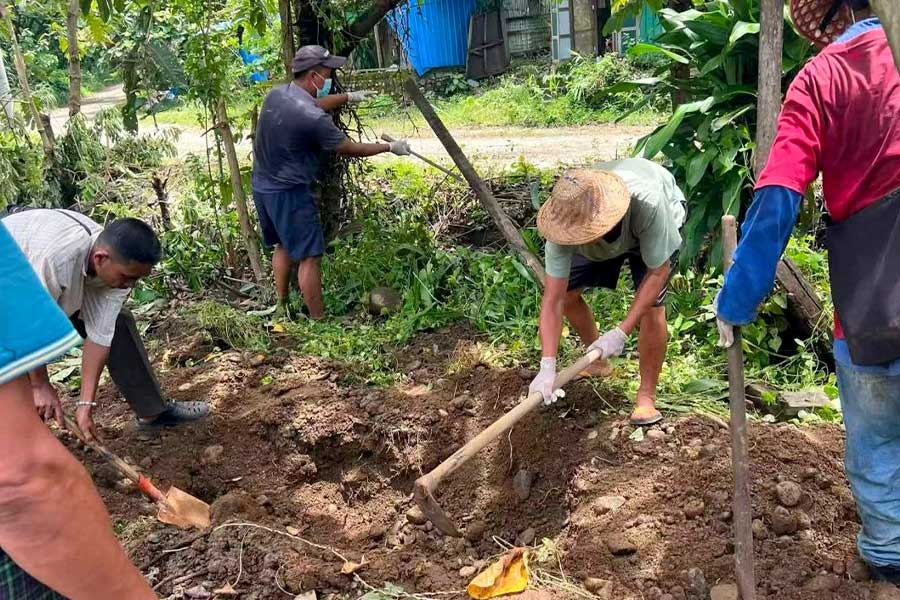
Villagers in Hmaw One Lay Village, Hpakant Township, Kachin State, have exhumed 25 bodies believed to have been killed and buried in the village.
Villagers returning home this month after fleeing the conflict discovered the unidentified bodies while clearing their home compounds.
"Not all the bodies were found in a single day. They were uncovered gradually as people cleaned up their properties. As of yesterday, 25 bodies have been found within Hmaw One Lay Village alone," a local man said.
Villagers began returning home in the first week of August, and the bodies were exhumed between August 8 and August 24.
Locals said identifying the 25 bodies remains difficult.
Hmaw One Lay Village is situated near Hpakant Town and was the site of fierce fighting between the military junta and the Kachin Independence Army (KIA) in 2025.
During the fighting, the military junta stationed troops in Hmaw One Lay Village for nearly a year. Villagers said the bodies were discovered at sites where military troops had been based.
As homes in Hmaw One Lay Village were burned and destroyed during the conflict, returning villagers face severe hardships and growing fears of landmines.
"Some returned to find no homes left because the military had burned them down. Landmines might also be present now. Everything we are encountering is alarming and terrifying," said a resident of Hmaw One Lay Village.
Having endured livelihood crises during displacement, returning residents continue to face post-war challenges that complicate their resettlement efforts.

Top News
Arakan records Myanmar’s highest combined civilian death and injury toll: NLTA
By Admin 31 Oct 2026
Junta honours 38 conscripts amid intense fighting in Sittwe
By Admin 31 Oct 2026
High farming costs, falling yields hit Arakan farmers
By Admin 31 Oct 2026