

- Kyauktaw market closure disrupts trade and drives up prices across Arakan
- Arakan has Myanmar’s highest multidimensional poverty, 1.66 million affected: UNDP
- Arakan records most armed incidents, second-highest civilian casualty toll in Myanmar: NLTA
- Junta fails to regain territory despite major Arakan offensive: ISP-Myanmar
- Two Myebon fishermen missing after junta troops throw fishermen into sea
ULA judicial department faces mounting challenges, ISP-Myanmar says
Although the Arakan Army, which controls most of Arakan State, is strengthening its administrative apparatus and governing as a revolutionary government, observers point out that significant challenges remain within its judicial sector.
24 Aug 2026
DMG Newsroom
24 August 2026, Mrauk-U
Although the Arakan Army, which controls most of Arakan State, is strengthening its administrative apparatus and governing as a revolutionary government, observers point out that significant challenges remain within its judicial sector.
Public criticism is mounting against the United League of Arakan (ULA) Judicial Department over human resource shortages, limited facilities and a lack of transparency, according to a research paper titled "Post-Dominance Challenges in ULA/AA Governance" published this month by the Institute for Strategy and Policy Myanmar (ISP-Myanmar).
Prior to securing full territorial control, the ULA established local-level administration and implemented a parallel judicial system that gained widespread public trust due to its speed and effectiveness.
However, ISP-Myanmar highlighted that during the transition toward a formal government structure, the administration suffered from resource imbalances. Prioritizing high-profile cases has also generated public criticism.
"While judicial independence exists to a certain extent, traces of military bureaucracy continue to exert influence. Nepotism is evident in staff recruitment, as appointments favor relatives and associates of the administrative circle," ISP-Myanmar stated.
These factors indicate institutional bias in case adjudication, representing transitional challenges currently faced by the ULA, according to the research paper.
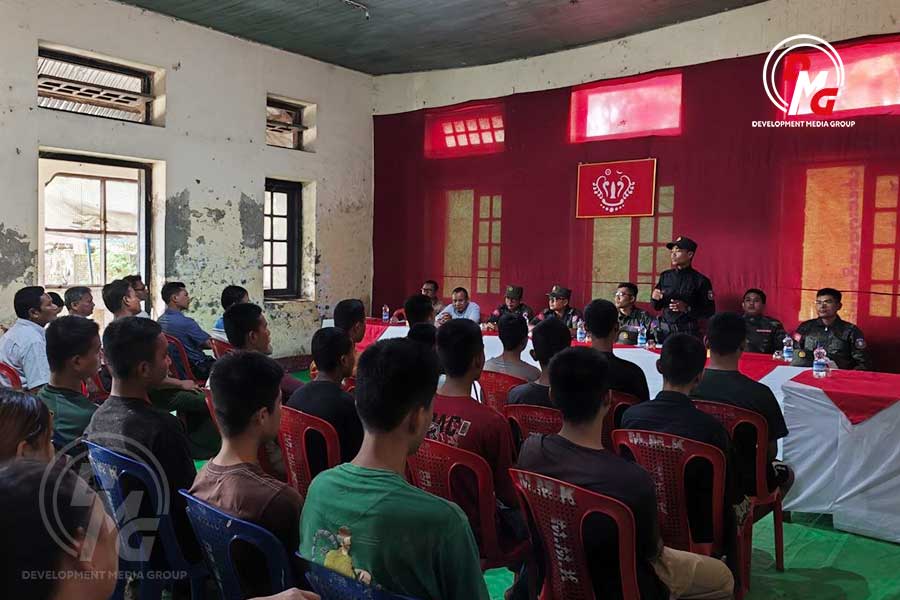
The ULA Judicial Department is staffed by retired judges, Civil Disobedience Movement (CDM) participants, local lawyers and law graduates. Due to a shortage of technical experts such as forensic scientists, the department faces gaps in experience and technology when handling major criminal cases.
Numerous cases handled by the ULA remain unresolved for extended periods, while frequent reassignment of attorneys has caused significant judicial delays.
Public criticism has surged, particularly over delays in issuing verdicts and cases in which perpetrators of rape and child rape remain at large.
Among rape cases that have drawn intense public attention, only the Autseik case in Ponnagyun Township resulted in a swift sentence. In contrast, cases such as the Pharpyo incident in Anjanapura Township and the child rape case in Aung Thukha Village, Maungdaw Township, remain unresolved.
"Many cases remain unresolved by the ULA. Prompt arrest and prosecution of perpetrators in rape cases is vital. Comprehensive laws protecting women's rights must be officially made public. Promulgation should mean informing the general public, not merely circulating documents within the judicial department," said a female social activist from Mrauk-U Township.
ISP-Myanmar noted that weaknesses in the ULA judicial system have left women vulnerable to sexual violence and security risks.
Poor coordination between the Judicial Department and the Department of Law Enforcement and Public Security (DLEPS) further weakens judicial proceedings.
In Arakan State, criminal cases including theft, brawls, land disputes, drug offenses, rape and homicide are filed and adjudicated through the ULA Judicial Department.
However, local residents face legal shortcomings due to various factors, including sentence reductions for defendants and the geographical distance from courts. In a gold theft case in Pihtoo Village, Kyauktaw Township, the court acquitted a perpetrator who had already confessed to the theft before DLEPS officers.
"The identity of the gold thief was fully known, and the perpetrator confessed to the crime. Yet during trial, the gold owner lost the case. The entire village remains astonished and feels justice was denied," a male resident of Pihtoo Village said.
As public reliance on the ULA Judicial Department grows, operational gaps are widening, while a backlog of complaints is causing further delays.
ISP-Myanmar warned that failure by the ULA to resolve these challenges could eventually turn public trust in the judiciary into disappointment.
"We understand that the judicial sector currently operates under difficult circumstances. However, it needs to be a trustworthy sanctuary for justice. Victim families should be treated with respect and granted protection. Currently, women feel insecure. We continue to hope for a judicial system that women can rely on," said Ma Miki, a young woman from Rathedaung Township.
To hand down maximum sentences for severe offenses such as child rape, rape-murder and homicide in areas controlled by the Arakan Army, the ULA established a special court.
Formed in August, the special court aims to expedite maximum sentences for perpetrators of sexual violence, child rape, rape and murder, according to the ULA.

Top News
Man sentenced to death for rape and murder of nine-year-old girl in Anjanapura
By Admin 10 Oct 2026

Junta troops suffer heavy casualties in failed landings on AA-held Ngapyi Island
By Admin 10 Oct 2026
Kyauktaw market closure disrupts trade and drives up prices across Arakan
By Admin 10 Oct 2026
Arakan has Myanmar’s highest multidimensional poverty, 1.66 million affected: UNDP
By Admin 10 Oct 2026