
- Nay Pyi Taw talks between junta, MNDAA halt over special region demand
- Arakanese civilians face widespread violence, humanitarian aid blockades, UN mechanism warns
- India-Arakan trade route reopens after eight-day closure
- Clashes intensify along Sittwe-Ponnagyun border as Arakan Army captures military outposts
- Heavy fighting erupts in Laymyethna as junta launches offensive against Arakan Army-held territory
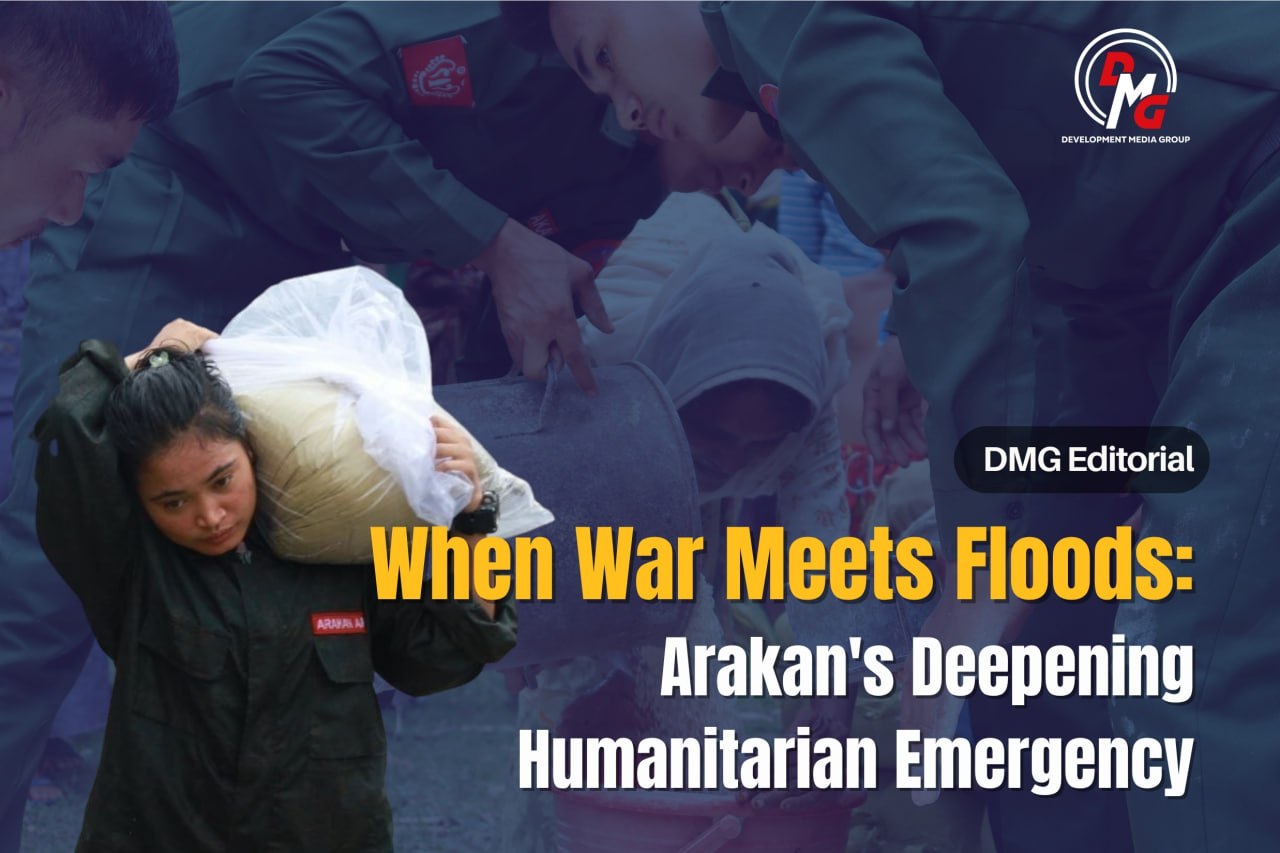
Editorial : When War Meets Floods: Arakan's Deepening Humanitarian Emergency
The latest military airstrikes on flood-hit Gwa Township demonstrate how Arakan's humanitarian crisis continues to deepen through the convergence of armed conflict and natural disaster.
15 Jul 2026
The latest military airstrikes on flood-hit Gwa Township demonstrate how Arakan's humanitarian crisis continues to deepen through the convergence of armed conflict and natural disaster.
On the afternoon of July 14, while residents were still struggling with severe flooding caused by days of heavy monsoon rains, Myanmar's military launched two more airstrikes on Gwa Town. Four bombs reportedly struck Myo Ma Ward and Khin Rone Ward within minutes of each other, injuring a 39-year-old civilian, U Kyaw Thu, and damaging several buildings.
The latest attack came only one day after the military carried out around 10 airstrikes on Kwin Hlar Shae, Yahaikwin and Kyaunggon villages in Gwa Township, reportedly dropping more than 50 bombs within an hour. Just days earlier, on July 10, another junta airstrike on Kular Chaung Village killed three civilians including a three-year-old child, and seriously injured two others.
The timing of these repeated attacks is particularly alarming. Gwa Township is among the areas hardest hit by recent monsoon flooding. At least ten villages have been inundated, forcing many families to evacuate to temporary shelters on higher ground where they urgently need food, clean water, medicine and emergency assistance. Instead of finding safety from the floods, many residents continue to face the threat of bombs from the sky.
Gwa is not an isolated case. Across Arakan, heavy rains have flooded multiple townships, damaged roads and bridges, triggered riverbank erosion and disrupted livelihoods. Thousands of internally displaced people remain in makeshift shelters with limited access to healthcare, education and essential services. Trade restrictions, damaged transportation routes and rising commodity prices have further increased the cost of daily survival. The floods did not create Arakan's humanitarian emergency, they have intensified one that already existed.
Yet even amid this worsening humanitarian situation, military air operations have continued across the state. In recent weeks, junta aircraft have repeatedly bombed Kyauktaw, Buthidaung, Maungdaw and Gwa. On June 17, an airstrike in Kyauktaw reportedly killed ten civilians and injured sixteen others. On July 1, military aircraft bombed Kyet Mauk Taung, a Muslim village in Buthidaung Township, injuring three civilians, including two children, before carrying out further attacks around Maungdaw later that day. The repeated strikes across Arakan suggest that civilians remain exposed to aerial attacks regardless of changing frontlines or the absence of active ground fighting.
The humanitarian consequences continue to grow. Floodwaters have disrupted livelihoods, increased the risk of disease and left many displaced families without adequate shelter, food or medical care. Children, older people and those with chronic illnesses remain particularly vulnerable. Every additional airstrike compounds an already dire humanitarian emergency by creating new displacement, destroying civilian property and deepening fear among communities already struggling to recover from natural disaster.
International humanitarian law applies under all circumstances. Civilians and civilian infrastructure must be protected regardless of military developments or weather conditions. Repeatedly bombing civilian-populated areas while communities are coping with floods and displacement only intensifies human suffering and raises serious concerns under international humanitarian law.
Arakan today stands at the intersection of armed conflict, climate-related disasters and profound political change. Local communities and volunteer networks continue to provide emergency assistance despite extremely limited resources, but the scale of the crisis now exceeds local capacity alone.
The international community should respond with greater urgency by expanding humanitarian assistance, strengthening support for local relief efforts, ensuring safe and sustained humanitarian access, and reinforcing the protection of civilians. Behind every humanitarian assessment are families trying to survive two disasters at once, one caused by nature, the other by war.
If the violence continues while humanitarian needs continue to rise, today's overlapping crises risk becoming a prolonged humanitarian catastrophe with consequences extending far beyond Arakan.

Opinion
Beyond Military Victory: What Is Myanmar’s Ultimate Political Objective?
By Admin 26 Sep 2026
UN at a Crossroads: Six Priorities for a Shared Future
By Admin 23 Sep 2026
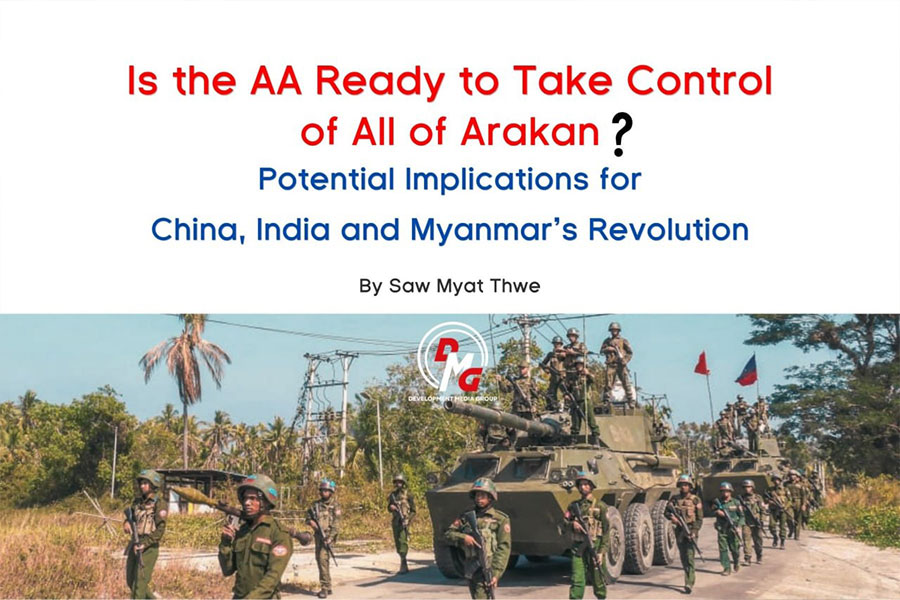
.jpg)
How Can Myanmar’s Political Crisis Be Brought to an End?
By Admin 13 Sep 2026
By Cutting Trees, We Are Killing Ourselves
By Admin 06 Sep 2026
A Modern August We Must Never Forget
By Admin 31 Aug 2026
POLITICS

BUSINESS
Industry to manufacture finished goods from coconut starting in early 2020
By Aung Kaung Zaw 20 Nov 2019