
- Military operations spread despite decline in clashes, BNI report finds
- Junta aerial attacks force school closures across three Arakan townships
- Family demands swift arrest of statutory rape suspect in Werathani
- Women face shrinking employment opportunities in Myanmar, UNDP reports
- AA seizes five junta outposts as Arakan records most civilian-targeted airstrikes: NLTA
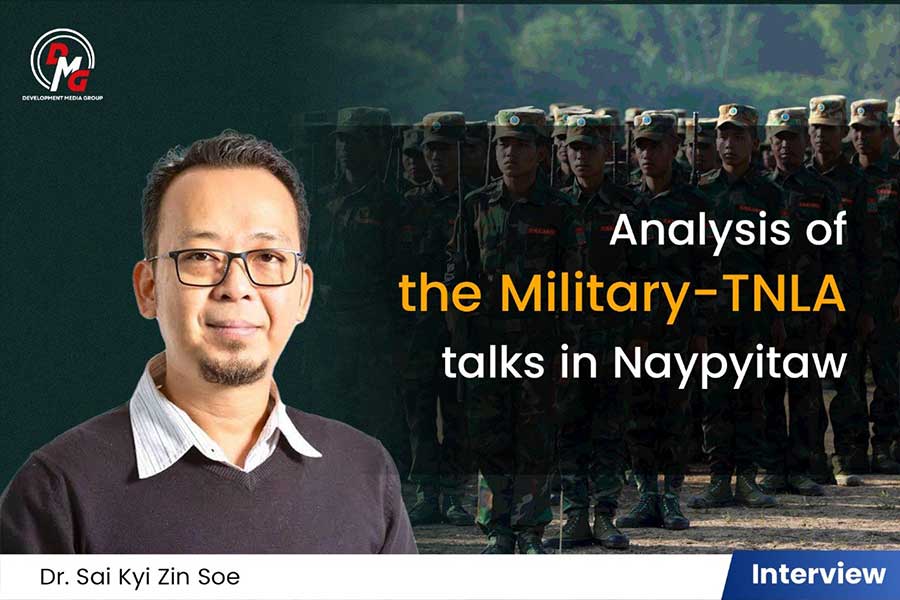
Analysis of the Military-TNLA Talks in Naypyitaw
DMG spoke with political analyst Dr. Sai Kyi Zin Soe about why the TNLA has entered into formal negotiations with the military junta and whether the talks could have broader implications for Myanmar’s resistance movement.
24 Jul 2026
DMG | Interview
Representatives of the military junta’s National Solidarity and Peace Negotiation Committee (NSPNC) and the Ta’ang National Liberation Army (TNLA) held talks in Naypyitaw on July 19.
During the meeting, the TNLA reportedly requested the establishment of a Ta’ang State encompassing the territories under its control, emphasizing that it was not seeking to secede from Myanmar.
The TNLA is a member of the Three Brotherhood Alliance (also known as the Northern Brotherhood Alliance) and was one of the principal forces behind Operation 1027. DMG spoke with political analyst Dr. Sai Kyi Zin Soe about why the TNLA has entered into formal negotiations with the military junta and whether the talks could have broader implications for Myanmar’s resistance movement.
DMG: The military and the TNLA met in Naypyitaw on July 19. Why do you think they have now entered into formal negotiations?
Dr. Sai Kyi Zin Soe: There are likely many factors behind the meeting. Looking at developments since the first and second phases of Operation 1027, and most recently the situation in which Kutkai was handed back, the TNLA has come under growing pressure to maintain its position as an ethnic revolutionary organization in its area of operation.
One major source of pressure is China. There have also been situations in which allied forces have ended up fighting one another, creating additional strains on relations among the allies.
Another important factor is the absence of a broadly accepted political agreement or alliance framework among the major revolutionary forces. There is no effective coordination mechanism through which these groups can systematically support one another and collectively reduce the pressure faced by individual organizations. This can also be understood as one of the factors contributing to the present situation.
DMG: The TNLA reportedly asked for the territories under its control to be designated as a Ta’ang State. How do you think the military might respond?
Dr. Sai Kyi Zin Soe: If we look at the military’s current position and approach, it has repeatedly and explicitly stated that it intends to preserve and defend the 2008 Constitution. Therefore, we can expect that it would consider demands raised during these talks only within the framework of that constitution.
If the military believes the TNLA’s demands can somehow be accommodated through arrangements or amendments within the framework of the 2008 Constitution, the two sides may be able to reach a compromise. In that sense, it is possible that they could find some common ground.
DMG: Could these talks affect other revolutionary organizations?
Dr. Sai Kyi Zin Soe: Relations did not suddenly change simply because this meeting took place. Operation 1027 was primarily led by the three members of the Three Brotherhood Alliance, the Arakan Army (AA), the Myanmar National Democratic Alliance Army (MNDAA) and the TNLA.
By the time the second phase of Operation 1027 had ended and territory that had been seized was handed back to the military, however, it was already apparent that relations were changing in one way or another.
Even then, many analysts believed that a situation like this would emerge sooner or later because the alliance lacked sufficient cohesion to withstand mounting pressures. What we are seeing now can be understood as those pressures pushing the situation toward that point.
DMG: Now that the TNLA and the military have entered into talks, could other revolutionary organizations eventually engage in similar negotiations?
Dr. Sai Kyi Zin Soe: If we look at the revolutionary forces today, they are not actually a single, unified bloc. Many of these organizations began their struggles on the basis of liberating their respective territories and organizing around ethnic identity. Historically, their struggles have also been shaped by their own ethnic identities, experiences and historical backgrounds.
For many of these organizations, the liberation of their own regions is likely to remain their primary objective. The question of how those liberated territories could later come together and what kind of country they might collectively build can be seen as a secondary objective.
If there were a common system for nation-building and a shared political framework that all revolutionary organizations could understand and accept, they might not necessarily pursue the liberation of their respective territories separately as their first priority. But the revolutionary groups that exist today are confronting different challenges according to their own circumstances.
The Arakan Army, for example, faces challenges related to ethnic and religious tensions within its area, as well as issues subject to scrutiny and potential legal action. Because its territory borders India, there are also security concerns involving areas along the Indian frontier, while Bangladesh represents another important factor.
China, meanwhile, maintains different forms of relations with, and applies varying degrees of pressure to organizations such as the KIA/KIO, TNLA, MNDAA and the United Wa State Army, as well as political organizations such as the Shan Nationalities League for Democracy (SNLD). Each organization therefore has to survive and operate under its own particular set of pressures and relationships.
Every revolutionary organization must also maintain the support and participation of the ethnic communities in its respective area. At the same time, the military continues to exert pressure and launch offensives in various forms.
In areas where revolutionary organizations operate alongside one another, territorial disputes, competing interests and other disagreements can also arise between them. Under such circumstances, the calculation over whether to prioritize an organization’s own immediate objectives or the broader objective of building a new country will not necessarily be the same for every group.
For the TNLA, the priority after Operation 1027 now appears to be consolidating the territories it gained and building a more durable structure and system of administration there.
That calculation reflects both considerations within the organization itself and the external pressures that we can observe. We can therefore understand the TNLA’s decision to enter into talks as one made after weighing all of these factors.
Other revolutionary organizations could eventually make similar calculations if circumstances change and they come under different forms of pressure. Some may conclude that they also need to enter into negotiations.
At the same time, there are organizations trying to develop stronger alliance-based structures capable of withstanding such pressures without separately entering into talks, while also seeking to establish a common political framework acceptable to all.
The situation could therefore change depending on which of these paths emerges first.
DMG: Thank you for sharing your analysis.

Opinion
Shadows Over Childhood: Confronting the Reality of Missing Children
By Admin 16 Oct 2026
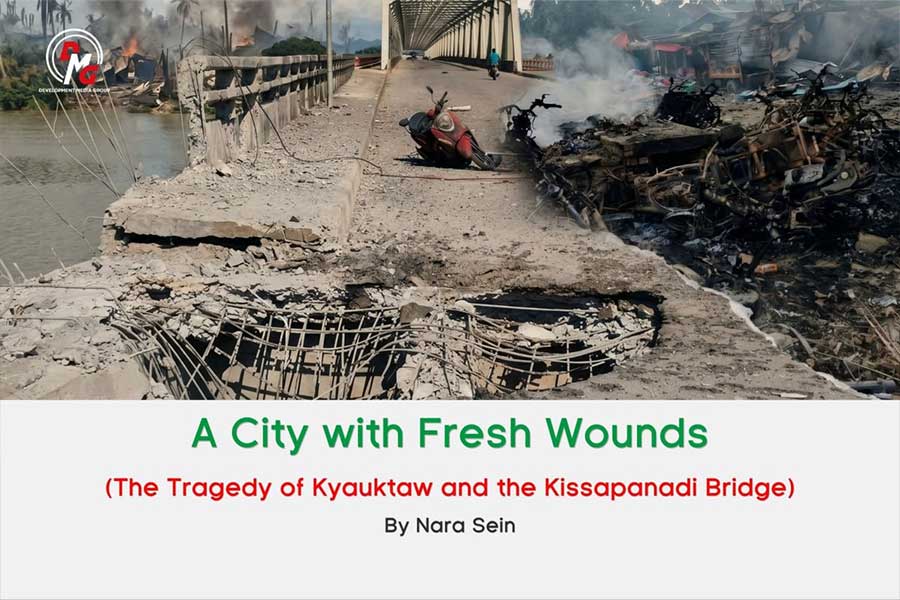
A City with Fresh Wounds (The Tragedy of Kyauktaw and the Kissapanadi Bridge)
By Admin 01 Oct 2026
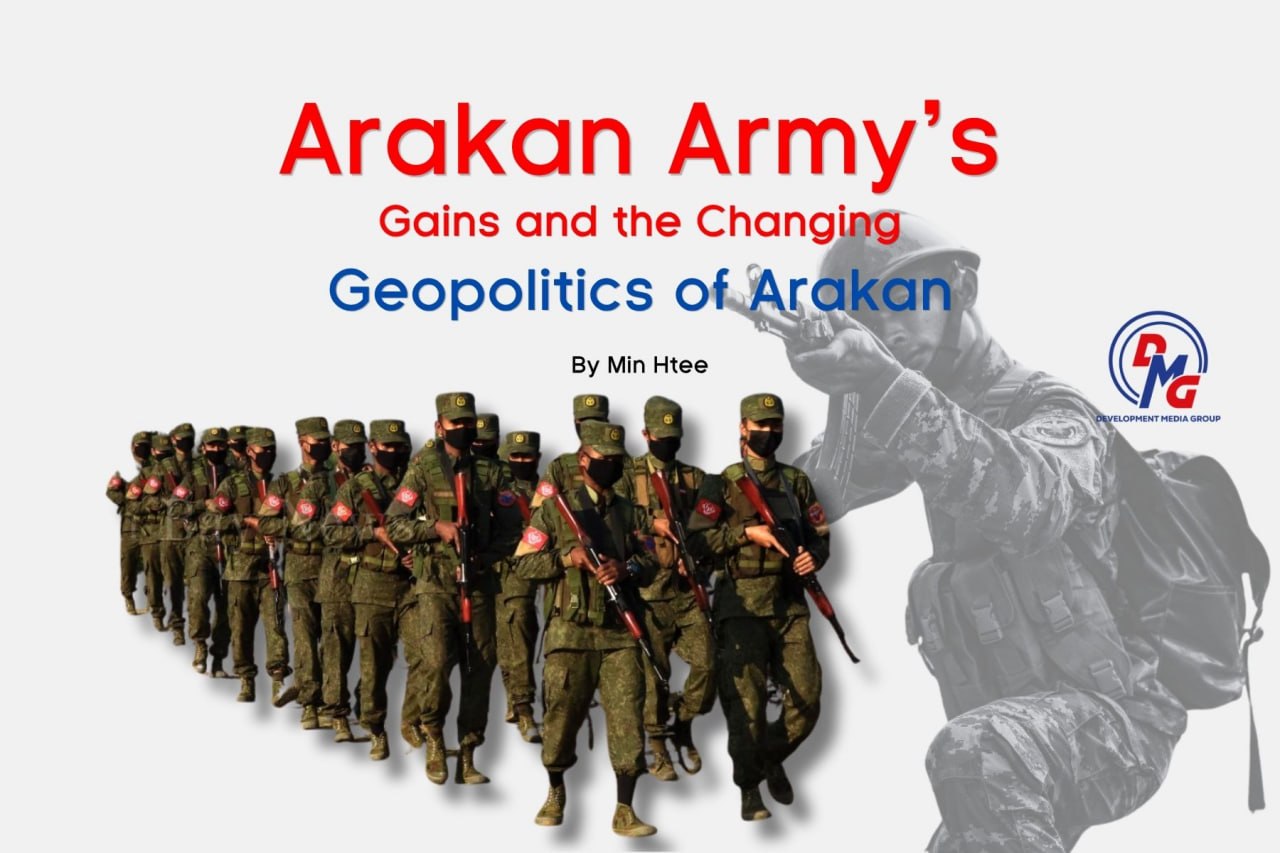
Arakan Army’s Gains and the Changing Geopolitics of Arakan
By Admin 29 Sep 2026
Beyond Military Victory: What Is Myanmar’s Ultimate Political Objective?
By Admin 26 Sep 2026
UN at a Crossroads: Six Priorities for a Shared Future
By Admin 23 Sep 2026
POLITICS

BUSINESS
Industry to manufacture finished goods from coconut starting in early 2020
By Aung Kaung Zaw 20 Nov 2019