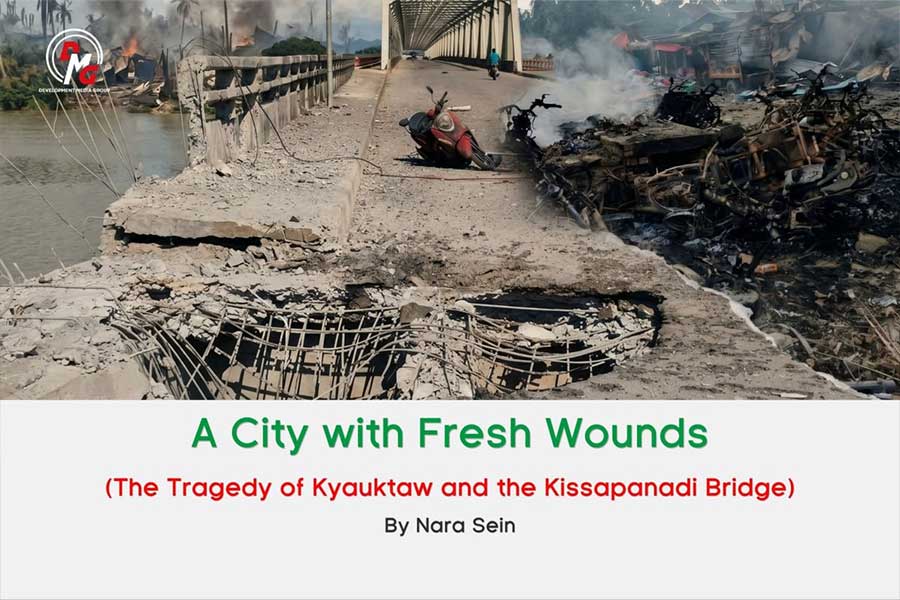

- Kyauktaw market closure disrupts trade and drives up prices across Arakan
- Arakan has Myanmar’s highest multidimensional poverty, 1.66 million affected: UNDP
- Arakan records most armed incidents, second-highest civilian casualty toll in Myanmar: NLTA
- Junta fails to regain territory despite major Arakan offensive: ISP-Myanmar
- Two Myebon fishermen missing after junta troops throw fishermen into sea
Revolutionary forces, civil groups urge negotiated settlement to MNDAA-TNLA conflict
Spring Revolution forces and various civil society organizations have called for a negotiated settlement to the military conflict currently unfolding between the Myanmar National Democratic Alliance Army (MNDAA) and the Ta’ang National Liberation Army (TNLA) in northern Shan State.
16 Mar 2026
DMG Newsroom
16 March 2026, Kutkai, Northern Shan State
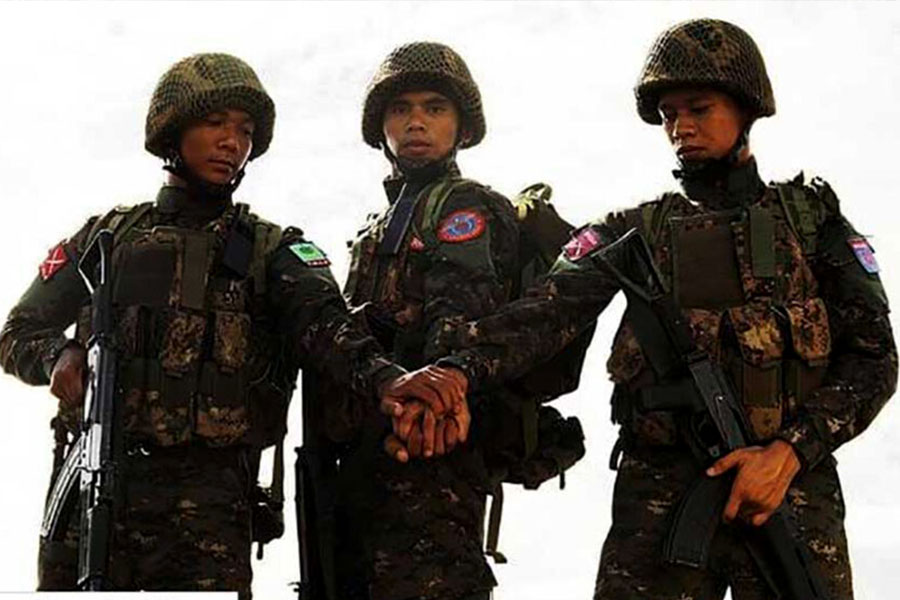
Spring Revolution forces and various civil society organizations have called for a negotiated settlement to the military conflict currently unfolding between the Myanmar National Democratic Alliance Army (MNDAA) and the Ta’ang National Liberation Army (TNLA) in northern Shan State.
The appeal was issued by the Spring Revolution Alliance (SRA), the National Unity Consultative Council (NUCC), and a coalition of 45 civil society organizations.
The groups urged members of the Brotherhood Alliance to resolve their differences through allied diplomacy rather than military confrontation.
The MNDAA recently seized Kutkai, a town previously captured and controlled by the TNLA, and is reportedly continuing attacks on other TNLA-held territories.
Sources say the MNDAA has been arresting TNLA soldiers at the Muse 105-Mile trade zone and the Kyinsankyawt border gate, locations previously managed jointly by the three Brotherhood Alliance members. The MNDAA is also reportedly preparing for an offensive on Namkham.
“The seizure of Kutkai by the MNDAA was a remarkably swift operation. It appears the strategy is to restrict TNLA forces to their original strongholds of Namsan and Mantong. TNLA checkpoints along the Lashio–Muse Road will likely have to withdraw. The MNDAA is currently deploying massive force, similar to the intensity seen during Operation 1027,” said Captain Zin Yaw, a participant in the Civil Disobedience Movement (CDM).
While the TNLA has requested negotiations to address the MNDAA offensive, attacks have continued. The TNLA has also reportedly appealed to the Chinese government to mediate the crisis.
Some sources allege that the MNDAA’s operations involve not only Kokang troops but also pro-junta militia members.
Political analysts suggest the conflict may be influenced by Chinese interests or possible tactical cooperation between the military regime and the MNDAA under external pressure.
“From a conflict economy perspective, one wonders if China wants its preferred proxies positioned along the main union highway to ensure trade routes remain open,” said political analyst Maung Tamar. “Politically, it raises questions about whether the MNDAA is seeking territorial expansion to create a China-aligned sub-state linked to Wa territory. It is clear they wouldn’t act this boldly without a green light from China.”
Analysts note that the TNLA has gradually been losing control of towns captured during Operation 1027, having ceded five towns back to the military regime and one to the MNDAA. Following the capture of Kutkai, the MNDAA is pushing toward Namkham and has reportedly carried out drone strikes on a TNLA security checkpoint located 12 miles between Namkham and Namphatkar.
As military tensions escalate between the MNDAA and TNLA, local residents fear the region could be heading toward a full-scale conflict between the two former allies.

Top News
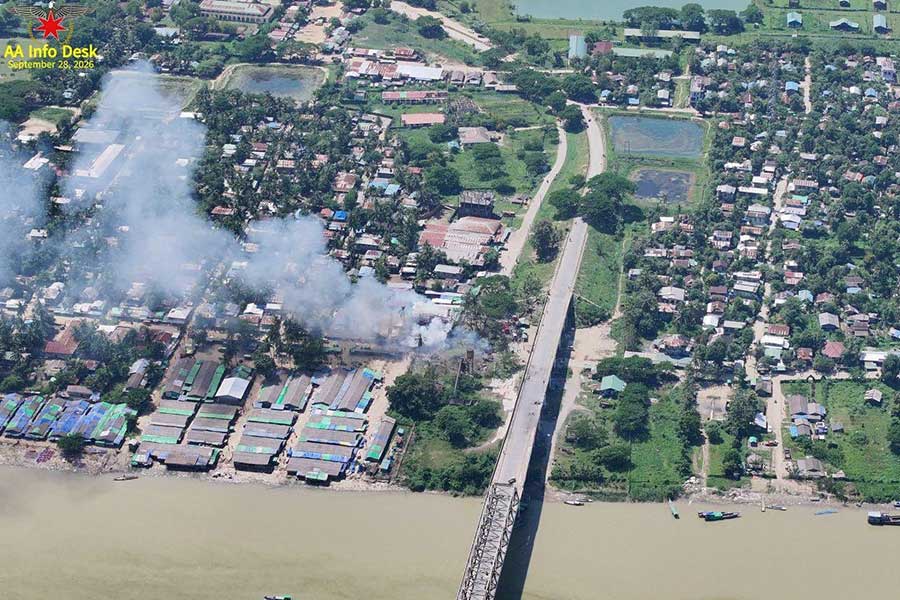
Kyauktaw market closure disrupts trade and drives up prices across Arakan
By Admin 10 Oct 2026
Arakan has Myanmar’s highest multidimensional poverty, 1.66 million affected: UNDP
By Admin 10 Oct 2026
Junta fails to regain territory despite major Arakan offensive: ISP-Myanmar
By Admin 10 Oct 2026
Clashes intensify near Taung Maw Oo naval station as Arakan Army launches offensive
By Admin 09 Oct 2026