
- Military operations spread despite decline in clashes, BNI report finds
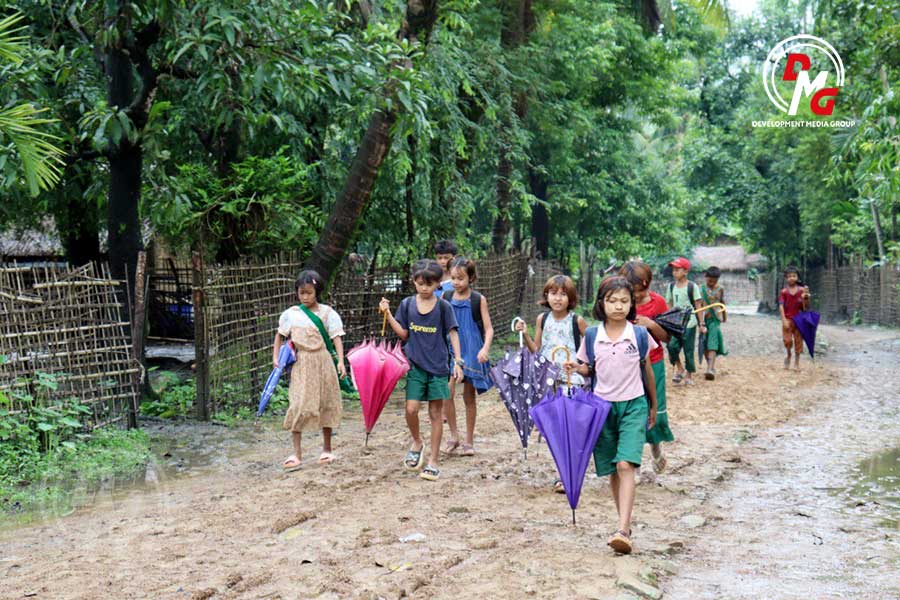
- Junta aerial attacks force school closures across three Arakan townships
- Family demands swift arrest of statutory rape suspect in Werathani
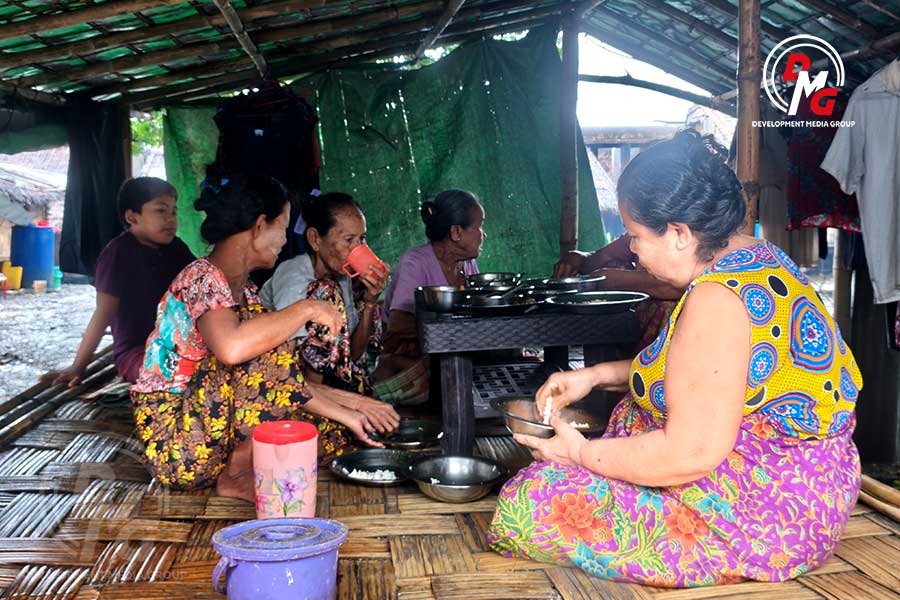
- Women face shrinking employment opportunities in Myanmar, UNDP reports
- AA seizes five junta outposts as Arakan records most civilian-targeted airstrikes: NLTA
Chakma youth urge participation in rebuilding Arakan State, resolving ethnic issues
Ethnic Chakma people are urging their community members to actively participate in rebuilding Arakan State and to resolve challenges faced by their ethnic group through dialogue with the United League of Arakan (ULA).
16 May 2026
DMG Newsroom
16 May 2026, Minbya
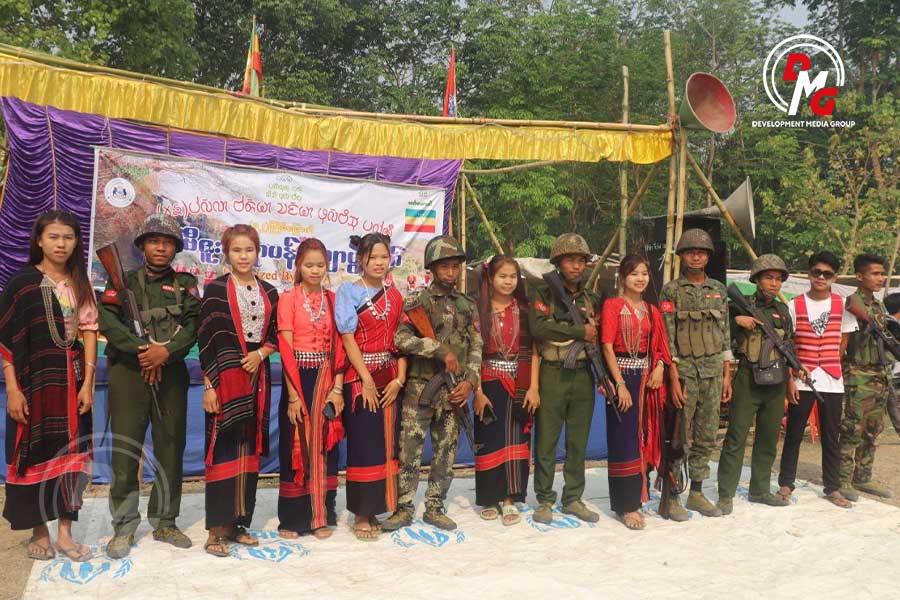
Ethnic Chakma people are urging their community members to actively participate in rebuilding Arakan State and to resolve challenges faced by their ethnic group through dialogue with the United League of Arakan (ULA).
Ethnic Chakma people noted that diverse races and religions coexist under the control of the Arakan Army in Arakan State, adding that social harmony has improved recently as diversity has become more widely accepted.
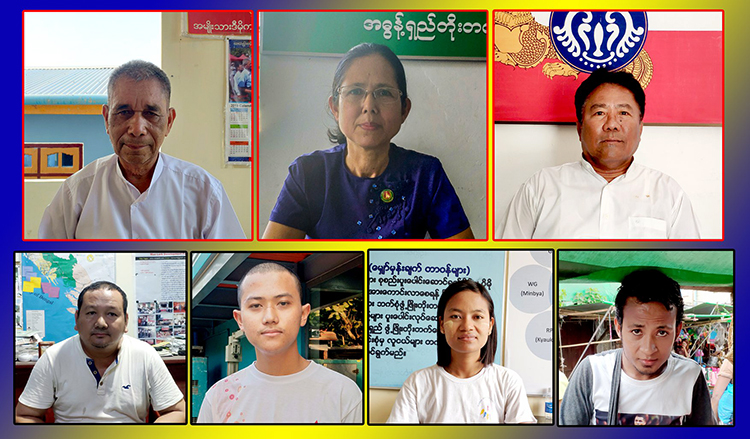
An ethnic Chakma man currently serving under the ULA stated that the Chakma people, who are recognized as an Arakanese tribe, have lived together in Arakan State throughout successive generations and now need to fulfill their respective duties in rebuilding Arakan State.
"As ethnic Chakma people living in Arakan State, we must carry out our assigned duties from whichever side we can. If we fail to do our part, it will be discouraging for future generations. I am also glad to see many people joining recently out of genuine interest. The ULA should compile a list of ethnic members serving in the organization and honour and recognize them based on their capabilities," he said.
More than 400 Chakma people are currently working in various sectors, including defence, education, healthcare, and departmental operations, to rebuild Arakan State.
On the other hand, due to financial hardships within their families, some Chakma people are leaving for mainland Myanmar and foreign countries in search of work.
Consequently, Chakma people are facing challenges related to a declining population within Arakan State.
"The main challenge for ethnic minority groups is their tendency to fear any armed group. This is because they have witnessed the atrocities committed by military dictators. The ULA needs to overturn this perception and become a government loved by the people. To achieve this, it is crucial to carefully handle ethnic minority affairs. This is a situation where lessons must be drawn from the anti-dictatorship revolution in Myanmar," said Ko Thein Tun Hla, an ethnic Chakma youth in Minbya Township.
"Only by doing so can it become a good, trusted government for ethnic minorities, which will greatly contribute to the successful construction of Arakan State," Ko Thein Tun Hla added.
Due to aerial threats posed by the Myanmar military regime, Chakma people in Arakan State are facing hardships related to their livelihoods and employment opportunities. The Chakma people are an ethnic group that has traditionally practiced Buddhism for generations.
Chakma people emphasized that since the administration, judiciary, and legislature are still in a foundational stage, the ULA needs to systematically manage these sectors by establishing policies that protect ethnic minorities.
"As a Chakma person, it is essential to cooperate and participate in rebuilding Arakan State. However, in some areas, missteps by local authorities weaken the participation of ethnic minority members. To prevent this, policies that protect ethnic minorities should be enacted. Instead of using harsh approaches, issues should be handled systematically and constructively," said a Chakma man active in ethnic minority affairs.
The Arakan Army, which controls most areas of Arakan State, is simultaneously operating administrative, judicial, and legislative mechanisms, alongside handling ethnic minority affairs, in its liberated territories.
On the other hand, ethnic leaders stated that the Chakma people are facing a population decline and must systematically preserve their language, literature, and traditional culture.
The Chakma people live in Mrauk-U, Minbya, Kyauktaw, Buthidaung, Maungdaw, and Ponnagyun townships of Arakan State, as well as Paletwa Township in Chin State, with a total population of more than 50,000.
A significant number of Chakma people also reside in mainland Myanmar, India, Bangladesh, and Sri Lanka.

Top News
Military operations spread despite decline in clashes, BNI report finds
By Admin 17 Oct 2026
Junta aerial attacks force school closures across three Arakan townships
By Admin 17 Oct 2026
Family demands swift arrest of statutory rape suspect in Werathani
By Admin 17 Oct 2026
Women face shrinking employment opportunities in Myanmar, UNDP reports
By Admin 17 Oct 2026