
- Myanmar Navy threats leave Arakan fishing industry on the brink of collapse
- ULA pledges greater support for ethnic communities in Arakan
- Junta sends reinforcements to fiercely contested Sittwe-Ponnagyun front
- India's Kaladan project faces uncertain future amid Arakan conflict: CAS
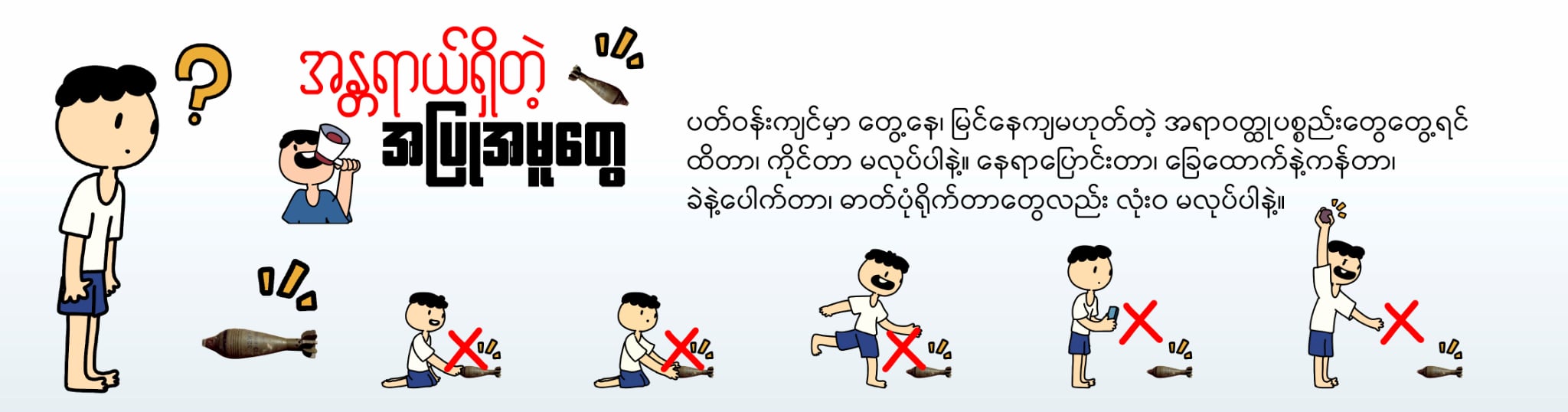
- Myanmar records more than five landmine, ERW casualties daily
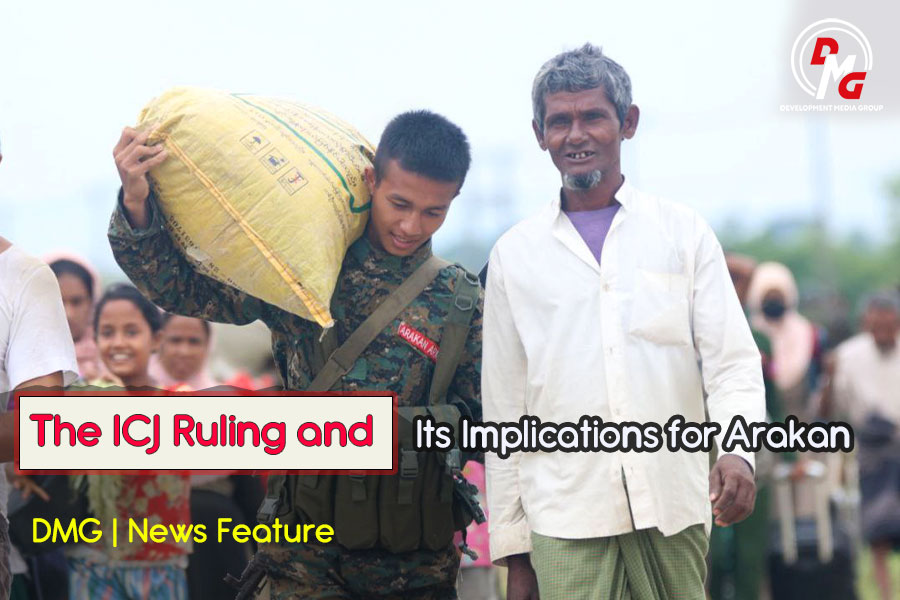
The ICJ Ruling and Its Implications for Arakan
Efforts to address the refugee crisis and implement measures arising from the ICJ judgment must therefore take into account the changing political and territorial realities on the ground, particularly the role of the ULA/AA.
26 Nov 2026
DMG | News Feature
The landmark genocide ruling presents significant challenges for Arakan but could also open opportunities for international engagement, inclusive governance and intercommunal reconciliation.
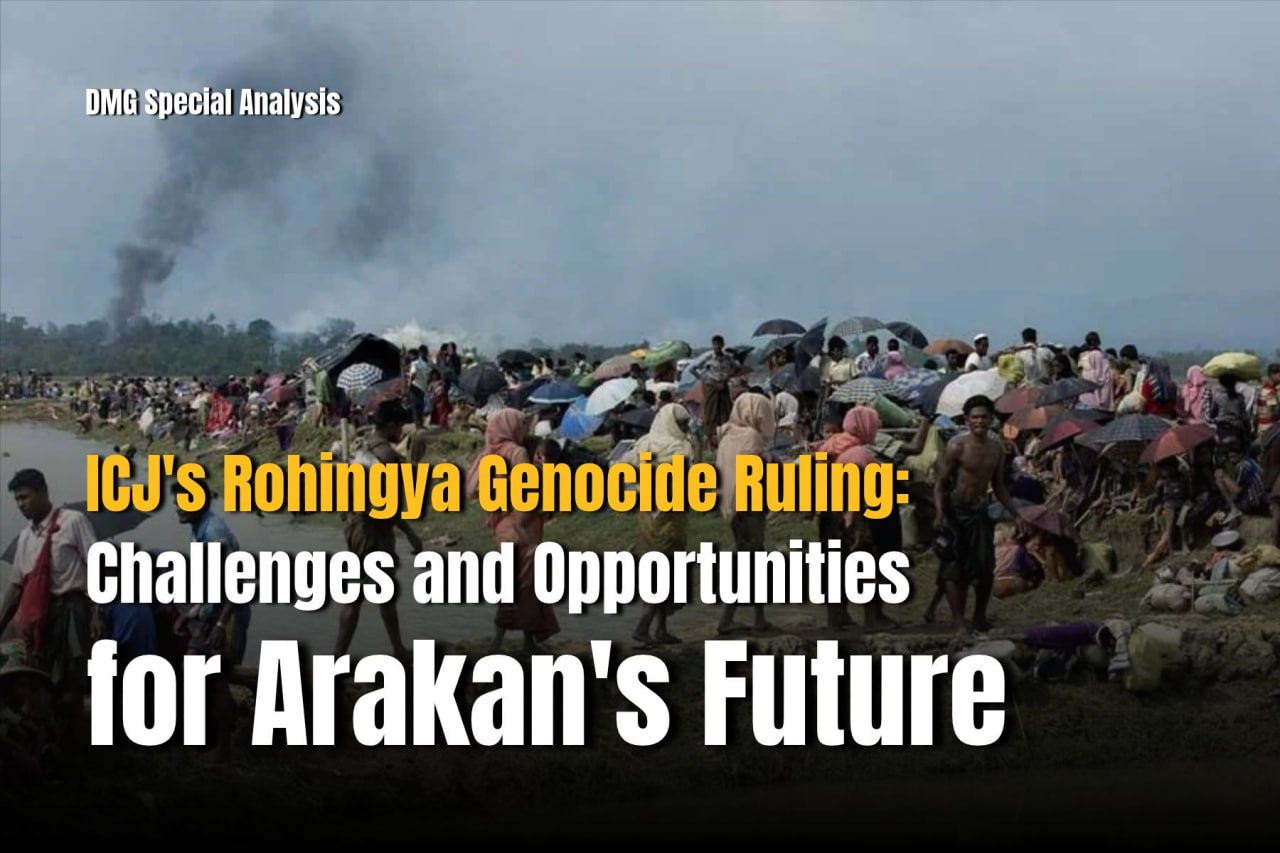
The International Court of Justice (ICJ) delivered a landmark judgment on November 19, 2026, finding that Myanmar committed genocide against the Rohingya during military operations in northern Arakan (Rakhine) State in 2017. The military campaign followed attacks by the Arakan Rohingya Salvation Army (ARSA) in August of that year.
While Myanmar bears legal responsibility for complying with the judgment, the role of the United League of Arakan/Arakan Army (ULA/AA), which now exercises de facto control over much of Arakan, has become increasingly important.
At the time of the 2017 crisis, Arakan was under the control of the Myanmar government and military. Today, however, the ULA/AA controls most of the region, including areas from which large numbers of Muslim (Rohingya) refugees fled to neighbouring Bangladesh.
Efforts to address the refugee crisis and implement measures arising from the ICJ judgment must therefore take into account the changing political and territorial realities on the ground, particularly the role of the ULA/AA.
The ICJ Ruling and Realities on the Ground
While the ICJ judgment establishes Myanmar’s responsibility under international law, some Muslims living in areas controlled by the ULA/AA say the military no longer has the administrative authority needed to address their concerns.
“This ruling has brought the military’s wrongdoing to light. But they cannot do anything for us here. This region is no longer under the military council’s administration, and the Muslims living here are no longer under its control. The organisation that can actually do something for us is the ULA/AA,” said U Aye Tun, a Muslim resident of Maungdaw who spoke under a pseudonym.
The court ordered Myanmar to address continuing violations of the Genocide Convention, enact appropriate legislation, investigate suspected perpetrators, and prosecute and punish those responsible where warranted.
Myanmar must also take measures to prevent future violations, provide guarantees of non-repetition and undertake reparations, including facilitating the safe, voluntary and dignified return of displaced Muslim/Rohingya and the reunification of separated families.
The court ordered compensation for harm that cannot be remedied through restitution. Myanmar must submit a report within two years to assist the court in determining the amount and arrangements for compensation and other reparations.
Myanmar’s legal obligations remain binding despite the military’s loss of territorial control over much of Arakan.
However, Myanmar’s military-backed administration has rejected the genocide finding. On November 26, Min Aung Hlaing said his administration would not comply with all the measures ordered by the court, further raising questions about the implementation of the judgment.
Meanwhile, fighting between Myanmar’s military, which seized power in February 2021, and the Arakan Army continues, leaving civilians exposed to the consequences of armed conflict.
Political observers warn that persistent insecurity and disruptions to civilian life could further complicate the implementation of the ICJ judgment.
“Even if arrangements are made for repatriation, the situation on the ground makes implementation difficult. There is ongoing fighting between the AA and the military. Under such circumstances, the military could argue that implementation is not yet possible because of the AA’s presence,” said political researcher Dr Sai Kyi Zin Soe.
He added that as long as armed conflict continues in Arakan, providing security guarantees for returning Muslims will remain difficult.
Should the military use the AA’s control of Buthidaung and Maungdaw as grounds for intensifying military pressure, implementation of the ICJ judgment could be delayed further, he said.
Political observers also point out that successive authorities’ attempts to exploit communal tensions for political gain have contributed to longstanding conflicts in Arakan, deepening mistrust between Muslim and ethnic Arakanese communities rather than fostering mutual understanding.
While the ICJ judgment specifically addresses genocide against the Muslim/Rohingya, the wider history of conflict in Arakan has also inflicted considerable suffering on ethnic Arakanese communities, including displacement, loss of life and property, and economic hardship. These conflicts have also damaged the region’s international image.
Basar, a Muslim member of an administrative advisory body in Maungdaw District, said communities were seeking to learn from past experiences and rebuild relations.
“The problems we experienced in the past were inflamed by people who wanted to exploit them for political gain and personal interests. Both communities suffered. We are learning from those experiences and trying to build the best possible future together,” he said.
Meanwhile, some ethnic Arakanese residents have long expressed concerns about possible territorial and demographic changes associated with the refugee issue. Following the ICJ judgment, some also fear that mounting international pressure could contribute to renewed communal tensions.
Implications of the ICJ Ruling for Arakan
Political analysts emphasise the importance of recognising that the ICJ judgment concerns Myanmar’s responsibility under the Genocide Convention for atrocities committed during past military operations.
U Myo Kyaw, general secretary of the Arakan League for Democracy (ALD), said the judgment should be approached constructively rather than simply rejected.
“Rather than rejecting this issue outright, I believe we need to engage in discussions with international legal experts and other specialists about how to address it in a way that serves the interests of the people of Arakan and contributes to, rather than obstructs, the rebuilding of Arakan,” he said.
The judgment could also draw greater international attention to the ULA/AA’s territorial control, governance institutions and treatment of communities living under its administration.
Although the ULA/AA is not a party to the ICJ proceedings, its policies and practices will be important in shaping the conditions under which displaced communities could safely return and have their grievances addressed.
In particular, the ULA’s policies concerning the rights, security and welfare of Muslim communities will be relevant to efforts to address the consequences of displacement and facilitate repatriation.
“International engagement with the AA could be influenced by the extent to which the ULA/AA develops administrative institutions and legal mechanisms capable of protecting the rights of Rohingya within its territory and providing remedies for the harm they have suffered,” Dr Sai Kyi Zin Soe said.
He noted that clearly articulating policies concerning the rights of Muslims could create opportunities for the ULA/AA to establish constructive relations with the international community while contributing to Arakan’s future development.
As the ULA/AA continues to establish administrative and judicial institutions, it will also need to demonstrate respect for the rule of law. Should public unrest arise, its leadership will need to facilitate dialogue and peaceful dispute resolution to prevent tensions from escalating into communal violence.
Responding to the ICJ judgment, ULA/AA spokesperson U Khaing Thukha said: “We are monitoring developments and will stand on the side of truth and justice while taking appropriate and necessary measures in the interests of Arakan.”
As part of its stated efforts to promote social harmony and recognise diversity, the ULA has provided opportunities for Muslims to participate in administrative departments, district- and township-level institutions, and the security sector.
U Aye Tun, the Muslim resident of Maungdaw, said some Muslims viewed the ULA’s initiatives positively. He expressed confidence that communities could work together to overcome difficulties arising from the ongoing conflict.
“The ULA is now giving Muslims opportunities to participate and work together. Many Muslims are serving in armed forces, and others are working in civilian administrative departments. They have also been given positions at township and district levels.
“That is why we believe the way forward is to continue working with the ULA. The military council cannot do anything for us. It has no authority to make decisions here in Arakan,” he said.
Opportunities Amid Challenges
The implications of the ICJ judgment extend beyond Myanmar’s borders, involving neighbouring Bangladesh, which hosts large numbers of Rohingya refugees, as well as China and India, both of which have substantial strategic and economic interests in Arakan.
Arakan’s regional importance is reinforced by its cross-border trade with Bangladesh, India’s Kaladan Multi-Modal Transit Transport Project, the China-backed Shwe natural gas project, oil and gas pipelines, and the Kyaukphyu Special Economic Zone (SEZ).
These economic and geopolitical interests have already drawn international attention to Arakan’s military, political and diplomatic developments, as well as the ULA’s efforts to establish governance institutions and shape the region’s future.
U Myo Kyaw believes the international attention generated by the ICJ judgment could also create diplomatic opportunities for the ULA/AA.
“The emergence of this issue could, in a sense, bring the ULA administration governing Arakan onto the international stage as an indirect consequence.
“Since the international community is interested in this issue, if we can manage it effectively through diplomatic engagement, a human rights-based approach and consideration of our national interests, I believe we could move beyond our current position on the ground and gain a presence on the international stage in the not-too-distant future. That could bring benefits,” he said.
U Myo Kyaw also cautioned that both communities should approach the judgment carefully to ensure that international pressure for accountability remains focused on the Myanmar military’s responsibility for the atrocities addressed by the court.
At the same time, the ULA/AA’s own governance practices, particularly its protection of human rights and treatment of Muslim communities, are likely to influence its future relations with the international community.
By developing clear policies concerning the rights of Muslim communities and engaging constructively with international stakeholders, the ULA/AA could create opportunities for diplomatic and political engagement, as well as international support for regional governance and institutional development.
Such engagement, however, would not necessarily amount to formal international recognition of the ULA administration.
Ultimately, although the ICJ judgment presents significant challenges for Arakan, political researchers believe it could also offer a timely opportunity to lay the foundations for a more inclusive, peaceful and stable future.
Realising that opportunity will depend on whether the Arakanese and Muslim communities, together with the ULA/AA, can address longstanding grievances and emerging challenges through mutual understanding, trust, respect for human rights and adherence to international standards.
For Arakan, the challenge is not only to confront the legacy of past atrocities but also to build a future in which the rights, security and dignity of all communities are protected.

Top News
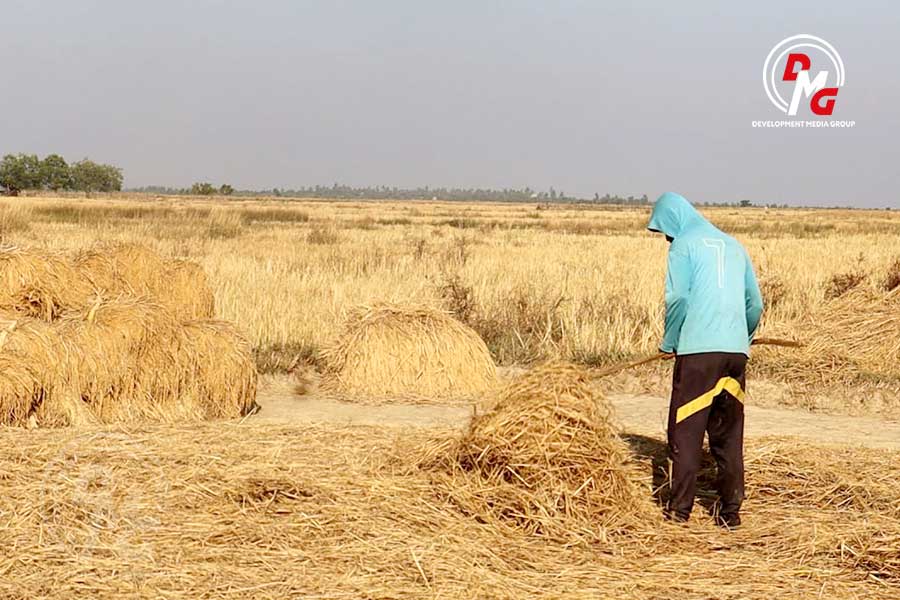
Arakan farmers risk their lives to harvest paddy amid airstrike fears
By Admin 26 Nov 2026
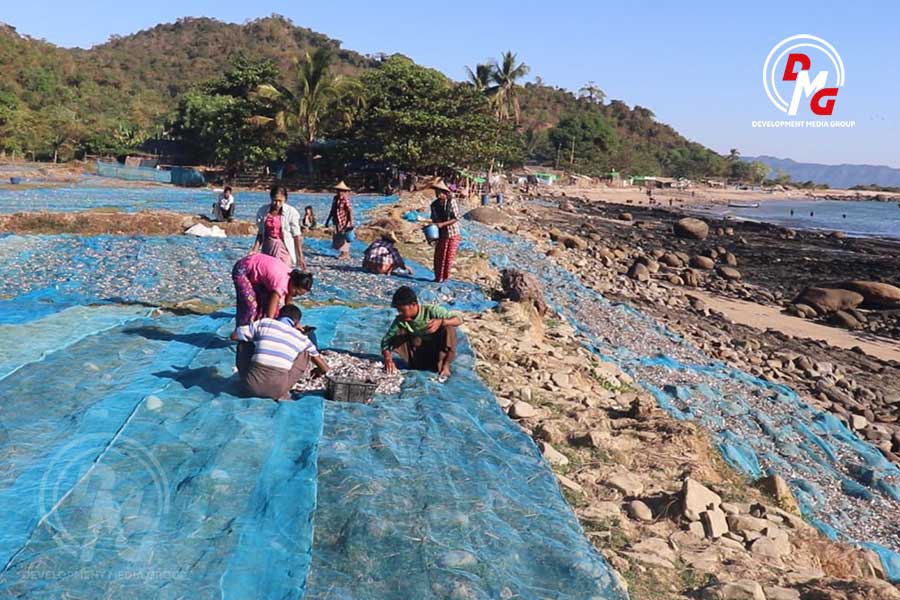
Myanmar Navy threats leave Arakan fishing industry on the brink of collapse
By Admin 26 Nov 2026
ULA pledges greater support for ethnic communities in Arakan
By Admin 26 Nov 2026
ULA health department plans cholera vaccination campaign in seven townships
By Admin 25 Nov 2026
Junta sends reinforcements to fiercely contested Sittwe-Ponnagyun front
By Admin 25 Nov 2026