

- Local businesses expand in Arakan despite supply and security challenges
- Junta airstrike kills pregnant woman, injures 12 in Mrauk-U village
- Road closure, fighting deepen livelihood crisis in Taungup mountain villages
- ULA health department urges Arakan residents to prepare for El Niño
- Junta bombs former displacement sites in Ponnagyun
Will International Condemnation of War Crimes Ever Lead to Justice?
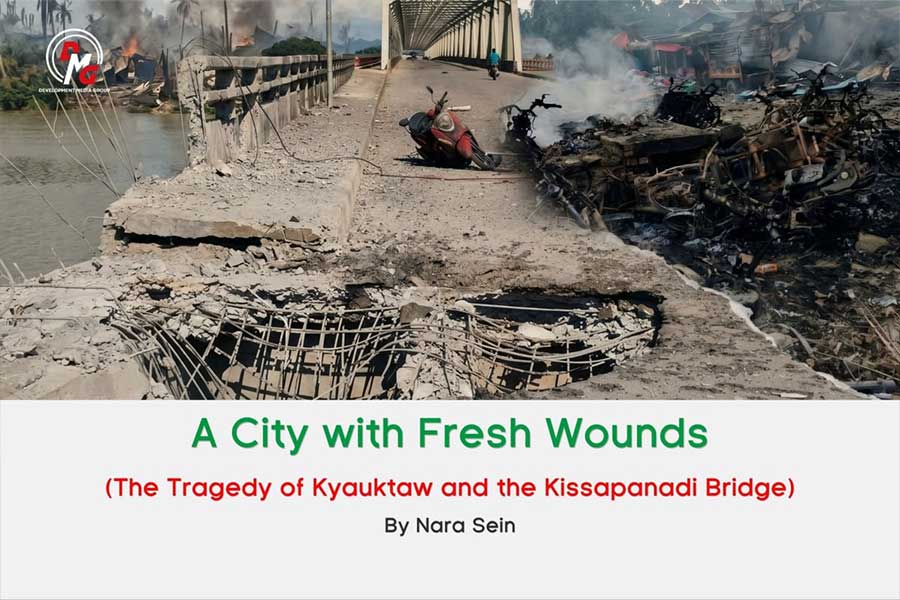
On September 28, 2026, Myanmar's military reportedly carried out an airstrike near India Market and the Kissapanadi Bridge in Kyauktaw Township, Arakan (Rakhine) State, killing at least 50 people and injuring 58 others.
30 Oct 2026
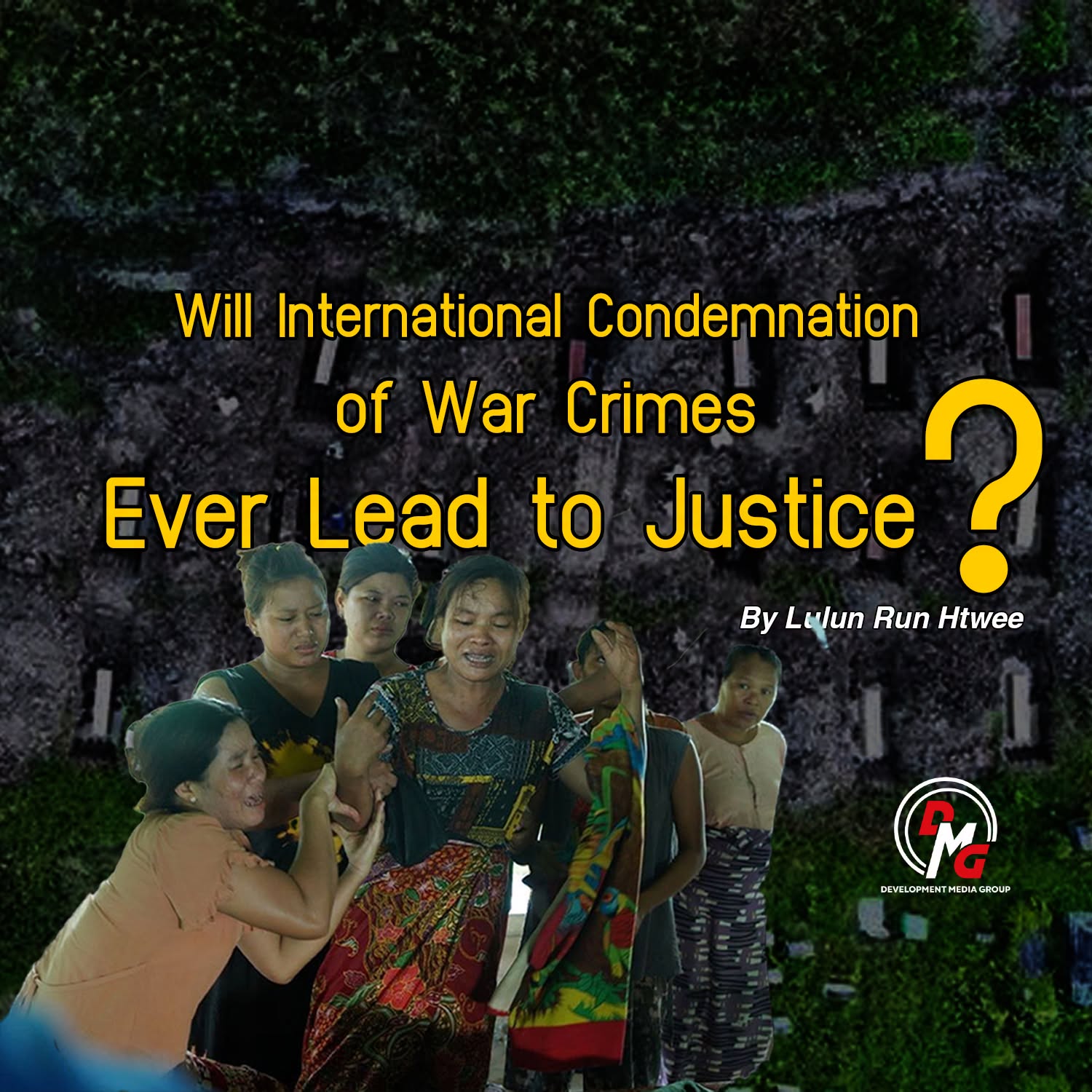
By Lulun Run Htwee
On September 28, 2026, Myanmar's military reportedly carried out an airstrike near India Market and the Kissapanadi Bridge in Kyauktaw Township, Arakan (Rakhine) State, killing at least 50 people and injuring 58 others.
The attack struck a busy commercial area serving people from different ethnic and religious communities, including Rakhine, Muslim, Hindu, and other residents. Many of the victims were women and children, along with market vendors, shoppers, transport workers, and passersby. Nearby shops and infrastructure, including the bridge, were also damaged.
The attack raised serious concerns about the military's compliance with international humanitarian law, particularly the obligation to distinguish civilians from military objectives and take precautions to minimize civilian harm.
UN High Commissioner for Human Rights Volker Türk condemned the attack, while the Independent Investigative Mechanism for Myanmar (IIMM) appealed for information from witnesses and others with direct knowledge of the incident.
Yet the response raises a familiar and increasingly urgent question: How many more civilians must die before international condemnation translates into meaningful action?
For the people of Arakan, this is not simply a debate about international institutions. It is a question of survival, protection, and justice.
A Growing Record of Civilian Suffering
Since Myanmar's military seized power in February 2021, armed resistance has spread across much of the country. In its campaigns against ethnic armed organizations and other resistance forces, the military has increasingly relied on airstrikes, artillery bombardment, naval operations, and drones.
Civilian communities have borne much of the suffering. Reports of village burnings, arbitrary arrests, killings, displacement, and restrictions on humanitarian assistance have become recurring features of the conflict.
According to ISP-Myanmar, an independent research organization, the military conducted at least 1,583 airstrikes nationwide between March 31 and August 31, 2026. Arakan State, Chin State, Sagaing Region, and Magway Region were among the areas facing the greatest risks from aerial attacks.
The Kyauktaw market bombing was not an isolated tragedy.
In Arakan, civilians have suffered through numerous deadly incidents, including the reported mass killings in Byine Phyu village, an airstrike on a school in Thayat Tapin village in Kyauktaw Township in September 2025, and the bombing of Mrauk-U Hospital in December that year.
The hospital attack reportedly killed and injured patients, medical personnel, and caregivers. Medical facilities enjoy special protection under international humanitarian law, making an independent investigation into the circumstances of the attack essential.
There have also been reports of casualties from airstrikes on detention facilities holding captured combatants in Ann, Kyauktaw, and Maungdaw townships. People who have surrendered, been captured, or otherwise ceased participating in hostilities must be treated humanely and protected from attack.
These incidents have left lasting scars on communities already struggling with displacement, economic hardship, and restricted access to essential services.
They also reveal a disturbing pattern: civilian suffering continues, international condemnation follows, but meaningful accountability remains elusive.
International Law Is Clear. Enforcement Is Not.
Myanmar is a party to the four Geneva Conventions of 1949. Although it has not ratified Additional Protocol II, which addresses certain non-international armed conflicts, it remains bound by Common Article 3 and applicable customary international humanitarian law.
Three fundamental principles govern the conduct of hostilities.
The principle of distinction requires parties to differentiate between civilians and combatants, and between civilian objects and military objectives.
The principle of proportionality prohibits attacks expected to cause incidental civilian harm that would be excessive in relation to the concrete and direct military advantage anticipated.
The principle of precaution requires parties to take all feasible measures to avoid or minimize civilian casualties and damage to civilian property.
These obligations apply to all parties to an armed conflict, regardless of their political objectives or territorial control.
An attack that causes civilian casualties is not automatically a war crime. Determining criminal responsibility requires an assessment of the target, the information available to those planning or carrying out the attack, the precautions taken, and other relevant circumstances.
Nevertheless, repeated attacks affecting markets, schools, hospitals, and residential communities warrant rigorous and independent investigation.
Where sufficient evidence establishes that war crimes have been committed, those responsible, including individuals who ordered or directed unlawful attacks, should face appropriate legal proceedings.
The difficulty is not that international law lacks standards for protecting civilians.
The deeper problem is the persistent gap between the international community's stated commitment to justice and its ability to enforce that commitment.
The United Nations and the Limits of Veto Power
The effectiveness of the United Nations has long been questioned, particularly when the Security Council struggles to respond to conflicts involving the interests of powerful states.
Under the UN Charter, the five permanent members of the Security Council, China, France, Russia, the United Kingdom, and the United States, possess veto power over substantive resolutions.
This arrangement can prevent collective action even when serious international crimes are alleged and urgent measures are needed to protect civilians.
Calls for reform have continued at successive UN General Assembly sessions. Leaders from countries including Barbados and Türkiye have criticized aspects of the international system and argued for more representative and effective global institutions.
The debate is not new.
In 2009, Libya's then-leader Muammar Gaddafi delivered a controversial address to the UN General Assembly, sharply criticizing the concentration of power within the Security Council and the privileged position of its permanent members.
Recognizing the institutional concerns raised in that speech does not imply approval of Gaddafi's authoritarian rule or political record.
The broader issue remains relevant: international decisions affecting millions of people can be shaped or obstructed by the strategic interests of a handful of powerful governments.
For countries experiencing armed conflict, this imbalance has consequences far beyond diplomatic disagreements.
It can influence whether atrocities are investigated, whether meaningful pressure is applied, and whether international mechanisms receive the political support necessary to function.
The Security Council is not the only avenue for international action. Other UN bodies, national courts, regional institutions, and individual governments can also contribute to accountability and civilian protection.
Nevertheless, the inability of the Council to act decisively in some of the world's most serious crises continues to undermine confidence in the international system.
The credibility of the United Nations should be judged not only by the principles it upholds but also by its ability to help protect people whose lives are at risk.
Lessons from Syria, Vietnam, and Dresden
History offers sobering reminders of the human consequences of aerial warfare.
During the Syrian conflict, attacks by multiple parties, including Syrian government forces and their Russian allies, caused extensive civilian suffering.
The UN Human Rights Office estimated that 306,887 civilians were killed as a direct result of the conflict between March 2011 and March 2021.
During the Vietnam War, large-scale bombing campaigns by the United States and its allies devastated communities across Vietnam and had lasting consequences in neighboring Laos and Cambodia.
The Allied bombing of Dresden, Germany, in February 1945, also resulted in extensive destruction and an estimated 25,000 deaths.
These conflicts differed substantially in their causes, scale, military circumstances, and applicable legal frameworks. They should not be treated as equivalent to the present conflict in Arakan.
Their relevance lies in a broader historical lesson: when civilian protection is neglected, the human consequences of warfare can extend far beyond the battlefield and persist for generations.
Arakan's present circumstances are different, but the danger to civilians is unmistakable.
Airstrikes threaten lives, destroy homes and livelihoods, disrupt healthcare and education, and deepen an already severe humanitarian crisis.
The international community should not wait for further devastation before strengthening measures to protect civilians and support credible accountability efforts.
History should inform prevention, not merely provide examples of tragedies recognized too late.
The ICC, Political Pressure, and the Challenge of Accountability
The International Criminal Court (ICC) represents an important effort to ensure that individuals responsible for the gravest international crimes can face prosecution.
Yet the court also illustrates the political and practical limitations of international justice.
On February 6, 2025, the United States issued Executive Order 14203, establishing sanctions against certain individuals associated with ICC activities. Additional measures followed in 2025 and 2026.
These actions have raised concerns about political pressure on international judicial institutions and the broader consequences for judicial independence.
The ICC can investigate and prosecute genocide, crimes against humanity, war crimes, and the crime of aggression within the limits of its jurisdiction.
However, it does not possess a police force and depends heavily on cooperation from states to arrest suspects and enforce judicial decisions.
Its jurisdiction is also subject to legal conditions, meaning that not every alleged international crime automatically falls within the court's authority.
The IIMM has a different role. Established by the UN Human Rights Council, it collects, preserves, and analyzes evidence of serious international crimes committed in Myanmar and prepares material for use in relevant criminal proceedings.
Unlike a criminal court, the IIMM cannot issue arrest warrants, conduct trials, or impose sentences.
This distinction is crucial.
Evidence collection is essential, but evidence alone does not deliver justice. Accountability also requires courts with jurisdiction, effective investigations and prosecutions, cooperation from governments, and mechanisms capable of enforcing judicial decisions.
For the people of Myanmar, including communities in Arakan, these obstacles make justice a difficult and potentially lengthy process.
But institutional limitations should not be accepted as reasons for abandoning accountability.
Instead, they demonstrate the need for sustained international cooperation, stronger judicial mechanisms, and greater political commitment.
Beyond Condemnation: The Responsibility to Act
The people killed in the Kyauktaw market attack were not merely figures in a casualty report.
They were traders supporting their families, workers earning their daily wages, shoppers, mothers, children, and ordinary people going about their lives.
Their deaths have consequences that extend far beyond the immediate tragedy. Families lose breadwinners, children lose parents, and entire communities experience fear, displacement, and uncertainty.
The people of Arakan deserve the same protection, dignity, and access to justice as civilians anywhere else in the world.
Their suffering should not be treated as an unavoidable consequence of a distant conflict.
Statements of condemnation are important. They can draw international attention to violations, establish a public record of concern, and reinforce the legal and moral obligations of those involved.
But condemnation cannot substitute for practical measures.
The United Nations, governments, and international institutions should intensify efforts to protect civilians, facilitate humanitarian access, preserve evidence of serious violations, and support credible legal proceedings against those responsible.
Such measures should include sustained diplomatic engagement, appropriate legal and political pressure, cooperation with investigative mechanisms, and support for justice processes capable of addressing serious international crimes.
Civilian protection must also remain an immediate priority. Justice delivered years after an atrocity, while important, cannot restore the lives already lost.
Accountability and prevention should therefore reinforce one another.
For communities in Arakan, the consequences of international inaction are not theoretical. Every additional attack risks destroying more families, displacing more communities, and depriving more children of their futures.
Justice cannot end with a statement of condemnation. It must be reflected in credible investigations, meaningful accountability, and concrete efforts to prevent further harm to civilians.
The people of Arakan are asking a question that the international community can no longer afford to treat as rhetorical.
Will the world's response to possible war crimes remain limited to expressions of outrage, or will governments and international institutions demonstrate the commitment necessary to protect civilians and deliver justice?

Opinion
The Journey of Arakanese Language Education
By Admin 03 Nov 2026
Can the UN Restore Trust in a Fractured World?
By Admin 23 Oct 2026
Arakan Amid the Storm: From Survival to Rebuilding a People
By Admin 22 Oct 2026
Surviving Amid the Bombs: Arakan's Quiet Resistance
By Admin 19 Oct 2026
Shadows Over Childhood: Confronting the Reality of Missing Children
By Admin 16 Oct 2026
A City with Fresh Wounds (The Tragedy of Kyauktaw and the Kissapanadi Bridge)
By Admin 01 Oct 2026
POLITICS

BUSINESS
Industry to manufacture finished goods from coconut starting in early 2020
By Aung Kaung Zaw 20 Nov 2019