
- 92 groups urge Canada to expand sanctions on Myanmar oil and gas sector
- Junta bombing of Ponnagyun IDP shelter injures three civilians
- UN investigators seek evidence on deadly Kyauktaw airstrike as attacks continue across Arakan
- Myanmar military continues airstrikes across Arakan after deadly Kyauktaw attack
- ISP-Myanmar reports at least 115 mass civilian killing incidents across Myanmar
Arakan airstrike survivors struggle to continue medical treatment
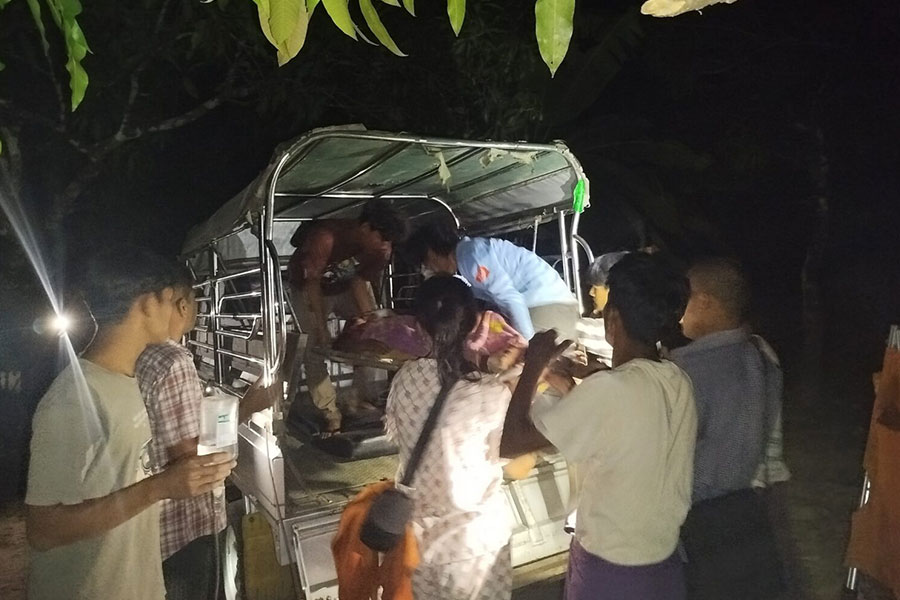
Civilians injured in junta airstrikes on villages in Arakan State controlled by the Arakan Army are struggling to continue medical treatment as financial assistance runs out.
06 Jul 2026
DMG Newsroom
6 July 2026, Ponnagyun
Civilians injured in junta airstrikes on villages in Arakan State controlled by the Arakan Army are struggling to continue medical treatment as financial assistance runs out.
The United League of Arakan (ULA) and aid organizations initially provided free medical treatment and financial support to those injured in the attacks. However, many victims who require long-term care say they are no longer receiving assistance and cannot afford the cost of follow-up treatment.
“At first, we received support for medical treatment from aid organizations. Now we have been discharged from hospital, but we still need regular checkups. We have to visit the hospital once every two weeks, but we cannot afford the travel costs. We live hand to mouth, so eventually we had to stop going to the hospital,” said Daw Moe Moe Chay.
Daw Moe Moe Chay and her family, originally from Ponnagyun town, had been sheltering in Aungphyupyin Village after being displaced by fighting.
A junta airstrike on Aungphyupyin Village on March 25, 2025, killed four displaced civilians and injured at least 10 others. Daw Moe Moe Chay lost both of her parents and an older brother in the attack, while she sustained injuries to her legs and body.
Although doctors instructed her to return for monthly follow-up treatment, she said she can no longer afford the transportation costs.
Ko Khaing Kyaw Htay from Yoengu Village in Ponnagyun Township said travel expenses have become the biggest obstacle to continuing treatment.
“A hospital visit costs around K400,000. At least one caregiver has to accompany the patient. Hiring a three-wheeled motorbike costs more than K100,000 per person, so the total expense can exceed K300,000. We simply cannot afford it,” he said.
Ko Khaing Kyaw Htay suffered injuries to his left leg and body during a junta airstrike on Yoengu Village on February 24, 2026, which killed 18 people and injured more than 10 others.
Although treatment at ULA hospitals was initially provided free of charge, patients were discharged once their condition stabilised because of security concerns. Many now have to travel every two weeks or once a month for follow-up treatment, but many say they cannot afford the journey because hospitals and clinics are located far from their homes.
Across Arakan State, civilians injured in junta airstrikes and artillery attacks continue to require long-term medical care, with affected families calling on the ULA and humanitarian organisations for additional assistance.
The junta has continued to carry out airstrikes on schools, monasteries, hospitals and civilian homes across Arakan State, resulting in rising civilian casualties and widespread destruction.

Top News
92 groups urge Canada to expand sanctions on Myanmar oil and gas sector
By Admin 02 Oct 2026
Junta bombing of Ponnagyun IDP shelter injures three civilians
By Admin 02 Oct 2026
Myanmar military continues airstrikes across Arakan after deadly Kyauktaw attack
By Admin 02 Oct 2026
ISP-Myanmar reports at least 115 mass civilian killing incidents across Myanmar
By Admin 01 Oct 2026