

- Arakan Army captures junta outposts as fighting intensifies near Sittwe
- Pro-junta ALP chair says NCA can shape Arakan’s future
- Extreme heat drives rise in clinic visits across Arakan
- Junta airstrikes on Ponnagyun IDP camps kill 15 civilians, injure 30: AAPP
- Myanmar junta airstrikes kill 163 civilians in September, Arakan hardest hit: MDSI
ISP-Myanmar warns junta offensives may escalate over China, India linked projects
Military campaigns in Myanmar could intensify as the junta seeks to regain control of strategic trade routes and infrastructure areas linked to major Chinese and Indian investment projects, the Institute for Strategy and Policy Myanmar (ISP-Myanmar) said in a report released Tuesday.
30 Jun 2026
DMG Newsroom
30 June 2026, Yangon
Military campaigns in Myanmar could intensify as the junta seeks to regain control of strategic trade routes and infrastructure areas linked to major Chinese and Indian investment projects, the Institute for Strategy and Policy Myanmar (ISP-Myanmar) said in a report released Tuesday.
The policy brief, published on June 29, followed recent diplomatic visits by Myanmar’s self-appointed President Min Aung Hlaing to China and India.
ISP-Myanmar said the junta’s efforts to secure foreign investment projects and border trade routes could lead to expanded military operations aimed at regaining control over areas currently held by resistance forces.
"Beijing and New Delhi maintain relations with Myanmar mainly based on economic and geopolitical interests," an analyst monitoring regional projects said. "Although Min Aung Hlaing made commitments during his visits, many project areas are currently under the control of revolutionary forces, creating pressure for further military operations."
The report said the Arakan Army and allied resistance groups currently control large areas linked to major infrastructure projects, including the India-Myanmar-Thailand Trilateral Highway and the Kaladan Multi-Modal Transit Transport Project.
Chin resistance groups also control Rikhawdar, a key border trade area connected to India, while the Kachin Independence Army (KIA) controls rare earth mining areas near the Chinese border in northern Kachin State.
ISP-Myanmar said the junta is attempting to establish a strategic connection between Arakan and Chin states with frontline areas in Sagaing and Magway regions, while also seeking to stabilize northern Shan State to reopen cross border trade.
The think tank warned that these efforts could contribute to increased fighting across northern, western, and central Myanmar.
A report by the London based Economist Intelligence Unit (EIU) also indicated that the junta may use its relationship with Beijing to increase political and economic pressure on resistance forces.
"Heavy fighting remains concentrated around major Chinese and Indian project areas in Arakan State, particularly Sittwe and Kyaukphyu," an Arakanese political figure said.
The official added that control of these coastal areas has become strategically important for both the Arakan Army and the regime.
ISP-Myanmar recommended that India expand its engagement beyond the junta and establish communication channels with resistance groups that currently exercise administrative control in some areas.
The think tank also described China’s approach to Myanmar as focusing on reducing battlefield tensions, supporting a transition away from direct military rule through state managed elections, and maintaining a role as a key mediator after elections.

Top News
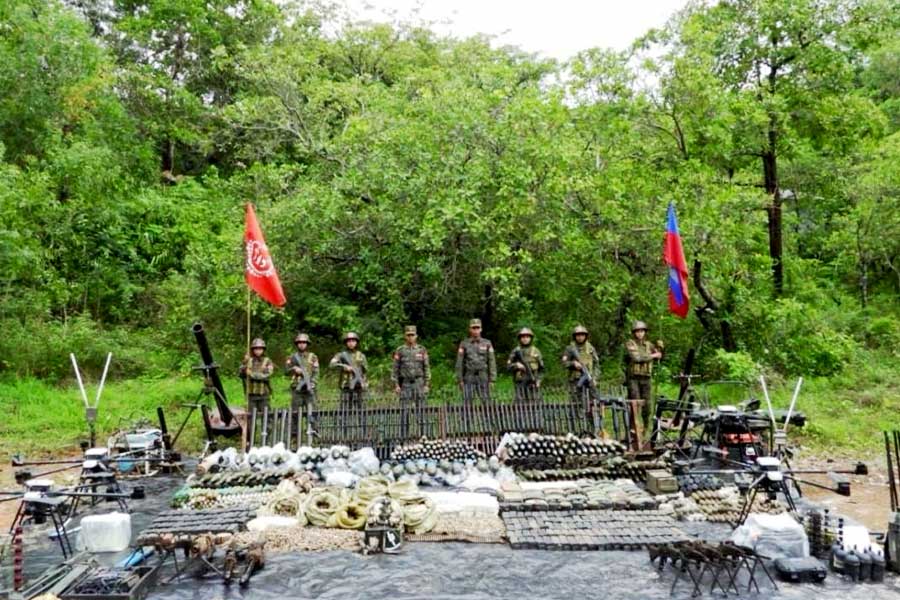
Arakan Army captures junta outposts as fighting intensifies near Sittwe
By Admin 15 Oct 2026

Pro-junta ALP chair says NCA can shape Arakan’s future
By Admin 15 Oct 2026

Extreme heat drives rise in clinic visits across Arakan
By Admin 15 Oct 2026

Cash withdrawal fees soar across Arakan State as trade with India slows
By Admin 14 Oct 2026
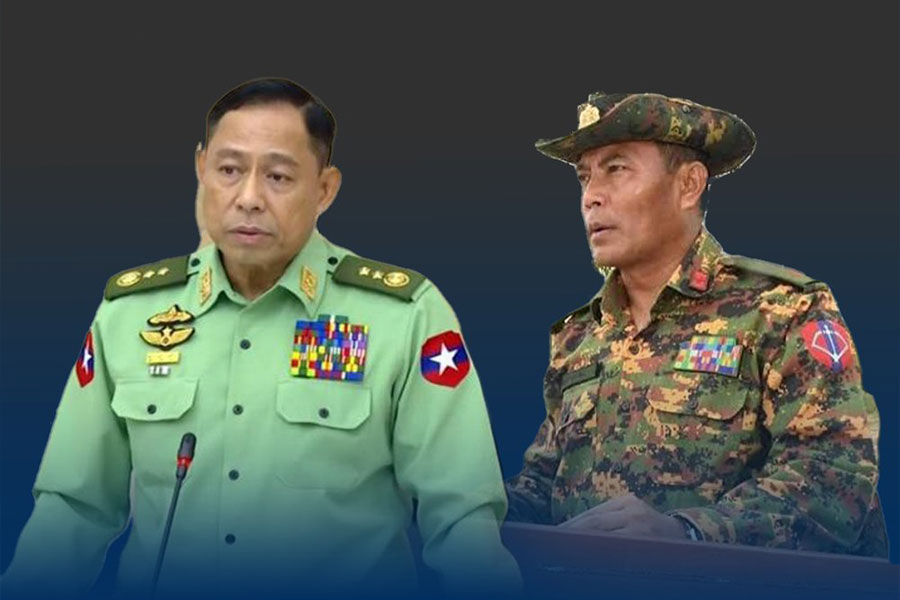
Military reshuffle may prolong junta rule and intensify war, analysts warn
By Admin 14 Oct 2026