

- Begging rises in junta-held Sittwe as commodity prices soar and livelihoods deteriorate
- Maternal, newborn deaths reported across Arakan amid healthcare shortages
- Junta attacks kill 15 women in Arakan, 49 nationwide in October: BWU
- Extreme heat, water shortages damage paddy fields across Arakan
- Junta airstrikes kill 145 civilians, injure 316 in October: MDSI
Seed shortages, rising input costs hit Arakan’s winter crop farmers
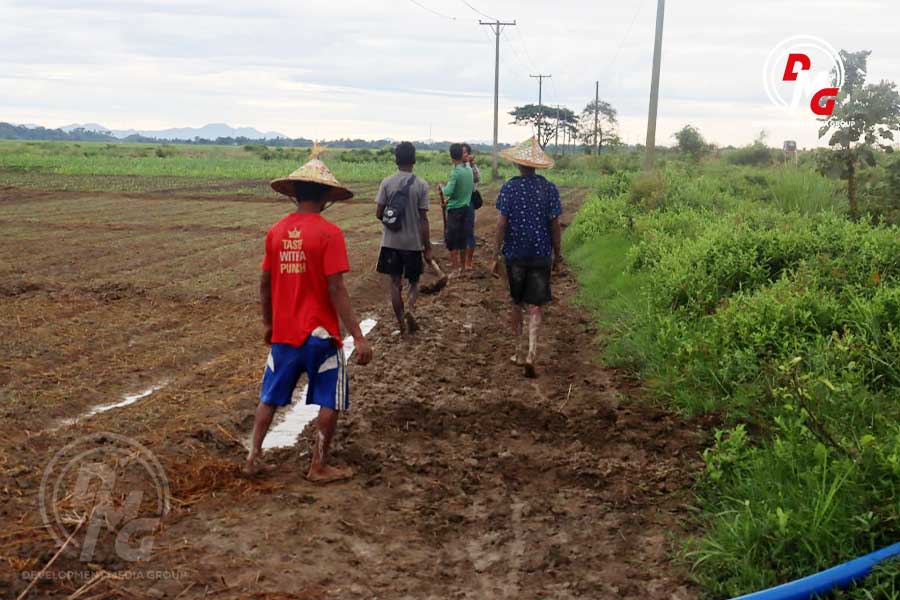
Farmers cultivating winter crops in Arakan State are facing severe seed shortages and soaring agricultural input costs amid transportation blockades and rising commodity prices, according to local sources.
12 Nov 2026
DMG Newsroom
12 November 2026, Mrauk-U
Farmers cultivating winter crops in Arakan State are facing severe seed shortages and soaring agricultural input costs amid transportation blockades and rising commodity prices, according to local sources.
Although farmers across Arakan State are striving to sustain agricultural production and support regional food security, shortages of seeds and the high cost of farming inputs are making cultivation increasingly difficult.
"Seeds are scarce, so we have to search locally for whatever seeds are available for planting. Because these seeds are not specially produced for cultivation and must be bought from ordinary markets, their germination rate is only around 60 percent," U Aung Thu, a winter crop farmer from Wimala Ward in Mrauk-U town, told DMG.
In previous years, farmers obtained seeds from mainland Myanmar, including Yangon, Mandalay, Sagaing and Magway regions. They are now forced to rely mainly on locally available seeds.
Before the outbreak of fighting, winter crops produced in Arakan State, including corn, onions, eggplants, chili peppers, potatoes and various beans, fetched good prices because they could be transported to mainland markets and exported abroad.
However, ongoing transportation blockades have restricted access to outside markets, leaving farmers increasingly dependent on local consumers to sell their produce.
Farmers said the germination rates of locally available seeds for crops such as beans, eggplants and chili peppers are currently around 60 percent, affecting the success of cultivation.
U Noe Ko Maw from Nagayar Pauktaw Village in Anjanapura Township said: "Previously, potatoes fetched good prices, selling for over K100,000 per sack. Now, because the military junta has blocked the roads, farming is very difficult. Still, we keep working the land hoping to provide food for our children and pay off small portions of our debts."
Agricultural observers said rising fertilizer prices, labour shortages, high plowing costs and limited markets for winter crops are contributing to a decline in the total acreage under cultivation across Arakan State.
Fertilizers used in Arakan State are currently sourced mainly from India and Bangladesh.
Before the conflict, a sack of chemical fertilizer cost less than K100,000. Prices have since risen to between K280,000 and K400,000 per sack, with some costing even more, according to local farmers.
As a result, winter crop farmers have been forced to reduce fertilizer use to around one-third of their usual amounts.
Low rainfall this year has also contributed to pest infestations damaging winter crops, increasing the need for pesticides.
"There is an urgent need for pesticides. Developing chili peppers are dropping off the plants, and pests are destroying eggplant crops. The pesticides we managed to buy are no longer effective enough. We urgently need proper pesticides to solve this," said U Oo Mya Kyaw, a farmer from Letma Zeegone Village in Anjanapura Township.
Alongside fertilizer shortages, winter crop farmers are struggling with soaring pesticide prices. Pesticides that previously cost around K2,000 per bottle are now selling for K30,000 to more than K40,000, farmers said.
Farmers also reported crop damage and water shortages amid unusually hot and dry weather conditions this year, which they associate with the El Niño phenomenon. They expect lower yields from both food and cash crops.
"Winter crops this year differ significantly from previous years. Many plants are failing to thrive. I am not entirely sure if it is due to soil and water conditions, but plant mortality is high and blossoms are dropping off. Last year's weather was normal, but conditions this year are unfavorable," U Oo Mya Kyaw added.
In local markets across Arakan State, green chili peppers are currently selling for around K40,000 per viss, while eggplants, onions and string beans are priced at more than K10,000 per viss.
Arakan State has more than 1.2 million acres of arable farmland, of which over 540,000 acres were previously used for winter crop cultivation. However, only about 40 percent of that acreage is currently being cultivated, according to observers monitoring the state's agricultural sector.
As agriculture directly supports Arakan State's economy, local farmers are urging the Arakan People's Revolutionary Government (APRG) to provide assistance to winter crop growers.

Top News
Arakanese IDP shot dead by junta troops in Laymyethna
By Admin 12 Nov 2026
Seed shortages, rising input costs hit Arakan’s winter crop farmers
By Admin 12 Nov 2026
Maternal, newborn deaths reported across Arakan amid healthcare shortages
By Admin 12 Nov 2026
APRG sets 9-kg standard for paddy baskets in Arakan
By Admin 11 Nov 2026