

Commodity prices surge in Arakan State as regime blocks Saw trade route
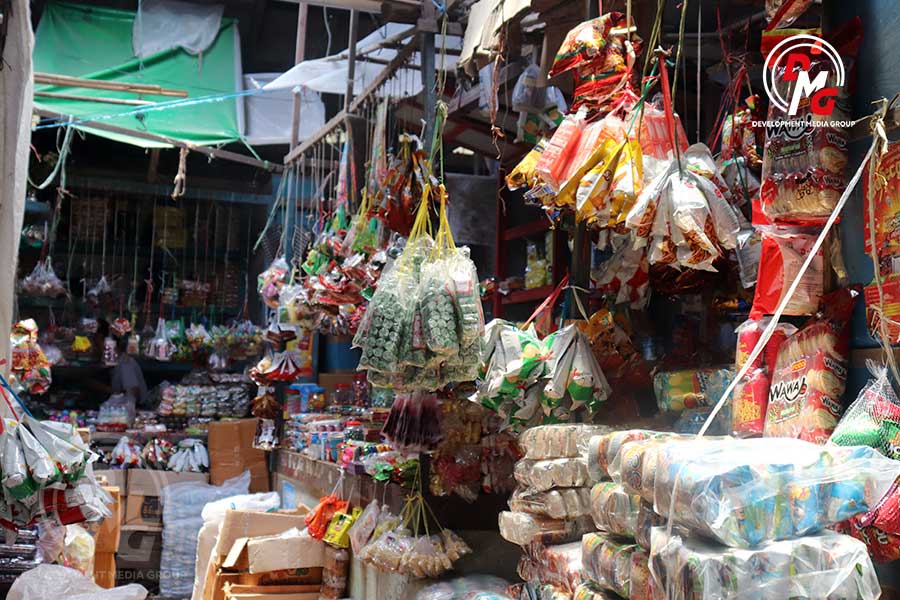
Basic commodities flowing from mainland Myanmar into Arakan State are facing severe shortages and rising prices after the regime blocked the key trade route in Magway Region’s Saw Township amid ongoing clashes.
25 May 2026
DMG Newsroom
25 May 2026, Kyauktaw
Basic commodities flowing from mainland Myanmar into Arakan State are facing severe shortages and rising prices after the regime blocked the key trade route in Magway Region’s Saw Township amid ongoing clashes.
Since late April, junta forces have deployed troops and imposed blockades in Saw Town and Kangyi Village along the Arakan-Magway trade corridor, effectively cutting off trade along the Arakan-Saw route.
As a result, prices of mainland goods have surged sharply. A pack of Blue sanitary pads has increased from K24,000 to K35,000. A carton of Shwe Wah soap has risen from K180,000 to K240,000, while Carbolic soap prices climbed from K147,000 to K180,000 per carton. A bundle of Bago Mya cheroot leaves has also jumped from K3,500 to K7,500.
Essential medicines are also becoming more expensive. A strip of Secif birth control pills has risen from K6,000 to K8,000. A bottle of Htet Lin increased from K3,000 to K4,000, while Maha Phyay climbed from K4,000 to K5,000 per bottle. A strip of Vitahome has also risen from K4,000 to K5,000.
“Wholesale carton prices in Kyauktaw have risen by tens of thousands of kyats. Naturally, village retail shops have also raised prices on individual items. Soft drinks, for instance, have increased by K500 to K1,000 per bottle,” said Daw Soe Soe, a grocery store owner in Kyauktaw Township.
Arakan State mainly depends on the Saw route in Magway Region and trade routes from India for the import of basic consumer goods. The closure of the Saw route has driven up the prices of goods manufactured in mainland Myanmar.
Residents also prefer Myanmar-made products over imports from India, having relied on mainland goods for many years.
“Yangon products are much more popular than Indian ones. Stocks have not completely run out yet, but merchants who managed to secure large quantities are selling them at higher prices. If Yangon goods are completely cut off and no fresh supplies arrive, they will eventually run out. The situation could become very difficult,” a merchant in Kyauktaw said.
Local residents in Arakan State, already struggling with limited job opportunities and low incomes, have been severely affected by rising commodity prices since fighting resumed in 2023.
With the regime blocking the main Saw trade route, the India route remains the only major supply line into Arakan State. However, the early monsoon season has complicated transportation along the land and water route due to landslides, rough terrain, and long travel delays.
Residents fear the continuing rise in commodity prices will create even greater hardships for conflict-affected communities during the rainy season.
“If one item increases by K1,000, buying three items means spending K3,000 more. It may seem like a small fluctuation, but for daily wage workers, even an increase of K500 or K1,000 has a huge impact,” said a displaced woman from Kyaukphyu Township.
The sharp increase in commodity prices across Arakan State since late April has deepened hardships for both internally displaced persons (IDPs) and local residents.
According to the United Nations World Food Programme (WFP), basic food prices have risen by 18 percent nationwide across Myanmar, while prices in Arakan State have surged by as much as 31 percent.
In a statement released on May 18, the WFP warned that soaring prices are pushing families with low incomes, depleted savings, and limited job opportunities toward a point where they can no longer afford basic food items.

Top News
Clashes intensify at three locations near Sittwe ROC
By Admin 19 Oct 2026
Junta extends martial law in 55 townships, including AA-held areas
By Admin 19 Oct 2026
Financial hardship limits access to healthcare in Arakan
By Admin 19 Oct 2026
Rice shortages worsen in Taungup as prices soar
By Admin 19 Oct 2026
Junta airstrike kills at least seven, injures many in Paletwa Twsp
By Admin 19 Oct 2026