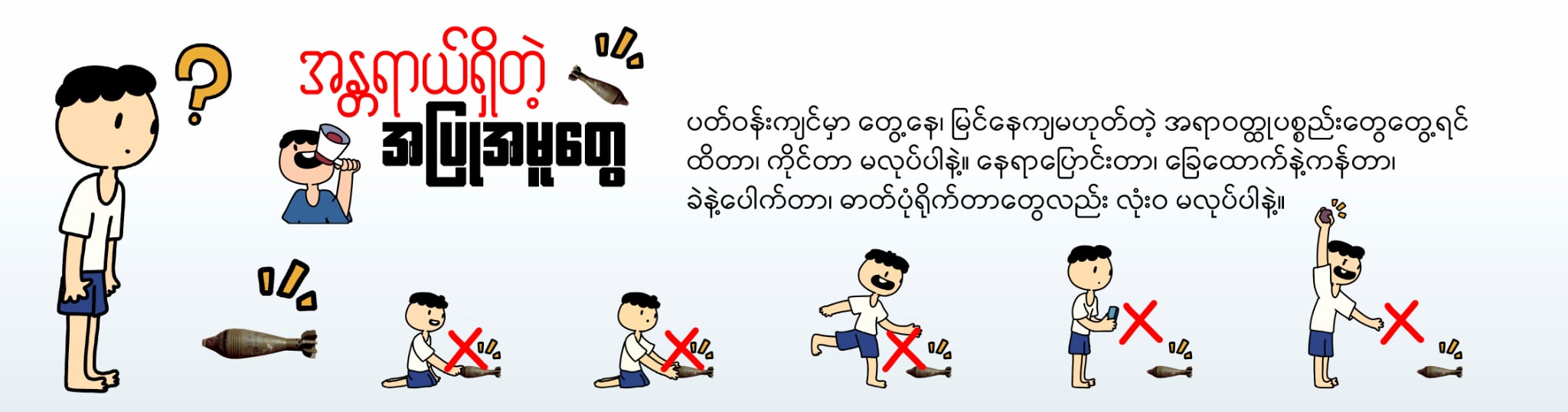

- ULA warns Arakan residents of airstrike risks during Thadingyut festival
- Months-long internet blackout drives up costs for residents of Thandwe and Gwa
- At least five injured in junta Y-12 airstrikes on Werathani villages
- Junta orders Sittwe residents to dismantle home bomb shelters
- Arakan records most armed incidents as 78 civilians killed across Myanmar: NLTA
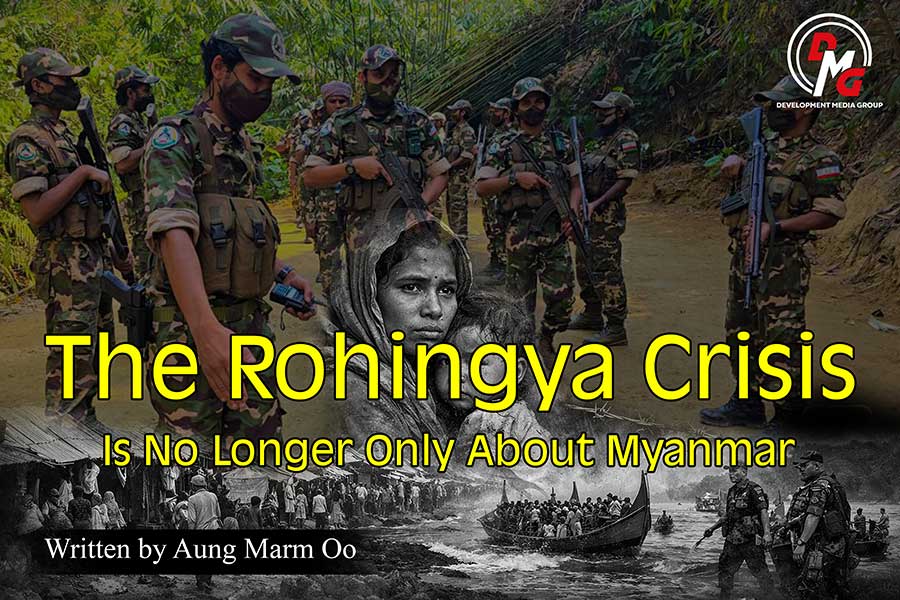
The Rohingya Crisis Is No Longer Only About Myanmar
The Rohingya crisis is often described as one of the world’s most protracted humanitarian emergencies. That description is accurate but incomplete. Today, the crisis is no longer confined to the violence of 2017 or the refugee camps of Cox’s Bazar.
05 Feb 2026
Written by Aung Marm Oo
How Arakan’s War, Armed Groups, and Regional Politics Are Rewriting a Human Tragedy
The Rohingya crisis is often described as one of the world’s most protracted humanitarian emergencies. That description is accurate but incomplete. Today, the crisis is no longer confined to the violence of 2017 or the refugee camps of Cox’s Bazar. It has entered a more dangerous and politically complex phase shaped by war in Arakan, the collapse of Myanmar’s central state authority, the rise of armed actors, regional power calculations, and growing international fatigue.
What is unfolding now is not simply a refugee problem. It is a crisis of governance, security, and political responsibility locally, regionally, and globally.
Arakan at War and Under New Authority
Arakan (Rakhine State) is no longer governed by a single authority in Naypyitaw. Since late 2023, intensified fighting between the Myanmar military and the Arakan Army / United League of Arakan (AA/ULA) has fundamentally reshaped the political map of the region.
Today, most of Arakan is effectively controlled and administered by AA/ULA, which operates parallel governance structures, local administration, security mechanisms, and judicial systems in many townships.
Civilians of all communities, Arakanese/Rakhine, Muslim, and others, have been caught between airstrikes, displacement, economic collapse, and the transition from junta rule to de facto local governance under AA/ULA.
For Muslim communities remaining in Arakan, conditions have not substantially improved. Movement restrictions remain severe. Access to livelihoods is limited. Humanitarian assistance is constrained by insecurity, communication blackouts, and unresolved political status. In some areas, civilians face pressure from multiple armed actors, forced displacement, or collective punishment.
At the same time, decades of mistrust between communities actively cultivated by successive Myanmar governments have not disappeared with the weakening of the junta. War hardens fear. Insecurity breeds rumor. Political manipulation thrives where transparency and dialogue are absent.
This is the uncomfortable truth: the Rohingya/Muslim issue in Arakan can no longer be addressed without directly engaging AA/ULA, because they are now the primary authority shaping security, administration, and daily life across the region. Ignoring this reality risks producing policies that appear credible in international forums but fail on the ground.
Armed Muslim Groups and the Regional Security Dimension
International discourse often avoids one of the most sensitive aspects of the crisis: the growing role of armed Muslim groups, particularly the Arakan Rohingya Salvation Army (ARSA) and the Rohingya Solidarity Organisation (RSO).
While these groups represent only a small fraction of the Muslim population, local communities, regional analysts, and security observers have long reported that their activities have had outsized destabilising effects inside Arakan and across the Bangladesh-Arakan/Myanmar border.
There have been persistent allegations and local reporting that elements of the Myanmar military previously tolerated, manipulated, or indirectly enabled such groups as part of divide-and-rule strategies through arms flows, selective enforcement, or intelligence operations designed to inflame communal tensions and justify militarisation. Whether through direct provision or calculated negligence, these dynamics contributed to cycles of violence that harmed civilians of all communities.
At the same time, armed groups have increasingly embedded themselves in refugee spaces across the border, creating new layers of insecurity that neither humanitarian frameworks nor political slogans adequately address.
Bangladesh, Camps, and Managed Instability
For Bangladesh, hosting nearly one million refugees has become politically, economically, and socially unsustainable. Dhaka faces donor fatigue, domestic pressure, and genuine security concerns.
In this context, multiple human rights organisations and regional observers have warned of the militarisation of refugee camps, where armed groups operate, recruit, extort, and move weapons with limited accountability. Allegations persist that Bangladeshi authorities have, at minimum, failed to dismantle these armed networks and, at times, have provided de facto protection or selective tolerance in the name of border stability and intelligence leverage.
The result is a dangerous feedback loop:
- Armed groups gain strength and legitimacy inside camps
- Regional insecurity deepens
- Civilians especially women and children are placed at greater risk
- Conditions for voluntary, safe, and dignified return are further undermined
This is not protection. It is managed instability.
Naming, Identity, and Political Instrumentalisation
Another core tension rarely addressed honestly is the issue of naming.
Successive Myanmar governments, as well as much of Myanmar’s population including Rakhine/Arakanese communities have not recognised the term “Rohingya”, instead referring to the population as Bengali or Muslim. This position, whether one agrees with it or not, is rooted in historical, political, and demographic disputes that predate the current crisis.
Armed groups such as ARSA, along with some activists and diaspora networks, have deliberately used the name “Rohingya” as a political instrument to seek international recognition, legitimacy, and external support despite lacking broad representation or democratic mandate among Muslim civilians themselves.
This has had two damaging effects:
1. It conflates civilians with armed actors in the eyes of security forces and neighbouring communities.
2. It turns identity into a weapon, rather than a foundation for protection, rights, and coexistence.
International actors often overlook this distinction, simplifying a complex social landscape into a single narrative, one that neither reflects realities in Arakan nor adequately protects civilians on the ground.
The Myth of Imminent Repatriation, and the AA/ULA Factor
Despite these realities, international actors continue to promote “repatriation” as the ultimate solution. In practice, it remains largely rhetorical.
There is no unified civilian administration recognised by all actors. There are no credible guarantees of citizenship, safety, land rights, or freedom of movement. Airstrikes, landmines, and displacement persist. Armed groups remain active on both sides of the border.
Crucially, most international repatriation frameworks still bypass AA/ULA, treating them as irrelevant or temporary despite the fact that they now administer most of Arakan.
Under these conditions, repatriation would not be return it would be relocation into insecurity. Any serious discussion of return, protection, or coexistence must therefore engage AA/ULA as a central political and administrative actor, whether international actors are comfortable with that reality or not.
International Response: Strong Norms, Weak Adaptation
Since 2017, international institutions have produced reports, resolutions, and legal proceedings affirming that serious crimes were committed against Muslim communities in Myanmar. These efforts matter. But they have not altered power dynamics on the ground.
Global attention has shifted. Myanmar has become a “known tragedy.” Accountability mechanisms move slowly. Armed actors adapt faster.
For civilians, Arakanese and Muslim alike justice increasingly feels abstract: discussed in courtrooms far away, disconnected from daily survival under bombs, blockades, and armed intimidation.
A Crisis of Responsibility in a New Political Reality
The Rohingya crisis today is not only about identity or history. It is about responsibility in a new political landscape:
- Myanmar’s responsibility to confront citizenship, equality, and inclusive governance
- AA/ULA’s responsibility as the de facto governing authority in Arakan to manage security, civilian protection, and inter-communal relations
- Regional responsibility to prevent refugee spaces from becoming militarized
- International responsibility to adapt policy to reality, not nostalgia for a collapsed state
Treating the crisis as a purely humanitarian inconvenience while ignoring armed dynamics and new governance structures has brought us to this impasse.
The Way Forward: Fewer Illusions, More Engagement
There are no easy solutions. But there are necessary principles:
- No forced or premature repatriation
- Protection-first policies that clearly separate civilians from armed groups
- De-militarisation of refugee camps
- Accountability that addresses all actors contributing to instability
- Direct, pragmatic engagement with AA/ULA on civilian protection and coexistence
- An inclusive political future for Myanmar that confronts rather than suppresses hard questions of identity, governance, and power
The Rohingya crisis did not begin in 2017, and it will not end with a press release. It is evolving shaped by war, borders, armed actors, and global indifference.
The real question is no longer whether the world knows what is happening but whether it is willing to engage with the full, uncomfortable reality on the ground.

Opinion
Can the UN Restore Trust in a Fractured World?
By Admin 23 Oct 2026
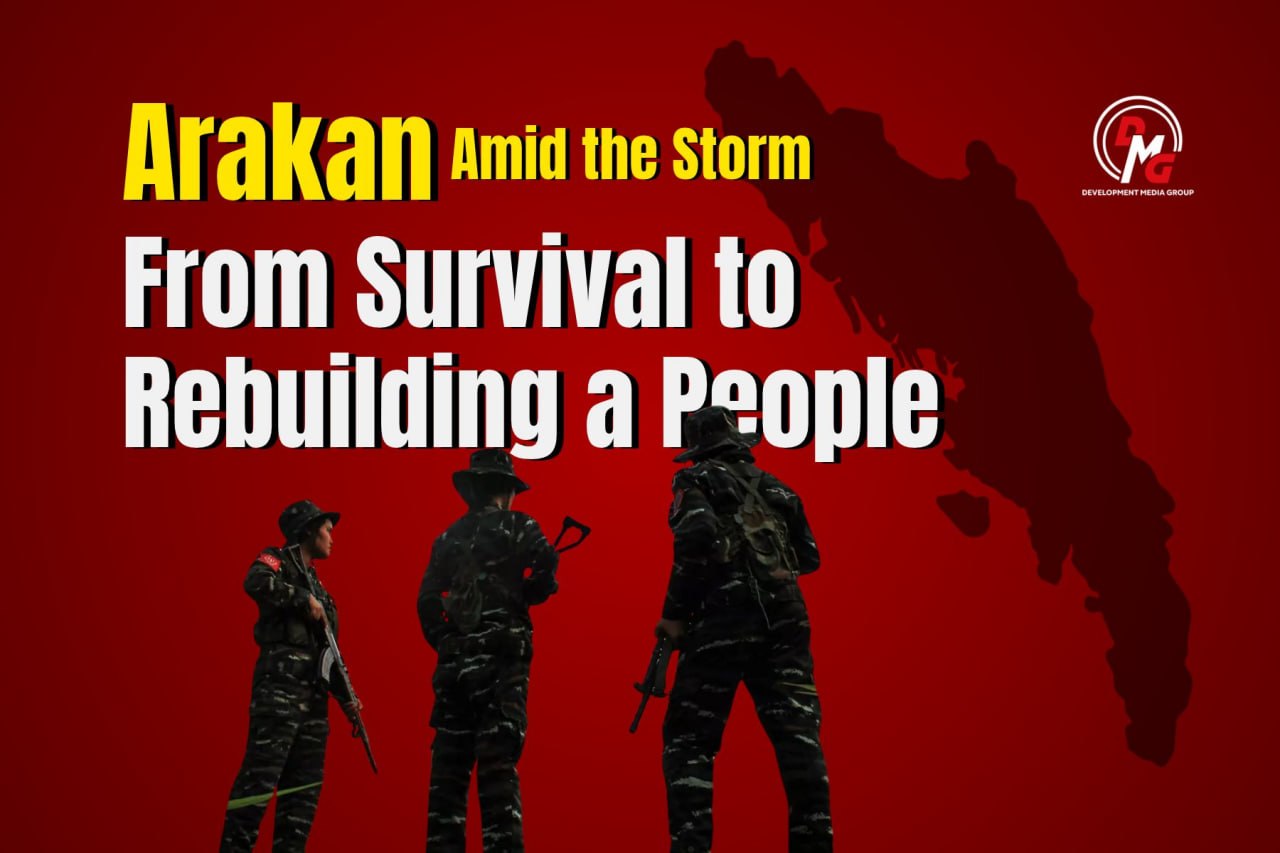
Arakan Amid the Storm: From Survival to Rebuilding a People
By Admin 22 Oct 2026
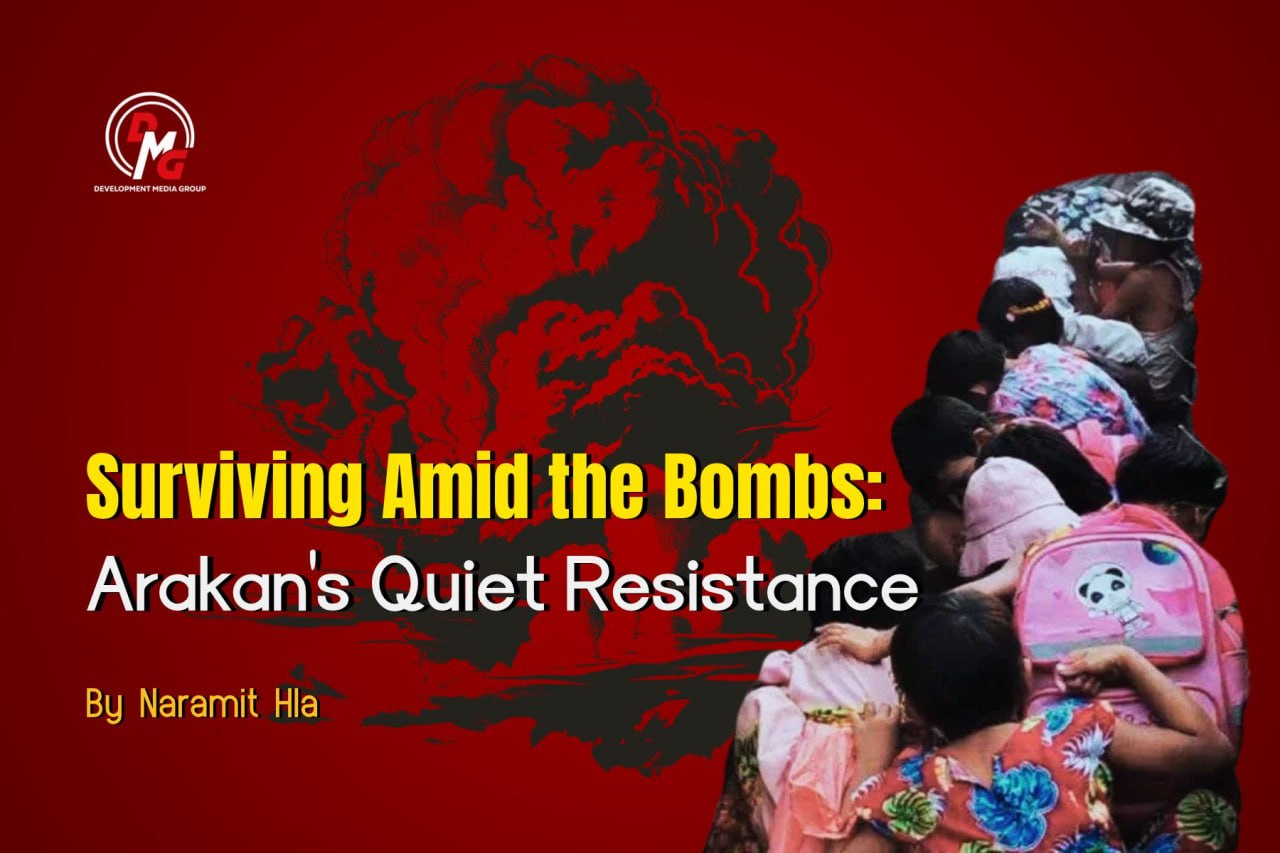
Surviving Amid the Bombs: Arakan's Quiet Resistance
By Admin 19 Oct 2026
Shadows Over Childhood: Confronting the Reality of Missing Children
By Admin 16 Oct 2026
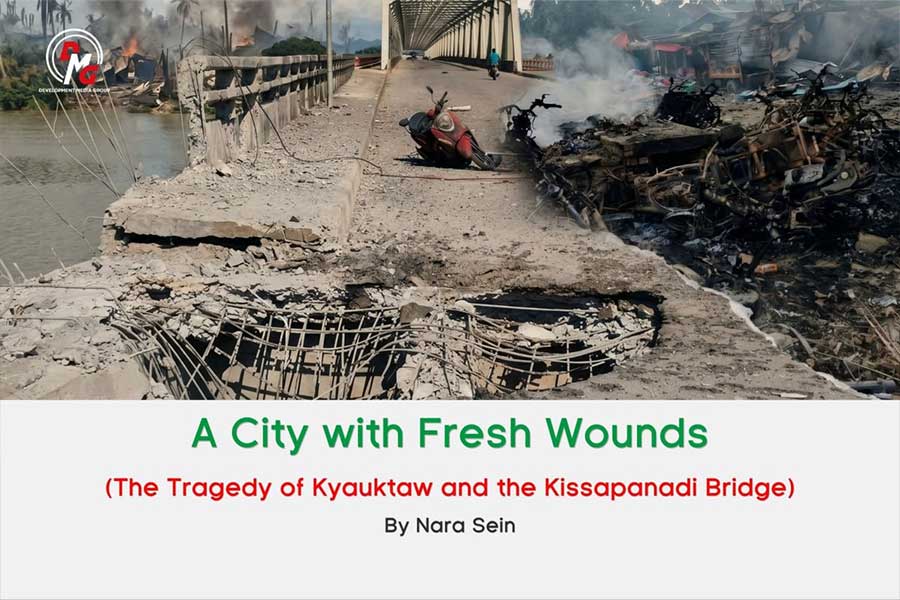
A City with Fresh Wounds (The Tragedy of Kyauktaw and the Kissapanadi Bridge)
By Admin 01 Oct 2026
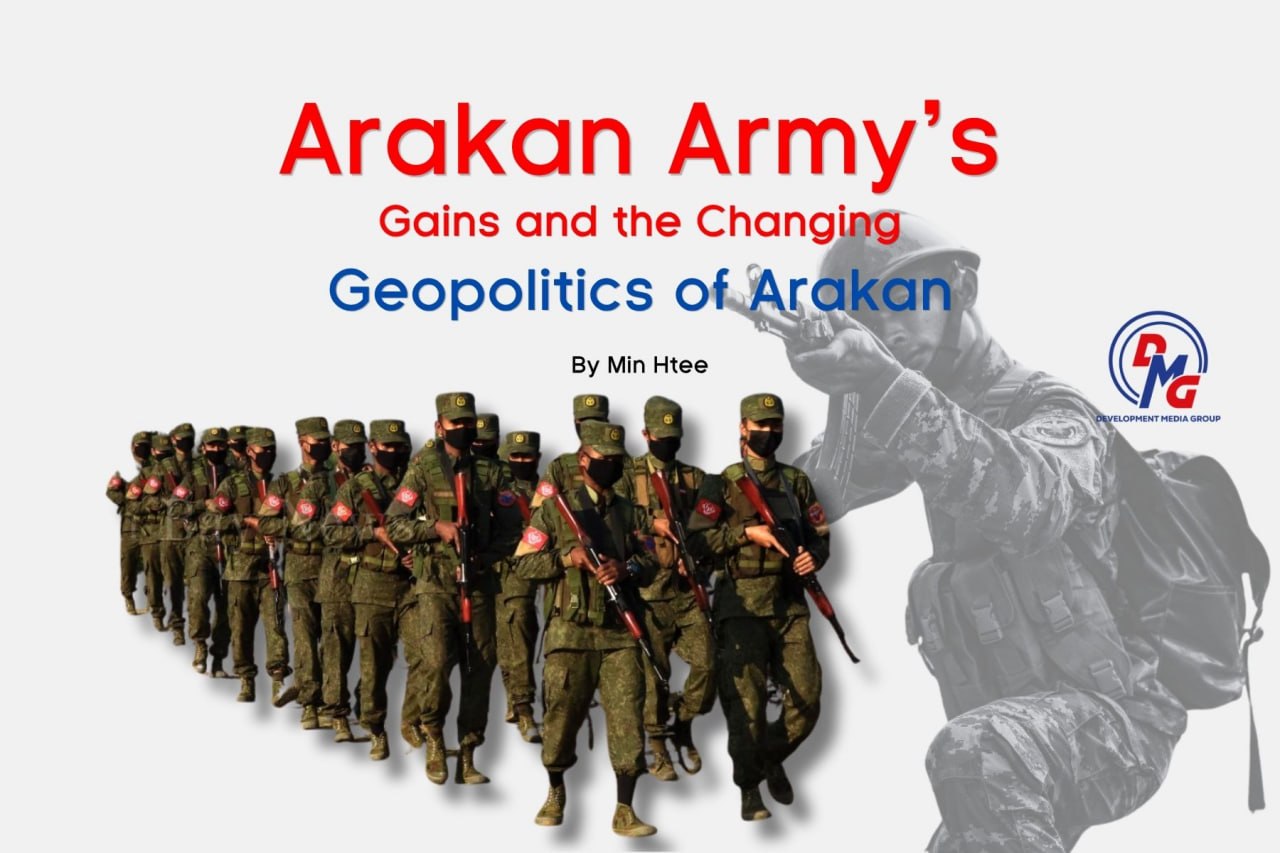
Arakan Army’s Gains and the Changing Geopolitics of Arakan
By Admin 29 Sep 2026
POLITICS

BUSINESS
Industry to manufacture finished goods from coconut starting in early 2020
By Aung Kaung Zaw 20 Nov 2019