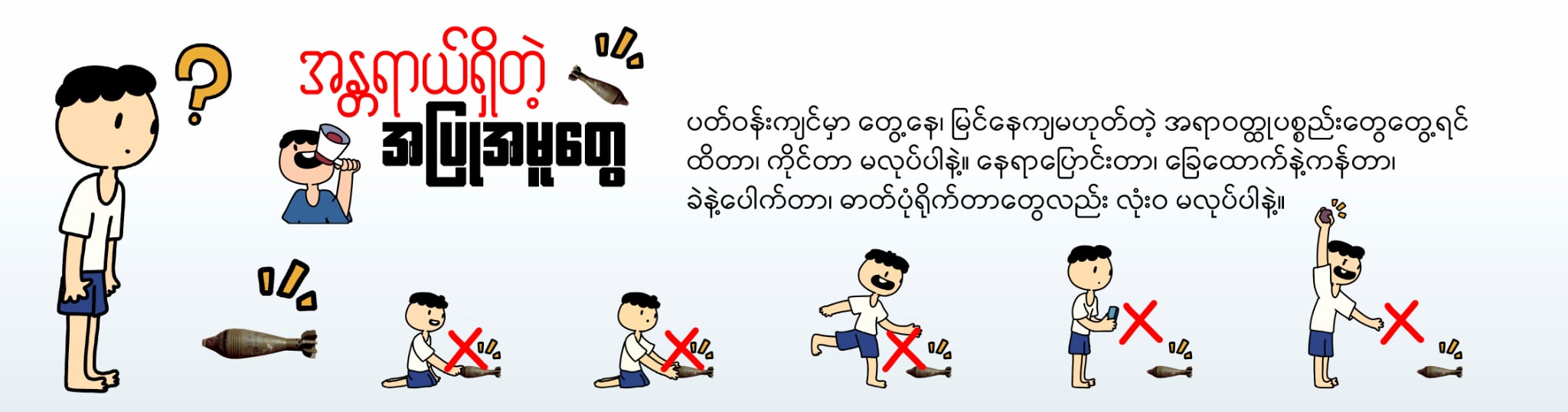

- ULA warns Arakan residents of airstrike risks during Thadingyut festival
- Months-long internet blackout drives up costs for residents of Thandwe and Gwa
- At least five injured in junta Y-12 airstrikes on Werathani villages
- Junta orders Sittwe residents to dismantle home bomb shelters
- Arakan records most armed incidents as 78 civilians killed across Myanmar: NLTA
A Village Gone Global Through One Radio
People across Myanmar, facing war, poverty, and countless forms of suffering, are among the greatest victims of propaganda and information warfare. In the same way, Myanmar's democracy and human rights still feel like trying to catch a radio signal in the rainy season appearing and disappearing, cutting in and out, never stable.
06 Jan 2026
.jpg)
Written by Mawra Zaw
In our area, back when television, video players, and cassette tapes had not yet become popular when computers, the internet, and mobile phones were still unknown, and when newspapers, journals, and magazines were not part of everyday life, I often find myself remembering Grandpa's little radio.
Grandpa's radio was probably a bit over a foot long. I can't quite recall whether it took six or eight large batteries. It was thick and heavy, with a wooden frame. And "Grandpa" was not my biological grandfather. But he was everyone's grandfather. Why? Because he used to wake all of us nearly sixty charity-school students every morning and every night to study.
Once Grandpa was up at 4 a.m., he would go through the whole dorm, calling each student by name to wake them. His name was U Thun Chi. He dressed neatly and cleanly, and he smoked what we called "Arakan cigarettes", strong, hand-rolled cheroots. His job was to sleep as the night guard at the hostel and push us to study. Sometimes, his long rattan stick even came down across our backs.
Another thing Grandpa was good at: he was highly skilled in traditional weaving and bamboo work making baskets, trays, and winnowing fans. His craftsmanship was neat and durable, and the things he made were extremely popular.
While weaving rattan and bamboo, Grandpa always listened to the 7 a.m. radio news and the 7 p.m. news. In those days, he never missed VOA, BBC, or RFA. If he missed one broadcast, he would wait for the next station's news so he wouldn't miss the updates that night.
Sometimes, as he listened, he would click his tongue and complain about certain stories. Other times, I noticed him smiling quietly to himself. When news involved the Than Shwe government (SLORC- State Law and Order Restoration Council), he would mutter, "These guys are doing nonsense again." But when he heard reports like "The United States urges Daw Aung San Suu Kyi's release from house arrest," or "The UN urges her release," those were the stories that made him smile. And if he heard that someone from the 88 Generation was being released from prison, Grandpa looked genuinely happy and deeply satisfied.
It didn't stop there. He would also share major news with his radio-listening friends during morning tea, or when he visited their houses. "Did you hear that news this morning?" he would ask. Then he'd excitedly repeat what Kyaw Zan Tha had said on VOA, as if he were delivering important secrets.
The thing that made Grandpa explode the most was when the radio batteries ran out in the evening, or when heavy rain caused the signal to cut in and out. He would get furious. Sometimes, when other elders in the village had broken radios, they would come all the way to Grandpa's place just to listen. Grandpa did the same: if his radio broke, he would go to a friend's house to listen.
If Grandpa didn't arrive at the hostel in the evening, we immediately knew: his radio had broken. He would only return around 9 p.m. And without him there, we didn't study, we talked and fooled around. Only when it was time for Grandpa to come back did we suddenly pretend to be reading.
Sometimes, if a radio broke in Grandpa's group, they would come together to listen at his place. After the news, they would sit in a circle and discuss politics, military developments, and everything else. Grandpa and his friends loved democracy. They loved Daw Aung San Suu Kyi. They loved Min Ko Naing. And among journalists, they especially loved U Kyaw Zan Tha. When it came to his reports, they didn't even say "BBC news" or "VOA news" anymore. They would just say, "Kyaw Zan Tha said…"
Back then, we didn't understand what Grandpa and those elders were really doing: in a rural place, with nothing but a small radio, they were trying to keep up with the world's changes and progress.
I remember one donation ceremony where people argued over news that the Kassapanadi Bridge would be built. One group insisted it was impossible: "That river is too deep, too wide, too historic. There's no way a bridge can be built." Some even said it was just superstition or propaganda.
Grandpa alone argued fiercely against them. He insisted the bridge would be built. In the end, he got so angry from arguing "one against the crowd" that he left without even eating the charity meal. I can still picture his face that day biting down on his strong Arakan cheroot and returning with a look of deep frustration.
But later, the Kassapanadi Bridge was built, along with the Pyi Kauk Bridge and the Yoe Chaung Bridge nearby. Grandpa was right. He had been listening to the radio news every day without fail.
Still, Grandpa did not keep fighting with people his age who knew less than he did. He simply turned back and left the ceremony. Why? Because if someone refuses to understand, explanations only turn into arguments. Arguments become hatred. Arguments create enemies. And you lose dignity, too. That is why, I think, Grandpa left without eating.
When the internet was cut in 2019-2020, we could barely function. We checked our phones over morning tea. At work, we kept the connection on to coordinate. When the internet was shut down, our right to information disappeared completely. We felt restless and trapped. Only then did I truly empathize with Grandpa's dependence on radio news.
For a devoted listener, what happens when the radio suddenly fails at the very moment they always listen? That is why Grandpa couldn't tolerate disruptions. That is why he complained. And that is why I eventually bought a radio myself because in places without connectivity, a radio is still one of the most useful tools.
Whenever I visited electronics shops, I found myself staring with fascination at radios of all kinds, new designs, different shapes. I began to respect elders walking with a radio pressed close to their ear early in the morning.
So today, when Arakan is facing intense fighting and internet cutoffs across the entire state, I find people like Grandpa admirable. If you want the news, you simply turn on the radio morning and night. But for us, being cut off from the internet is a deep hardship and a major challenge. In an era where opening a phone instantly brings information, losing that access feels like a real deprivation especially for younger generations.
Perhaps because my ears grew up accustomed to Grandpa's radio, I became a journalist. Now I am constantly writing about the military coup, human rights abuses, multiparty democracy, election fraud, and mass killings so much that my hands barely rest.
But in a place like Arakan, even now, not everyone can access this information. The bombing of Mrauk-U Hospital, or the news about the "ritual bell" discovery, these still circulate among the public like rumors.
A friend in Sittwe asked me about the bell story. What he had heard was: "The AA [Arakan Army] leader received it in a dream, and they dug it up." I had to explain over the phone that this was not true.
People across Myanmar, facing war, poverty, and countless forms of suffering, are among the greatest victims of propaganda and information warfare. In the same way, Myanmar's democracy and human rights still feel like trying to catch a radio signal in the rainy season appearing and disappearing, cutting in and out, never stable.
Sometimes I wonder: Are democracy and human rights truly real for us?
And yet, the words I once heard through Grandpa's old radio, "democracy" and "human rights", still echo in my ears today. But what we have is a democracy that cannot breathe, and rights that are constantly violated.
Still, the new radios, born from that old radio, continue to greet us through the airwaves: for democracy to survive, for human rights to live, against military dictatorship, for the revolution, for the people, and to connect with the world.
From rural villages to cities, the voices in the airwaves still greet their listeners: "Hello… dear listeners."

Opinion
Can the UN Restore Trust in a Fractured World?
By Admin 23 Oct 2026
Arakan Amid the Storm: From Survival to Rebuilding a People
By Admin 22 Oct 2026
Surviving Amid the Bombs: Arakan's Quiet Resistance
By Admin 19 Oct 2026
Shadows Over Childhood: Confronting the Reality of Missing Children
By Admin 16 Oct 2026
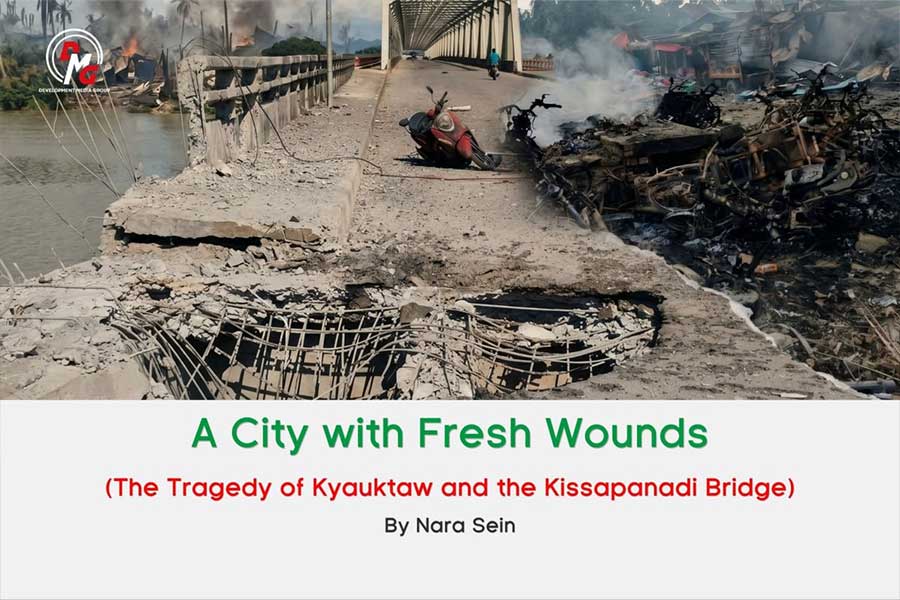
A City with Fresh Wounds (The Tragedy of Kyauktaw and the Kissapanadi Bridge)
By Admin 01 Oct 2026
Arakan Army’s Gains and the Changing Geopolitics of Arakan
By Admin 29 Sep 2026
POLITICS

BUSINESS
Industry to manufacture finished goods from coconut starting in early 2020
By Aung Kaung Zaw 20 Nov 2019