

- Junta seeks foothold on strategic island in Kaladan River as Arakan Army counterattacks
- Begging nearly doubles amid livelihood crisis in southern Arakan
- Heavy fighting near junta-held Sittwe fuels fear as frontlines approach city
- Displaced civilians struggle to access healthcare after junta airstrike destroys Ponnagyun clinic
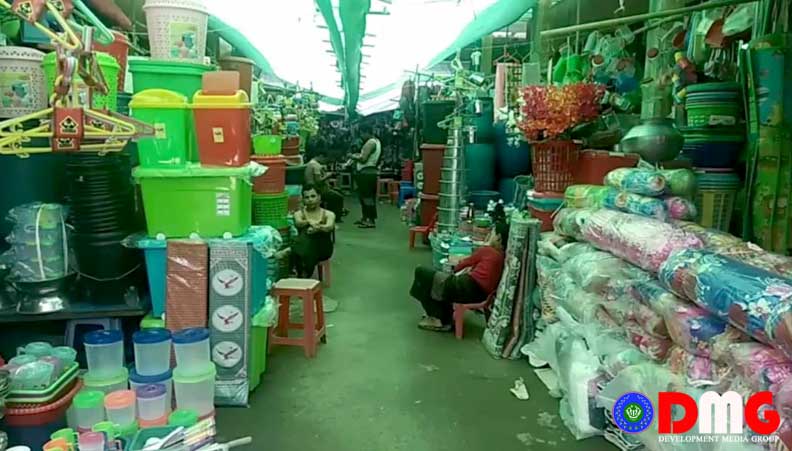
- Kyauktaw market closure disrupts trade and drives up prices across Arakan
New Diplomatic Movements Between Bangladesh’s New Government and the People’s Government of Arakan Now
This raises important questions: could relations between Bangladesh’s new government and Arakan see a meaningful shift? What policy direction might Bangladesh’s ruling party take? And how might urgent issues, border stability, humanitarian access, and the Muslim/Rohingya refugee crisis evolve amid ongoing conflict in Myanmar?
27 Feb 2026
Written by Aung Murm
A new government has emerged in neighboring Bangladesh following national elections. At the same time, the Arakan public administration led by the United League of Arakan/Arakan Army (ULA/AA), which now exercises de facto control over large parts of Arakan and much of the Bangladesh-Myanmar border area appears to be seeking stronger engagement, or at least more stable working relations, with Dhaka under the new administration.
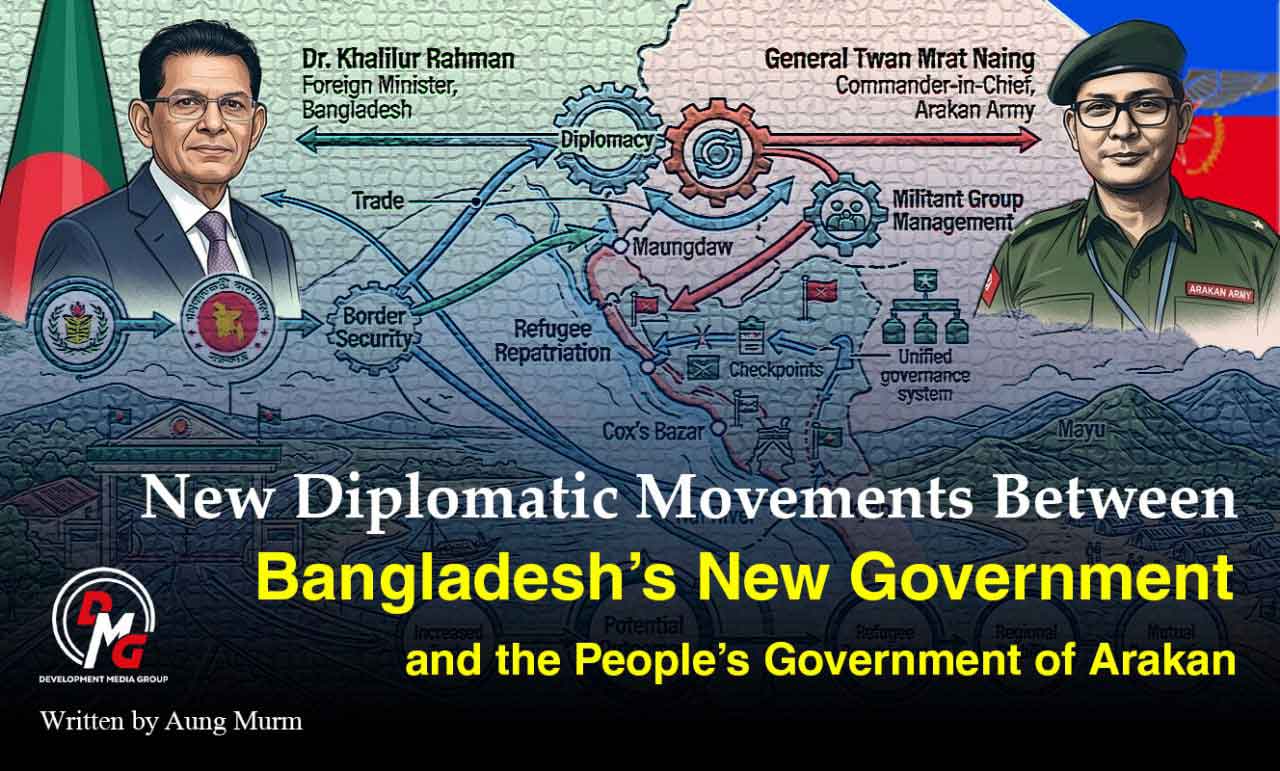
In recent days, the ULA/AA Commander-in-Chief, Major General Twan Mrat Naing, sent a congratulatory letter to Bangladesh’s newly appointed Foreign Minister, Dr. Khalilur Rahman.
Bangladeshi media described this as the first time the AA leader has sent such a message to Bangladesh’s foreign minister, and reported that the letter pointed to “practical and sustainable solutions” and an opportunity to build a new pathway of friendship between Bangladesh and Arakan.
This raises important questions: could relations between Bangladesh’s new government and Arakan see a meaningful shift? What policy direction might Bangladesh’s ruling party take? And how might urgent issues, border stability, humanitarian access, and the Muslim/Rohingya refugee crisis evolve amid ongoing conflict in Myanmar?
Bangladesh’s Election Result and BNP Policy Signals
The February 12 election delivered a decisive outcome, and Bangladesh’s new prime minister Tarique Rahman was sworn in shortly afterward. International reporting described the BNP and its partners as winning a large parliamentary majority in the new legislature.
The BNP’s public messaging has emphasized restoring economic confidence, combating corruption, and pursuing democratic reforms alongside a foreign policy posture framed around pragmatic relations with neighbors. In a country facing economic pressure and a long-running refugee burden, these signals matter for Arakan because Dhaka’s border policy is shaped not only by diplomacy but by domestic security calculations and humanitarian realities.
The Arakan Border: Opportunity and Risk in the Same Space
Bangladesh and Arakan share deep historical, social, and economic interconnections. Today, however, the border is defined less by commerce than by overlapping crises: armed conflict inside Myanmar; displacement and humanitarian deprivation in northern Arakan; the presence of cross-border criminal and armed networks; and Bangladesh’s longstanding responsibility for one of the world’s largest refugee populations.
For the Arakan authorities, Bangladesh presents both an opening and a test. On one hand, Dhaka’s security-first approach could push for practical engagement with whoever controls border terrain especially on issues like border incidents, fishing disputes, smuggling, and humanitarian flows. On the other hand, Bangladesh is extremely sensitive to any instability that could trigger new displacement, cross-border violence, or further deterioration inside the camps in Cox’s Bazar.
A Bangladesh affairs analyst told DMG that the previous interim period created constraints and uncertainty, but that an elected government may have stronger political space to pursue decisions tied to public mandate especially on trade, border governance, and the refugee issue. This is an argument many observers repeat: when pressure becomes structural, “no-contact” becomes impractical.
The Refugee Reality: Muslim/Rohingya Camps, Stalled Returns, and Humanitarian Constraints
Bangladesh continues to host roughly 1.3 million Muslim/ Rohingya refugees, most of whom fled mass violence in Myanmar since 2017. The camps remain overcrowded and under strain, while repatriation has repeatedly stalled due to safety, rights, and governance concerns inside Rakhine/Arakan.
At the same time, conditions inside Arakan have worsened since late 2023 due to intensified warfare, displacement, and restricted humanitarian access in many areas. Even when political actors speak of “solutions,” civilians on the ground still face insecurity, shortages, and interrupted services especially where airstrikes and heavy fighting have damaged infrastructure and constrained movement. In practice, any “new pathway” rhetoric will be judged by whether it reduces harm and expands humanitarian space rather than simply rearranging political messaging.
Fishermen as a Confidence Signal But Not a Breakthrough
Against this backdrop, seemingly small acts can carry outsized political meaning. DMG recently reported the handover of 73 Bangladeshi fishermen detained over illegal fishing incidents in Arakan waters and transferred to Bangladesh’s authorities through formal procedures. Such a move can function as a “confidence signal” on the border: a limited, concrete step that reduces tension without requiring formal recognition or major political concessions.
But confidence-building is not the same as resolution. Border trade remains fragile, and both sides have tightened security in response to armed activity and smuggling concerns. Any reopening of cross-border commerce whether through formal points or informal flows will likely depend on whether security improves and whether both sides can manage armed-group activity that destabilizes the frontier.
What to Watch Next
If there is to be a real diplomatic “movement,” it will likely show up first in practical areas:
• Regularized border communication to prevent incidents and manage cross-border disputes.
• Clearer procedures on fishing, maritime access, and detentions, so livelihoods do not become flashpoints.
• Humanitarian coordination that improves civilian protection and reduces pressure on displacement routes.
• A more realistic framework for Muslim/Rohingya discussions, anchored in safety and rights, not shortcuts.
The letter from Major General Twan Mrat Naing to Foreign Minister Khalilur Rahman is symbolically notable, but symbolism alone cannot stabilize a border shaped by war, displacement, and organized armed activity. The decisive test will be whether Dhaka and Arakan’s authorities can convert limited gestures into predictable mechanisms that protect civilians and reduce conflict spillover without turning humanitarian language into a cover for narrow security goals.
For Bangladesh and Arakan alike, diplomacy at this moment is not about ceremony. It is about managing danger while keeping open the possibility that practical engagement can prevent the next crisis from becoming even worse.

Opinion
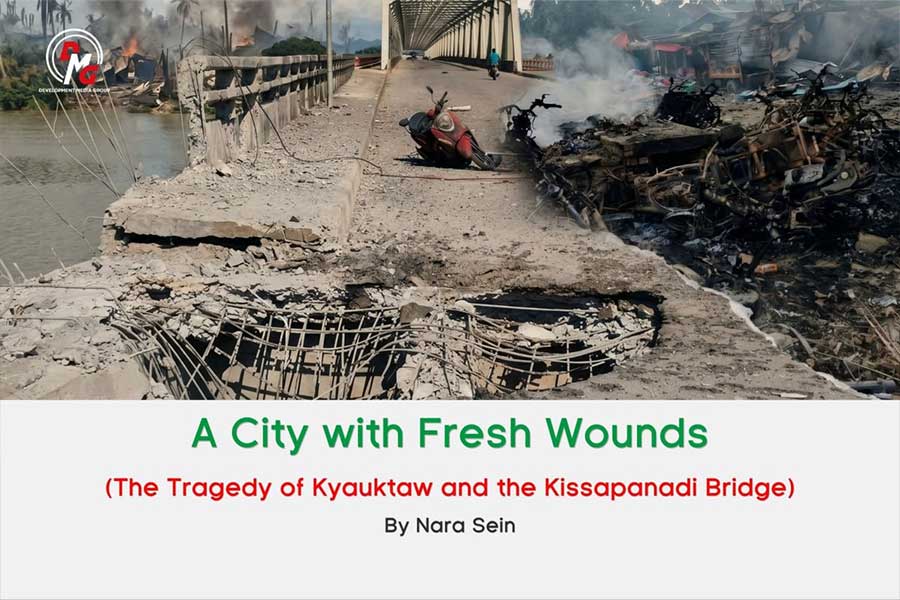
A City with Fresh Wounds (The Tragedy of Kyauktaw and the Kissapanadi Bridge)
By Admin 01 Oct 2026
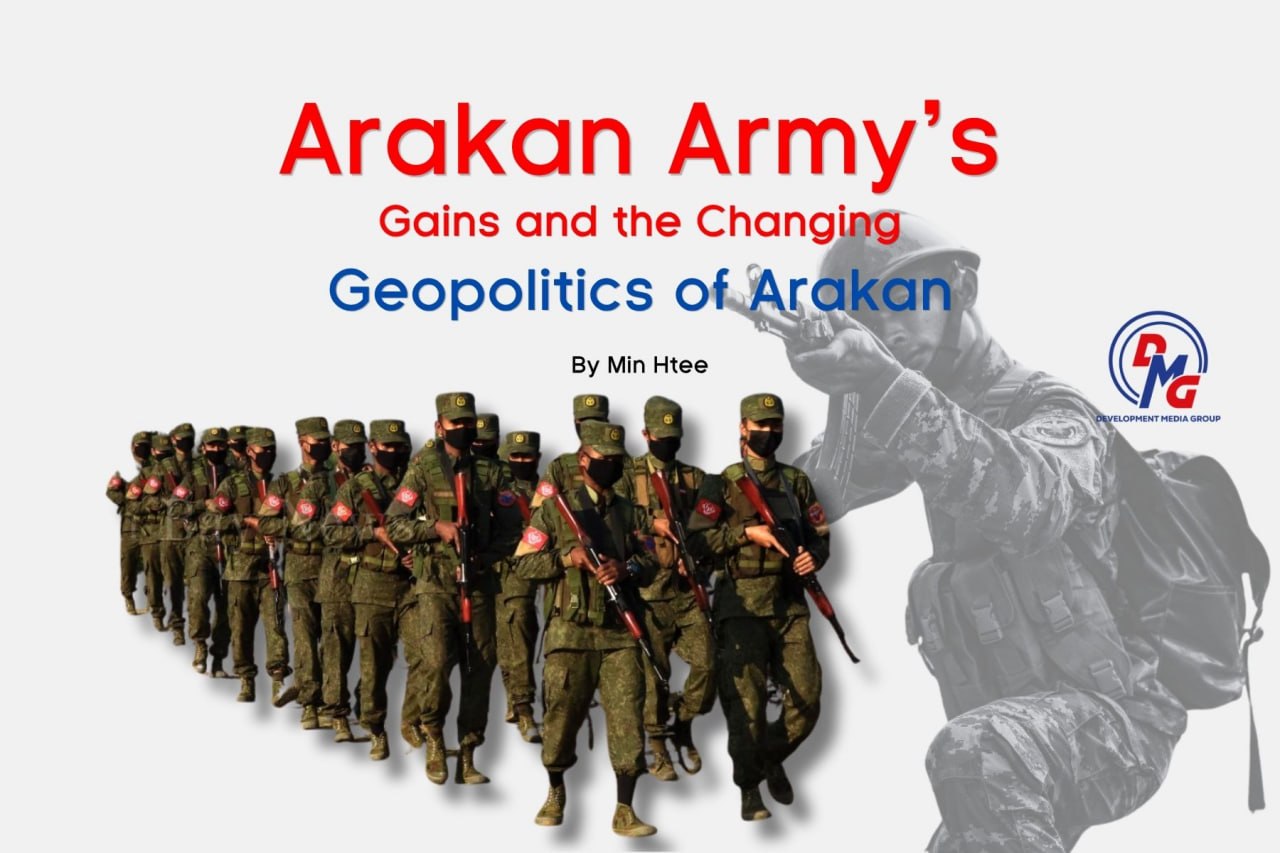
Arakan Army’s Gains and the Changing Geopolitics of Arakan
By Admin 29 Sep 2026
Beyond Military Victory: What Is Myanmar’s Ultimate Political Objective?
By Admin 26 Sep 2026
UN at a Crossroads: Six Priorities for a Shared Future
By Admin 23 Sep 2026
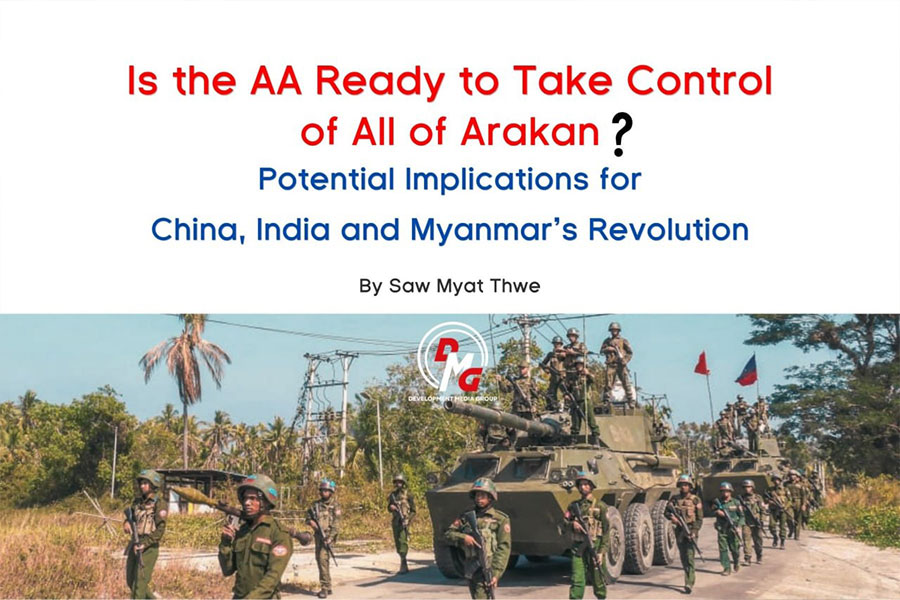
.jpg)
How Can Myanmar’s Political Crisis Be Brought to an End?
By Admin 13 Sep 2026
POLITICS

BUSINESS
Industry to manufacture finished goods from coconut starting in early 2020
By Aung Kaung Zaw 20 Nov 2019