
The Battle for Arakan’s Future
Myanmar’s military has so far been unable to reverse most of its territorial losses to the Arakan Army (AA), but recent developments point to a widening effort to prevent the United League of Arakan/Arakan Army (ULA/AA) from consolidating its military and political authority.
09 Sep 2026
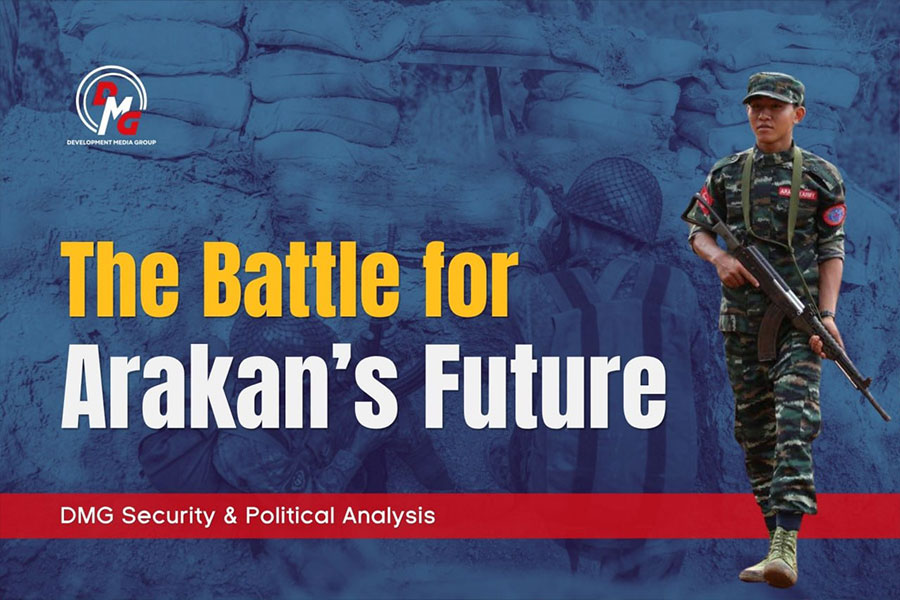
DMG Security & Political Analysis
The war in Arakan is entering a more complex and potentially dangerous phase. Myanmar’s military has so far been unable to reverse most of its territorial losses to the Arakan Army (AA), but recent developments point to a widening effort to prevent the United League of Arakan/Arakan Army (ULA/AA) from consolidating its military and political authority.
The clearest sign is the renewed Sittwe-Ponnagyun front. Junta troops crossed Minchaung Bridge from Sittwe Township on September 4 and advanced toward Kuntaung in Ponnagyun Township, triggering days of heavy fighting. The AA reinforced its positions and launched a counteroffensive, while junta forces employed armoured vehicles, artillery, air power and naval fire support. By September 7, thousands of civilians from around 20 villages in Ponnagyun and Rathedaung townships had fled to safer areas.
At the same time, military activity has increased around Kyaukphyu, Gwa and Thandwe. The emerging picture is therefore not one of de-escalation, but of an expanding struggle over whether the junta can regain strategic footholds or at least prevent the AA from transforming territorial dominance into durable political control.
Pressure From Multiple Fronts
Sittwe and Kyaukphyu remain central to this contest.
Around Sittwe, the push across Minchaung Bridge appears intended to establish a foothold inside Ponnagyun. CDM Captain Zin Yaw told DMG that the military appears to be seeking control of Kuntaung and, beyond it, the road junction linking Ponnagyun and Rathedaung. Such an advance could widen the junta’s operational space around Sittwe while forcing the AA to divert personnel and resources from other fronts.
Kyaukphyu presents a different but equally significant challenge because of its economic and geopolitical importance and major Chinese investments. Zin Yaw argues that these interests place constraints on AA operations that the military may seek to exploit. In his assessment, Sittwe and Kyaukphyu are the junta’s two most significant remaining ground footholds from which larger offensives could be attempted.
Pressure is also growing from outside Arakan. According to Zin Yaw, military columns linked to Light Infantry Division 101 have been deploying from the Shwethaungyan area of Thabaung Township toward the Gwa front, while naval activity has increased around Gwa, Kyeintali and Thandwe. He assesses that some operations from Sittwe may partly serve as diversionary attacks while the military simultaneously pressures other fronts, particularly southern Arakan.
The apparent logic is to stretch AA forces and probe for weaknesses. Yet opening more fronts does not guarantee territorial gains. Difficult terrain, extended supply lines and AA resistance continue to complicate junta operations.
The military’s fundamental problem therefore remains: it retains substantial destructive power and can deploy significant manpower, but converting that power into sustainable territorial control is considerably more difficult.
Air and Naval Power Fill the Gap
That difficulty helps explain the increasing importance of air and naval operations.
DMG recorded 35 civilians killed and 84 injured in junta airstrikes across Arakan and Paletwa during August, including women and children. Air power enables the military to strike deep inside territory it does not control on the ground, threatening communities, transportation routes and economic infrastructure without first retaking territory.
The September 7 attacks provide a particularly clear example of air, naval and ground pressure occurring almost simultaneously.
According to an AA statement issued on September 8, a military jet struck Ward No. 8 in Thandwe at 10:27 a.m. on September 7, carrying out two bombing runs. The AA said 83-year-old Daw Than Than Kyi was killed, three other civilians were injured and eight houses were damaged or destroyed.
The AA said military warships anchored offshore between Gwa and Thandwe then shelled the coastline from 11:26 a.m. until noon. At around 2:52 p.m., further airstrikes reportedly hit Kyaukgyi and Sabar Gyi villages in Thandwe Township, destroying eight houses but causing no reported civilian casualties. The statement also said a military jet bombed Phetkya Village in Ponnagyun Township at around 9:30 a.m., damaging four houses.
These incidents show military pressure extending across geographically separated fronts. Ponnagyun was already experiencing intense ground fighting while Thandwe and Gwa faced air and naval attacks farther south.
Zin Yaw describes the overall deployment as unusually large, claiming that forces equivalent to around 11 divisions are being used in the Arakan theatre alongside significant air and naval power. The exact force level cannot be independently established from his assessment alone, but his comments illustrate the perceived scale of the current military effort.
The strategic distinction is important: territorial control and civilian security are not the same thing. The ULA/AA may control extensive territory, but ground control alone cannot prevent air or naval attacks.
A Deepening Civilian Crisis
The consequences increasingly extend beyond the battlefield.
Blockades, displacement, disrupted transportation and rising prices are weakening household resilience. In Gwa, disrupted trade links with Ayeyarwady have increased dependence on supplies transported from northern Arakan. DMG has reported rice at around 90,000 kyats per sack, cooking oil at 15,000 kyats per litre and fuel at up to 13,000 kyats per litre.
Alternative supply routes are also vulnerable. Airstrikes along the India-Arakan trade corridor through Paletwa have discouraged cross-border movement, while attacks around Thandwe have displaced residents toward Taungup, Ramree and rural areas. Meanwhile, thousands of residents from around 20 villages in Ponnagyun and Rathedaung have fled amid artillery fire, airstrikes and ground combat.
The September 7 attacks underline how civilian vulnerability extends beyond immediate ground battles. According to the AA statement, homes were damaged in central Thandwe as well as Kyaukgyi, Sabar Gyi and Phetkya villages.
Air and naval operations can therefore cause casualties, destroy homes, disrupt livelihoods and generate displacement without producing corresponding territorial gains. Military pressure is becoming economic and humanitarian pressure: even far from front lines, disrupted markets, transport insecurity and fear of airstrikes can steadily erode civilian life.
From Military Control to Political Responsibility
The ULA/AA’s territorial gains have fundamentally transformed Arakan’s political landscape. But greater authority also brings greater responsibility.
As the ULA increasingly functions as a de facto governing authority, its legitimacy will be judged not only by military success but also by civilian protection, justice, humanitarian access, public services and the treatment of Arakan’s diverse communities.
This includes Muslims, internationally known as Rohingya, and other minorities. Allegations of human-rights violations involving all armed actors require credible and independent investigation. The political principle is straightforward: expanding authority means expanding responsibility.
The challenge becomes harder as the junta opens multiple fronts. The AA must simultaneously defend territory, protect civilians and maintain administrative structures. According to Zin Yaw, it also faces security pressures involving the Arakan Rohingya Salvation Army (ARSA) in Buthidaung and Maungdaw.
For the ULA/AA, battlefield victory alone cannot create durable political legitimacy. Equal protection, accountable institutions and non-discrimination will increasingly shape how its administration is viewed both within Arakan and internationally.
The Contest Ahead
A decisive military conclusion appears unlikely in the immediate future.
The junta’s recent operations suggest a strategy combining ground deployments with air and naval power while opening multiple fronts to stretch AA forces. The September 7 attacks reinforce this assessment: ground fighting remained intense around Ponnagyun while the AA reported air attacks in Ponnagyun and Thandwe and naval shelling along the Gwa-Thandwe coastline.
The objective may therefore be broader than simply retaking individual towns. Sustained pressure from the air, sea and multiple ground axes can force the AA to disperse resources, increase the costs of governing territory and deepen civilian insecurity even where the junta cannot immediately restore effective territorial control.
Zin Yaw believes ground fighting will intensify but doubts the military can fully achieve its strategic objectives, citing the AA’s strategic and tactical capabilities despite the junta’s ability to deploy greater numerical strength.
The AA faces the opposite challenge: defending increasingly long front lines while governing and protecting a large civilian population. Its leadership has spoken of dealing with the remaining junta-held towns before 2027, with Sittwe and Kyaukphyu representing the most consequential unresolved fronts. Zin Yaw believes significant developments are possible before then but warns that civilians could face considerable hardship in the process.
The struggle for Arakan may therefore increasingly be decided not simply by who controls territory, but by who can sustain political authority.
For the junta, destructive military capacity does not automatically restore political control. For the ULA/AA, territorial dominance does not automatically confer legitimacy.
Arakan’s future will ultimately depend on whether its dramatic shift in territorial power can be transformed into a stable political order, one capable of protecting civilians, sustaining economic life, delivering accountable governance and safeguarding the rights of all communities.
The next stage of the struggle may therefore be determined as much by governance, political endurance and civilian resilience as by events on the battlefield.

Opinion
Surviving Amid the Bombs: Arakan's Quiet Resistance
By Admin 19 Oct 2026

Shadows Over Childhood: Confronting the Reality of Missing Children
By Admin 16 Oct 2026
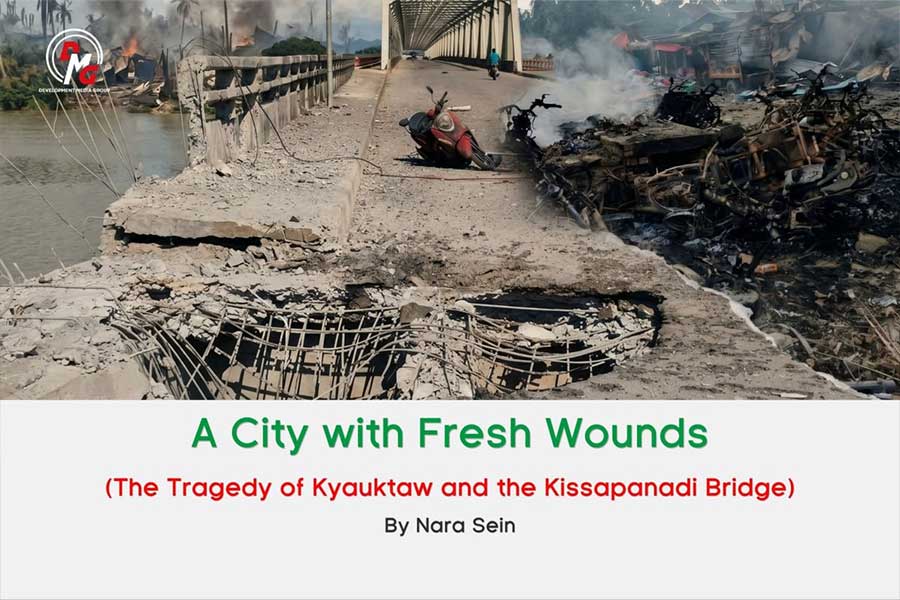
A City with Fresh Wounds (The Tragedy of Kyauktaw and the Kissapanadi Bridge)
By Admin 01 Oct 2026
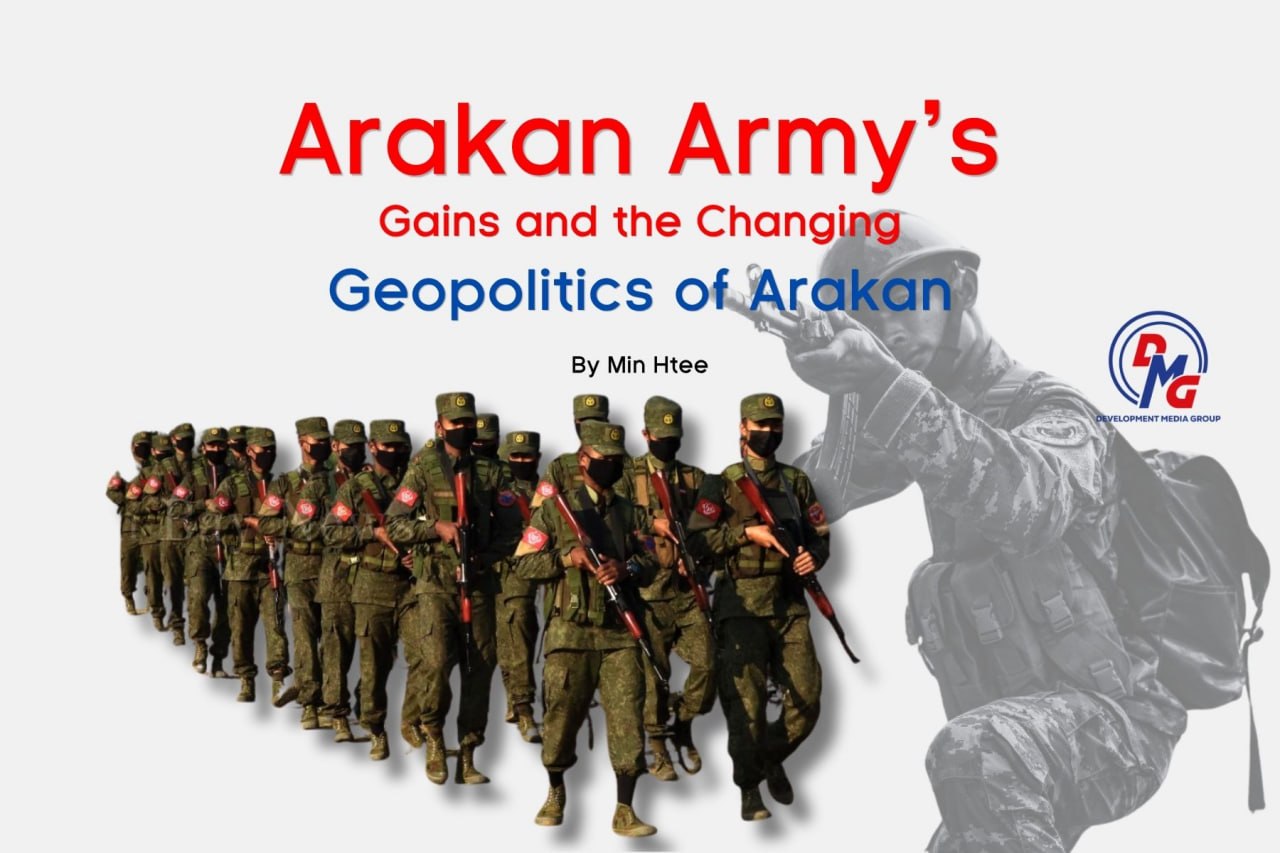
Arakan Army’s Gains and the Changing Geopolitics of Arakan
By Admin 29 Sep 2026
Beyond Military Victory: What Is Myanmar’s Ultimate Political Objective?
By Admin 26 Sep 2026
UN at a Crossroads: Six Priorities for a Shared Future
By Admin 23 Sep 2026
POLITICS

BUSINESS
Industry to manufacture finished goods from coconut starting in early 2020
By Aung Kaung Zaw 20 Nov 2019