
- 92 groups urge Canada to expand sanctions on Myanmar oil and gas sector
- Junta bombing of Ponnagyun IDP shelter injures three civilians
- UN investigators seek evidence on deadly Kyauktaw airstrike as attacks continue across Arakan
- Myanmar military continues airstrikes across Arakan after deadly Kyauktaw attack
- ISP-Myanmar reports at least 115 mass civilian killing incidents across Myanmar
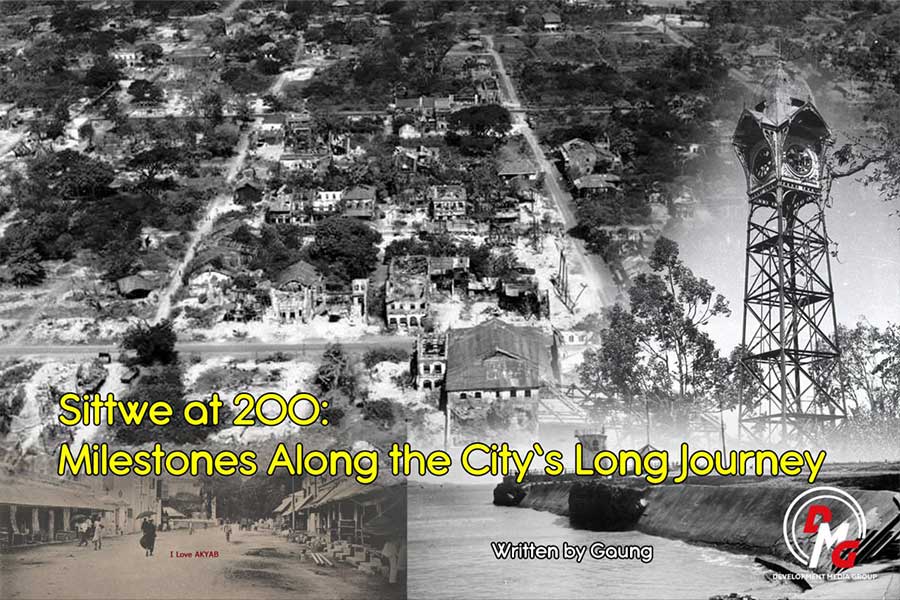
Sittwe at 200: Milestones Along the City's Long Journey
Since the start of 2026, Arakan's largest city, Sittwe, the capital of Arakan (Rakhine) State and, in northern Arakan, the only remaining stronghold of Myanmar's military council and its state administration has again become a place of major developments and turning points.
12 Jan 2026
Written by Gaung
Since the start of 2026, Arakan's largest city, Sittwe, the capital of Arakan (Rakhine) State and, in northern Arakan, the only remaining stronghold of Myanmar's military council and its state administration has again become a place of major developments and turning points.
The Arakan Army's offensives are now drawing closer to the Regional Operations Command (ROC) headquarters based in Sittwe. And today, Sittwe arguably the most strategically important location for both the military council and the Arakan Army also marks its 200th anniversary.
How did Sittwe become what it is today? What paths did this capital take across two centuries? What did it endure through world war and civil war, natural disasters, unrest and crises? What are its landmark sites and notable figures, and what does Sittwe look like now? This article explores those questions.
How Sittwe Came Into Being
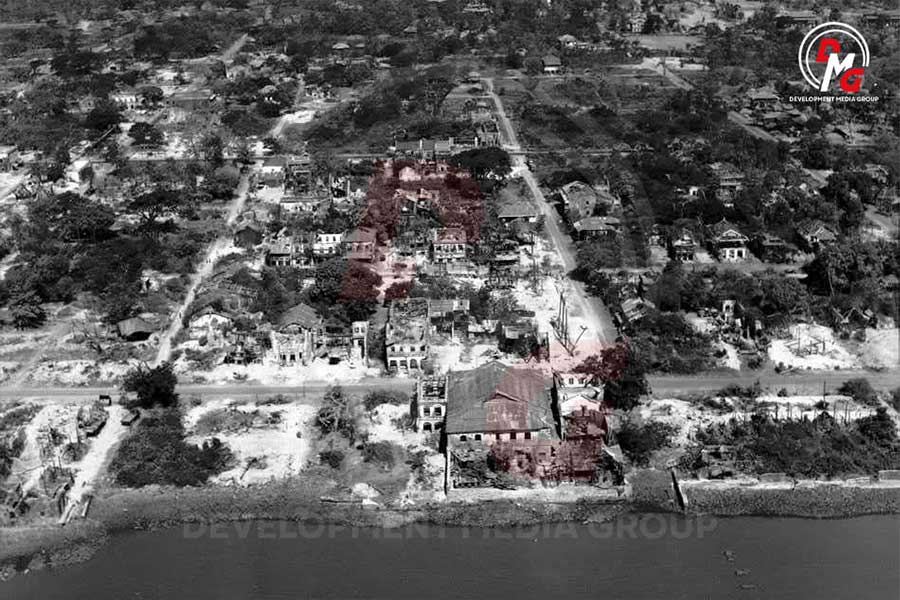
Sittwe, Arakan's iconic coastal capital at the mouth of the Kaladan River near the Bay of Bengal, was established on January 12, 1826, during British colonial rule. During the era of the Arakan kings, Sittwe was little more than a small and unremarkable fishing village.
Local accounts say the city's name evolved from "Sit-tai", a place where Arakan royal naval forces temporarily rested and encamped, which later became "Sittwe." Before 1826, Arakan's capital was Mrauk-U (often referred to as the "old capital").
After the First Anglo-Burmese War, King Bagyidaw of the Konbaung Dynasty, having been defeated, ceded Arakan and Tanintharyi to the British under the Treaty of Yandabo (1826).
After briefly basing administration in Mrauk-U, the British chose to relocate their administrative center. Because Mrauk-U lay inland and far from the coast, they shifted to Sittwe Island at the mouth of the Kaladan River where key waterways converge and where logistical and strategic access was far stronger.
Sittwe was reportedly founded as a formal town beginning from Mi Zan Ward, under the leadership of British colonial administrators such as Charles Paton and Thomas Dickenson, together with prominent Arakanese figures including Prince Shwe Ban, Dewayun Aung Kyaw Shwe, and town leader Aung Kyaw Zan.
At that time, Sittwe was still only a small fishing village. Over time, the British developed roads, transport links, and local infrastructure, and the settlement gradually expanded as people from across Arakan migrated there.
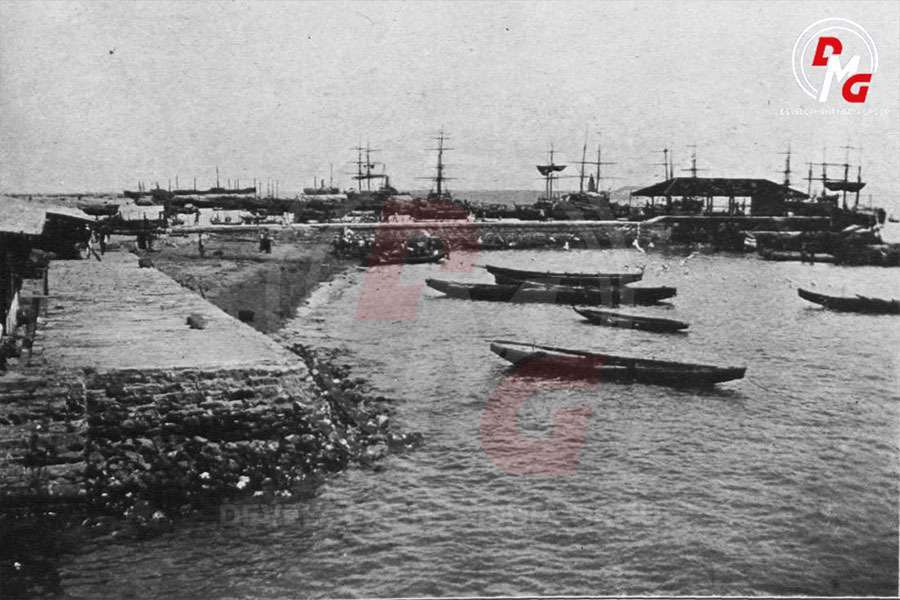
The British referred to Sittwe as "Akyab," a name linked in local explanations to geographic references and place names. Another account connects it to a revered pagoda to the west of the city associated with a sacred relic, with the term evolving over time into "Akyab." Arakanese people, however, continued to call it Sittwe. From the early colonial period onward, Sittwe became one of Arakan's most important cities.
Growing Population and Urban Expansion
Sittwe is a coastal city on flat terrain unlike many parts of Arakan, it has no mountain range. According to the 1953 census, Sittwe's population was 42,329. By the 2014 census, it had grown to 147,899. Local administrative records published by the military council in 2023 claimed the population of Sittwe Township had risen to more than 500,000.
Those records also stated the township covers 231.6 square kilometers (89.42 square miles), with 34 urban wards and 23,150 households.
Sittwe sits at an average elevation of around 15 feet above sea level. Annual rainfall ranges between 160 and 200 inches, producing a generally favorable climate. The terrain is characteristically flat and shaped by river systems. Diverse communities live in and around the city, including Arakanese/Rakhine, Maramagyi, Kaman, Hindus, Bamars, Muslims, Chins, and Khamis. Most residents are Arakanese, and the second-largest community is Muslim. The majority practice Buddhism, while Islam, Christianity, and Hinduism are also present.
Because of its moderate climate, flat land, fisheries, and strong waterway-based transport and trade, Sittwe steadily attracted migrants, and its population grew year by year.
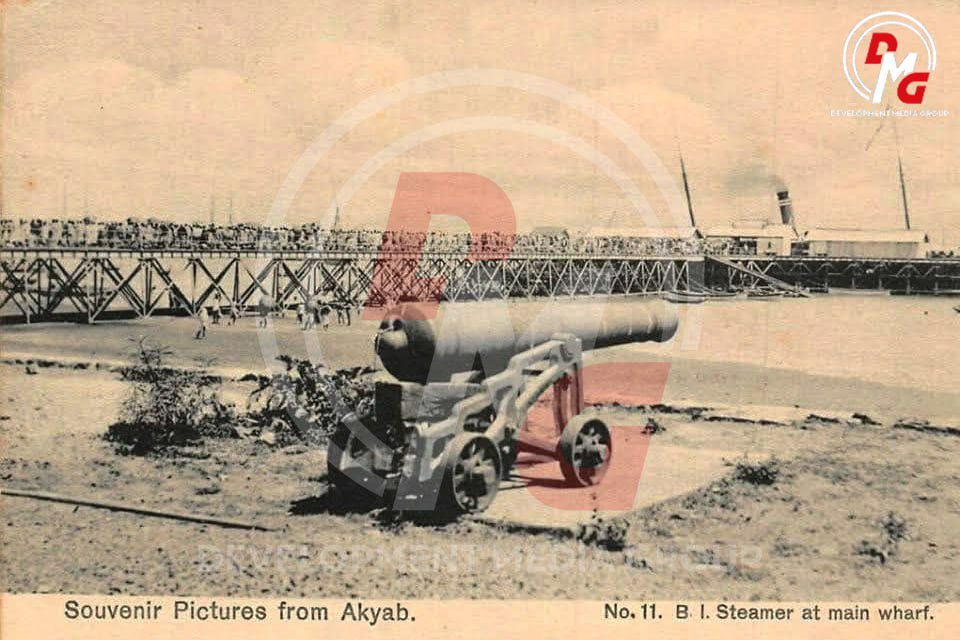
During the colonial era, Sittwe's economy expanded rapidly. Historical records note that from the 1830s onward, rice produced across Arakan was exported from Sittwe's port to international markets. Tens of thousands of tons were reportedly shipped annually to India, China, and Europe. Rice cultivation expanded, and Sittwe was even described internationally as a kind of "rice capital." The city's growth eventually placed it among Myanmar's major urban centers during British rule.
Some remember the early colonial era as comparatively prosperous for Arakan, as English-language schools emerged and educated Arakanese intellectuals appeared, including those who studied in India and the UK. In 1846, the British opened a government school in Sittwe, marking a shift from monastic education toward formal state schooling and English-language instruction.
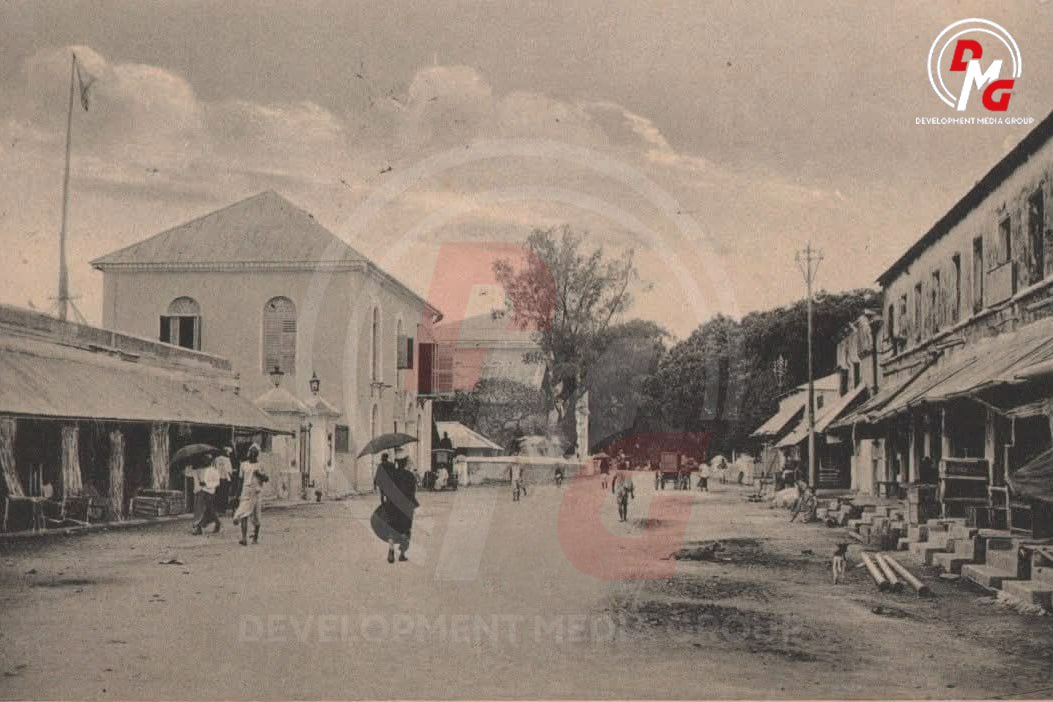
In 1874, British authorities introduced municipal administration and invested heavily in city development. Sittwe remained among Myanmar's major cities through the colonial period and up to 1973. After independence, from 1948 to 1974 (26 years), Sittwe served as the capital of "Arakan Division," and from 1974 to the present it has remained the capital of Arakan State.
Today, Sittwe remains Arakan's principal economic hub and the base for major foreign investment projects, including India's Kaladan Multi-Modal Transit Transport Project. A Korea-based company, BXT International, has also invested in the Sittwe Waterfront Project and associated housing/land development.
Geographically, Sittwe borders the Kaladan River and Pauktaw Township to the east, the Bay of Bengal to the south, and to the west and north it faces areas across waterways connected to Rathedaung and Ponnagyun Townships.
Transport links connect Sittwe to other townships and the mainland via road, waterways, and air routes (with rail infrastructure noted as under construction). Sittwe Airport served as a British airfield during World War II and was transferred in 1947 to civilian aviation administration. It is Arakan
State's key airport, with routes historically linking to cities including Yangon and Mandalay (and other local destinations).
The Sittwe-Yangon highway stretches more than 530 miles, passing through Ponnagyun, Kyauktaw, Mrauk-U, Minbya, Myebon, and Ann. Another coastal road corridor runs from Ann toward Kyaukphyu, Toungup, Ramree, Thandwe, Gwa, and beyond. Waterways connect Sittwe to northern towns (Buthidaung, Rathedaung, Ponnagyun, Kyauktaw, Mrauk-U) and southern coastal towns (Kyaukphyu, Ramree, Toungup, Manaung), using both government ferries and private speedboats.
India's port facilities in Sittwe were developed to accommodate international vessels. Additional domestic ports include Sittwe Port, Shwe Min Gan Port, and Sat Yoe Kya Port. Shwe Min Gan has been used for cross-border trade, including exports and imports connected to Bangladesh. A shipyard historically existed along Sat Yoe Kya Creek in the city center.
Enduring Natural Disasters, War, and Unrest
Sittwe's history includes war, natural disasters, major riots, mass movements, and repeated crises.
During World War II, in 1942, Japan launched a broader Southeast Asia military campaign and carried out air attacks on Sittwe, then a major colonial administrative port city. Bombing reportedly damaged factories, port infrastructure, roads, housing, shops, and government offices.
Among natural disasters, two storms stand out: the "Thirty Storm" and Cyclone Mocha.
On May 10, 1968, the "1300 Myanmar Era Storm" (also known as the "30 Storm") struck with winds exceeding 130 miles per hour, centered on Sittwe. Records report 1,037 deaths, the loss of 17,537 livestock (buffalo and cattle), and the destruction of 57,663 homes.
The storm also caused major maritime disasters: a Greek cargo ship reportedly sank at Sittwe Port while loading rice, and other vessels were thrown inland in nearby areas.
More recently, Cyclone Mocha caused major destruction in Sittwe as well. On May 14, 2023, winds of 130-140 miles per hour hit the Sittwe area. According to military council figures, Mocha damaged or destroyed 182,598 homes, 300 offices, 1,352 schools, 220 hospitals/clinics, and 1,701 religious buildings, with 145 deaths reported. Records also listed extensive losses of seed stock and livestock totaling 11,799.
Public Unrest and Sittwe
As Sittwe's population grew, it also became a center of political consciousness and public mobilization. Across different eras, the city reflected collective resistance to injustice and authoritarian rule.
The "Rice Crisis"
Despite being a rice-exporting region, Arakan experienced severe food shortages during the socialist era. In the rainy season of 1967, scarcity and hunger triggered public protest in Sittwe. On August 13, 1967, residents marched demanding rice distribution. Security forces opened fire, and more than 200 people were reportedly killed.
Accounts describe rice warehouses in Sittwe being full stockpiled for export while local residents were denied access. The violence became a defining trauma in the city's modern memory.
The 1988 Uprising
During the nationwide democracy movement of 1988, driven by economic collapse, repression, and currency policies, Sittwe residents also marched and protested alongside the rest of the country.
The "Saffron Revolution"
Sittwe also took part in the nationwide monk-led protests commonly associated with the Saffron Revolution, with marches led by monks across the city.
The 2012 Muslim-Arakanese/Rakhine Violence
In 2012, large-scale communal violence erupted in Arakan State during the USDP (Union Solidarity Development Party) government period. The conflict spread across multiple towns and reached Sittwe, where homes in several wards were reportedly burned and violent clashes occurred amid breakdowns in control.
Official government statements at the time reported more than 80 deaths, more than 100 injured, nearly 3,000 homes destroyed, and nearly 20 religious buildings damaged across the state. In Sittwe itself, thousands of homes from both communities were burned, and many residents were displaced. Afterward, authorities resettled communities into separate areas, establishing displacement camp locations to the west of the city.
Modern Development and City Life
Sittwe functions as a key entry point for goods from Bangladesh and for trade flows from townships across Arakan. Many livelihoods depend on agriculture, fishing, saltwater shrimp farming, trading and brokerage, and service work. The city has rice mills, fish and shrimp trading depots, cold storage facilities, ice plants, salt factories, and garment operations.
Exports of seafood and agricultural products move via Shwe Min Gan Port toward Bangladesh and through multiple routes toward central Myanmar.
Banks in Sittwe include KBZ, Yoma, Innwa, Myanmar Economic Bank, and other financial institutions. In education, Sittwe has multiple high schools and higher-education institutions including Sittwe University, Sittwe Technological University, and Sittwe Computer University, as well as vocational schools.
Healthcare facilities include a major general hospital, a traditional medicine hospital, and several private hospitals. The city also has major sports grounds, the Arakan State Hluttaw building, and other key public infrastructure.
Notable People from Sittwe
Sittwe has produced prominent figures across politics, public life, and society. This article highlights:
- U Re Kyaw Thu, remembered as an early pioneer of private banking services in Sittwe during the colonial era, supporting merchants and farmers when banking was dominated by British and Indian institutions.
- U Chan Htun, his son, a leading legal scholar from the late colonial to early independence years, known for expertise in British law and involvement in drafting Myanmar's 1947 Constitution.
- Venerable U Ottama, a major anti-colonial figure remembered for awakening national political consciousness.
- U May Aung, a prominent figure across colonial-era governance, law, and education, associated with the YMBA movement and educated at Cambridge.
- U Shwe Zan Aung, credited in historical accounts as an early translator of key Buddhist texts into English.
- Major General Twan Mrat Naing, associated with the Arakan Army and widely known in Myanmar's contemporary conflict landscape.
Landmarks in Sittwe
Sittwe retains historical buildings and traces from the colonial, independence, and military eras.
Key sites include:
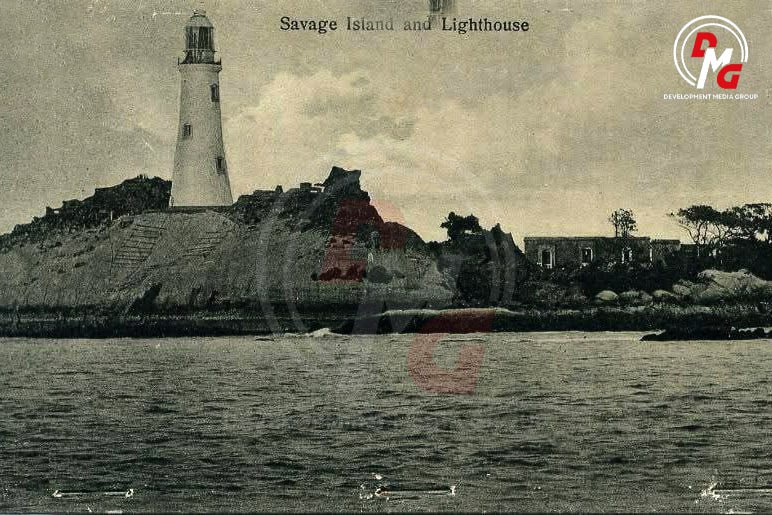
- Lay Chin Taung Lighthouse, built in 1844 and used until 1956, 138 feet high, once visible for up to 14 miles, located about two miles south of the city near the river mouth.
- The historic clock tower in the city center, around 139 years old, reportedly a gift commemorating Queen Victoria's 75th birthday in 1887.
Other notable locations include U Ottama Park, museums, the seafront/viewpoint, prominent monasteries and pagodas, churches, the central market, and the old Sittwe University campus. The city still contains colonial-era buildings such as the courthouse, main post office, port authority office, prison, and telegraph/communications buildings.
Festivals and cultural events include traditional Arakan Thingyan, major alms-offering ceremonies, tug-of-war festivals, and seasonal pagoda celebrations.
Sittwe Today: A City at 200, Facing an Uncertain Future
After decades of war, disasters, and upheaval, Sittwe's 200th year has become even more historically charged because the city is once again at the center of Arakan's present-day struggle.
With the start of 2026, conflict around Sittwe is intensifying. The Arakan Army is accelerating its offensives with the stated aim of taking control of Sittwe considered ancestral land of the Arakanese people while the military council is treating Sittwe as its last major fortress in northern Arakan and preparing to defend it desperately.
This article states that the Arakan Army has seized positions within roughly 2 to 4 miles of the ROC headquarters in Sittwe.
Since late 2023 and early 2024, many Sittwe residents have fled due to the broader town-seizure fighting across Arakan. The population remaining in the city is estimated here as about one-third of its previous level. Many residents are displaced into AA-controlled areas or to central Myanmar (including Yangon). Those who remain are largely people without sufficient means to leave.
Across Sittwe's wards, locked and abandoned homes, some reportedly damaged have become increasingly visible. The military council has tightened security in the city and deployed naval forces offshore.
No one can yet predict what will happen next. Will Sittwe on its 200th anniversary return to the hands of its local people, as this article frames it? Or will it remain under Myanmar's military rule? Sittwe's future remains uncertain.
This feature has traced the major mile-markers of Sittwe's two-century journey as a capital city. Yet many more stories, and many more records, still remain within Sittwe itself.
Happy birthday, Sittwe. May the great city endure.

Opinion
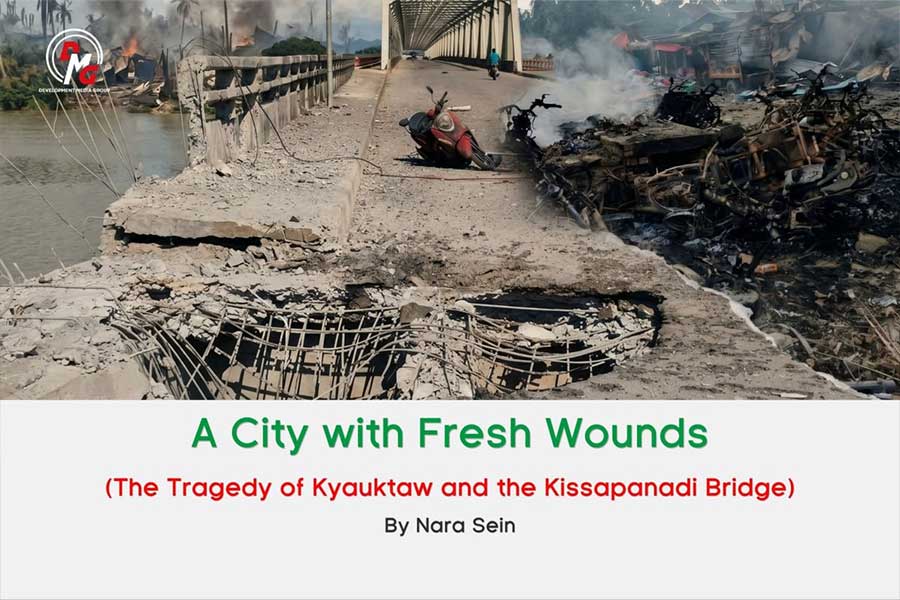
A City with Fresh Wounds (The Tragedy of Kyauktaw and the Kissapanadi Bridge)
By Admin 01 Oct 2026

Arakan Army’s Gains and the Changing Geopolitics of Arakan
By Admin 29 Sep 2026

Beyond Military Victory: What Is Myanmar’s Ultimate Political Objective?
By Admin 26 Sep 2026
UN at a Crossroads: Six Priorities for a Shared Future
By Admin 23 Sep 2026
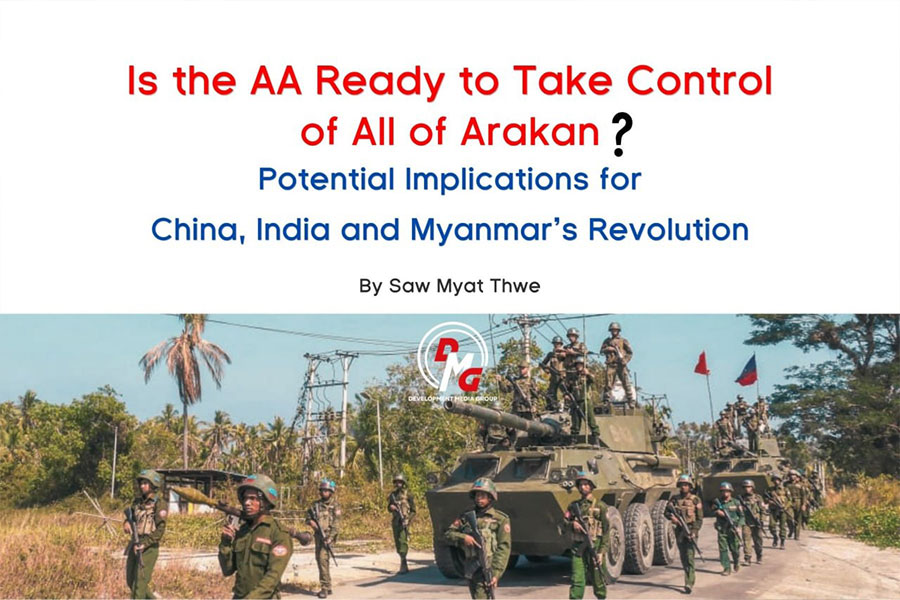
.jpg)
How Can Myanmar’s Political Crisis Be Brought to an End?
By Admin 13 Sep 2026
POLITICS

BUSINESS
Industry to manufacture finished goods from coconut starting in early 2020
By Aung Kaung Zaw 20 Nov 2019