
The Sunset Dreams of Elderly People with No One to Rely On
Several elderly women live there alone, with no family members to care for them, struggling through the twilight years of their lives. In truth, I return as much to see them as I do to revisit the neighborhood itself. I often wonder how they have managed to survive through these years of war.
01 Aug 2026

By Maung Mayu (Buthidaung)
Work frequently brings me back to my hometown. Yet each time I return, I cannot help but feel that the town has lost the liveliness and warmth it once possessed. It no longer bustles with the same energy. Perhaps that is why I seldom wander its streets as I used to. Even so, whenever I visit, I always find myself walking through the small neighborhood where I once lived.
Several elderly women live there alone, with no family members to care for them, struggling through the twilight years of their lives. In truth, I return as much to see them as I do to revisit the neighborhood itself. I often wonder how they have managed to survive through these years of war.
Walking slowly along the narrow lane, I noticed that the houses still stood close together, leaving scarcely any empty space between them. Yet they were no longer the same aging homes I remembered. Many had been rebuilt using salvaged bamboo walls, old timber and recycled corrugated iron sheets. The original houses had disappeared during the battle for the town, destroyed amid the military junta's indiscriminate attacks and the devastation of war.
Some of the elderly women who had once struggled through their final years in this neighborhood were no longer there. I learned that they had died while displaced by the fighting. They had survived only by depending on one or two remaining relatives who were themselves living in hardship and often lacked enough food. In a way, one might even say their deaths spared them from even greater suffering.
I do not say this without compassion. Had they survived until today, life would almost certainly have become even more difficult. During this war, even those of us who are still able to work have been struggling under the military junta's blockades of transportation and medicine supplies, soaring inflation, rising prices, unemployment and countless other hardships. If people who are still physically capable are finding it difficult simply to support their families, how much harder must life be for those who can no longer care for themselves?
Ahead of me, smoke drifted gently from a small hut. Beneath its makeshift lean-to, an elderly woman was preparing her meal. As I approached, she looked up at me but did not immediately recognize who I was.
I knew her well.
Everyone called her Ayee Chay, or "Little Auntie."
After looking at me for a moment, recognition finally appeared on her face. She smiled faintly and asked whether I had come home for a visit. Her voice was no longer as firm or lively as I remembered. It carried the unmistakable frailty of old age.
Despite her failing eyesight, she still had to cook her own meals. There was no one to help her, no one to earn a living for her, and no one to care for her when she became ill. She had never married and had no children.
When I was young, her family consisted of her elderly mother, an older brother and a younger brother. The two men collected vegetables and gathered firewood in the forest, while Ayee Chay sold what they brought home.
By the time war engulfed Buthidaung in November 2023, only Ayee Chay and one sibling remained. Both were already over seventy years old and increasingly weakened by age.
During the township-wide displacement in 2024, I met them again in a small village outside Buthidaung. They were living in a simple shelter built inside a relative's compound. During the early months of displacement, they occasionally received humanitarian assistance, but as time passed, the aid stopped coming. From then on, they survived largely through the kindness of better-off villagers who shared what little they could.
When Ayee Chay finally returned to town in late 2025, she returned alone.
Every member of her family had passed away.
Today, she spends the final chapter of her life in a small hut built for her by neighbors, surviving on occasional donations of rice, cooking oil and salt. She told me quietly that while relief assistance sometimes provided enough food to eat, she often wondered how she would survive once she became completely unable to care for herself.
Looking at Ayee Chay, a thought came to mind.
No one dreams of spending the final years of life in such loneliness. Yet none of us can predict where life will ultimately lead. Old age comes to everyone, though not always under the circumstances we hope for.
Most grandparents probably dream of spending their later years in a home filled with children and grandchildren. They long for sons and daughters who will care for them and keep them company.
But for elderly people like Ayee Chay, the dreams of life's sunset are far simpler.
Instead of a fragile hut that cannot keep out the wind and rain, they dream of a safe place to live. Instead of worrying about their next meal, they dream of having enough food each day. They hope for someone who will care for them when illness comes, and for companions with whom they can share the long, lonely evenings.
Young people dream of building a brighter future.
For those who have reached the sunset of life, the dream is simply to spend their remaining days with dignity, security and humanity.
There must be many elderly people across Arakan who, like Ayee Chay, are living out the final years of their lives with no one to rely on.
Earlier this year, I saw an elderly woman lying beside the road near the clock tower junction in Maungdaw, groaning in pain with no one beside her. In Kyauktaw, I have often seen elderly women with bent backs and failing eyesight leaning on walking sticks as they go from place to place asking for donations.
During the recent floods, I also heard the heartbreaking story of an elderly couple in Mrauk-U Township who went hungry because there was no one left to work or provide food for them.
Undoubtedly, many more elderly people across Arakan are enduring similar hardships in silence.
For this reason, I believe Arakan now urgently needs residential care homes or community shelters for elderly people who have no family or support.
The strength of a modern and developed society is measured not only by its roads, bridges, hospitals and schools, but also by how well it protects its most vulnerable people, older persons, people with disabilities and orphaned children.
A few days ago, I read a Facebook post by writer Maung Charry (Kanmhtaunggyi) entitled "Let's Help Those Who Have No One to Rely On."
Before the war, he had established a residential care center called the Ananda Metta Home for the Sick and Elderly, funded through donations from generous supporters. Tragically, just as the home was preparing to open, war broke out. The buildings were later destroyed, forcing him to abandon the project.
Yet after witnessing the growing number of elderly people without support, as well as people living with illness and disabilities, he has now resolved to try again.
Through his Facebook page, Maung Charry, he is appealing for public support to rebuild the initiative. He is seeking donations for building rent, rice, cooking oil, salt, bedding, cooking utensils and other daily necessities.
(Writer Maung Charry (Kanmhtaunggyi) is also traditional medicine practitioner Dr. Yan Naing Phyo.)
A charitable initiative born from the compassion of one individual can endure only if it receives the support of the wider community. It would be even more encouraging if an established charitable organization or a well-funded foundation could help bring such a care center into existence.
Building a home for elderly people who have no one to rely on is about far more than constructing another building.
It is about turning their sunset dreams into reality.
Nor is this the responsibility of one individual or one charitable organization alone.
It is the responsibility of Arakanese society as a whole.
Only through the combined generosity of ordinary people, the active participation of civil society organizations and meaningful policy support from the government can the sunset dreams of elderly people like Ayee Chay become more than dreams, and instead become a peaceful, dignified and compassionate reality.

Opinion
Surviving Amid the Bombs: Arakan's Quiet Resistance
By Admin 19 Oct 2026

Shadows Over Childhood: Confronting the Reality of Missing Children
By Admin 16 Oct 2026
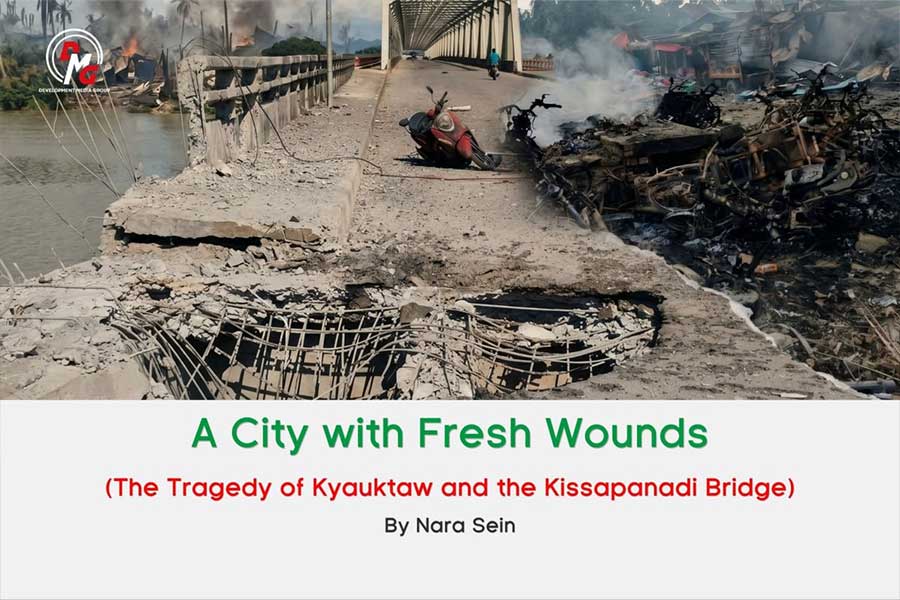
A City with Fresh Wounds (The Tragedy of Kyauktaw and the Kissapanadi Bridge)
By Admin 01 Oct 2026

Arakan Army’s Gains and the Changing Geopolitics of Arakan
By Admin 29 Sep 2026

Beyond Military Victory: What Is Myanmar’s Ultimate Political Objective?
By Admin 26 Sep 2026

UN at a Crossroads: Six Priorities for a Shared Future
By Admin 23 Sep 2026
POLITICS


BUSINESS
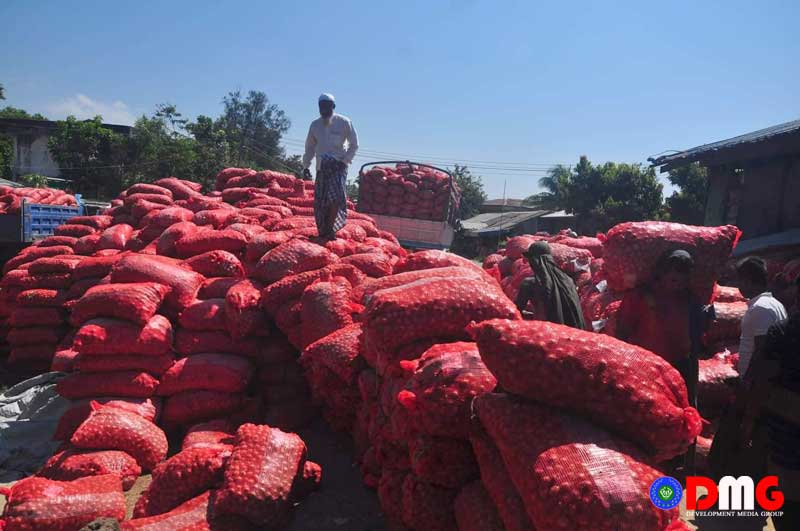
Industry to manufacture finished goods from coconut starting in early 2020
By Aung Kaung Zaw 20 Nov 2019