


- Deadly junta airstrike leaves Kyauktaw daily-wage earners jobless
- India pushes to accelerate work on Kaladan road project in 2027 working season
- Junta launches fresh multi-aircraft bombardment of Kyauktaw mountain ranges
- Fierce combat erupts in Kyindwe, southern Chin State as resistance forces capture junta troops
- Malaysian firms linked to Myanmar military aviation supply chain: JFM
Fewer migratory birds recorded in Arakan State this winter
The number of migratory birds entering Arakan State during the winter season has been declining year by year, according to local residents and environmental observers.
22 Dec 2025
DMG Newsroom
22 December 2025, Rathedaung
The number of migratory birds entering Arakan State during the winter season has been declining year by year, according to local residents and environmental observers.
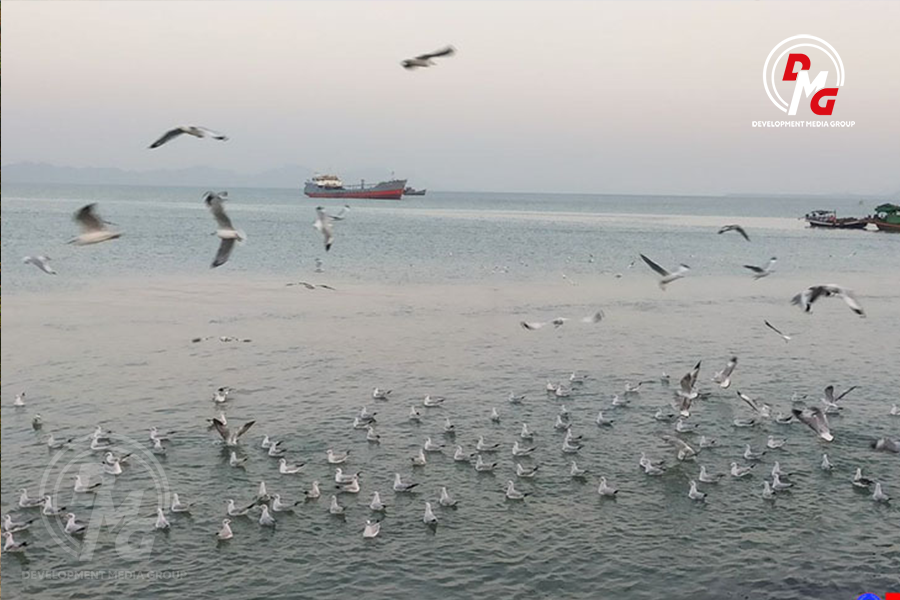
Migratory birds usually arrive in Arakan State in October and November, frequenting coastal areas such as Nanthar Island in Rathedaung Township and wetlands along the Mayu River. However, locals say sightings have dropped significantly this year.
Residents reported seeing only around ten groups of migratory birds, which were previously observed in large numbers.
“Every year, the number of wintering bird species decreases,” said a Rathedaung resident. “When we were young, we used to see Siberian birds and other wintering birds in large numbers. But over the years, their numbers have fallen, and this year we saw only about ten groups.”
Wintering bird species that arrive in Arakan State annually include spoon-billed sandpipers, dowitchers, various waterfowl species and green sandpipers.
“The spoon-billed sandpiper now has only about 500 individuals left worldwide, and only a few dozen come to Arakan State to winter,” said an environmentalist from the state. “It is an extremely rare species.”
Locals attributed the decline partly to heavy artillery fire following fighting in Arakan State, saying it has disrupted feeding grounds. As a result, species such as spoon-billed sandpipers, cranes and waterfowl have been seen only in small numbers.
A resident of Maungdaw Township said that not only migratory birds but also herons are becoming increasingly scarce in Arakan State.
“In Kyaukpandu Village, some houses have adopted herons and tried to tame them. At the same time, many people catch them with nets, and as a result herons have become very rare,” the resident said.
Local communities also cited illegal bird hunting, lack of protection for feeding grounds, freshwater and saltwater beaches, and mangrove forests as key factors driving the decline of bird populations.
Residents said bird trappers are active in areas such as Nanthar Island and along the Mayu River, where migratory birds frequently gather.
Environmental conservationists stressed the need for greater environmental awareness training and stronger law enforcement to protect migratory birds in Arakan State.
“The environment must be preserved. We need to avoid unnecessarily killing biodiversity and living creatures, and reduce tree cutting as much as possible. Everyone who can should participate in protecting mangrove forests,” said an environmental conservationist.
Locals said some bird species are on the verge of extinction due to commercial hunters who catch birds with nets at night in grazing areas.
An environmentalist urged the Arakan Army to impose strict bans on commercial bird hunting, warning that many bird species, including migratory birds, are becoming increasingly rare.
“We have seen a gradual decline in the number of migratory birds entering Arakan State year after year. Some species now face the threat of extinction,” the environmentalist said.
Migratory birds are species that move between the southern and northern hemispheres based on seasonal conditions and food availability.
According to conservationists, two of the world’s nine major migratory routes—the Central Asian–Indian Flyway and the East Asian–Australasian Flyway—pass through Myanmar, including Arakan State, during the winter season.

Top News

Deadly junta airstrike leaves Kyauktaw daily-wage earners jobless
By Admin 08 Oct 2026
India pushes to accelerate work on Kaladan road project in 2027 working season
By Admin 08 Oct 2026
Junta launches fresh multi-aircraft bombardment of Kyauktaw mountain ranges
By Admin 08 Oct 2026


Malaysian firms linked to Myanmar military aviation supply chain: JFM
By Admin 08 Oct 2026