

- High farming costs, falling yields hit Arakan farmers
- Junta airstrike hits high school in AA-held Maungdaw village
- Junta renews offensive to recapture Arakan Army-held Ponnagyun
- Arakan records most junta airstrikes in Myanmar, BNI report finds
- Family seeks rearrest of rape suspect who escaped ULA custody in Ann
High farming costs, falling yields hit Arakan farmers
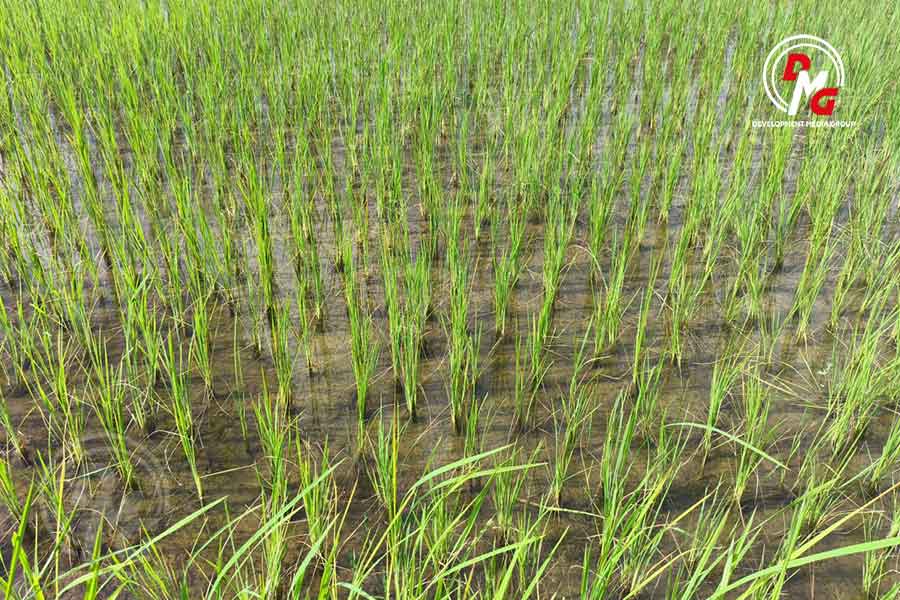
Low rainfall during the late monsoon, combined with soaring temperatures, has caused poor paddy heading across the Panmyaunggyi Creek area in Anjanapura Township, raising concerns among local farmers about a sharp decline in this year's harvest.
31 Oct 2026
DMG Newsroom
31 October 2026, Anjanapura
Low rainfall during the late monsoon, combined with soaring temperatures, has caused poor paddy heading across the Panmyaunggyi Creek area in Anjanapura Township, raising concerns among local farmers about a sharp decline in this year's harvest.
Flooding in the Panmyaunggyi Creek area during the early monsoon destroyed the initial crop plantings, forcing farmers to replant late in the season. The replanted crops are now struggling to develop heads and flower due to dry conditions.
"Repeated flooding pushed our replanting back to around September," U Sein Hla Kyaw, a farmer from Shwetaung Village, told DMG. "With very little rain since then, the paddy plants haven't even formed heads yet. Of the 10 acres of paddy I cultivated, only about one acre is developing properly. The remaining nine acres have failed to head."
The Panmyaunggyi Creek area encompasses around 20 villages, including Ohpyintaung, Ngatar, Pyinyaung, Shwetaung and Shwekyan. Local farmers said July flooding severely delayed planting, while subsequent dry conditions have stalled crop development.
Compounding the problem, the rainy season has ended without further rainfall, while temperatures have risen during the critical paddy heading stage.
To save their crops, some farmers are incurring high costs to pump water into their dry fields using motorized pumps.
"There is no water left in the fields, so we have to use water pumps," said U Maung Hla Wai, a farmer from Ohpyintaung Village. "I spent over K3 million cultivating 14 acres of paddy, but only about four acres will produce a harvest. The remaining 10 acres are completely lost. Normally, I harvest nearly 3,000 baskets of paddy each year. This year, I expect barely 800 baskets."
Farmers across Arakan State are facing serious challenges caused by armed conflict, natural disasters and economic hardship.
Ongoing military clashes have disrupted supply chains, making agricultural inputs such as chemical fertilizers, pesticides and fuel extremely scarce and expensive.
"Arakan State is currently suffering from the combined impacts of war and natural disasters," said U Kyaw Thaung, a farmer from Kyauktaw Township. "If agricultural production drops drastically, local food security will be severely compromised. Farmers desperately need direct support and assistance."
High cultivation costs and soaring diesel and fertilizer prices have contributed to a steady decline in cultivated acreage across Arakan State, alongside falling crop yields.
Farmers said climate-related shocks, including severe droughts and seasonal flooding, continue to damage farmland and reduce overall agricultural output.
According to the World Meteorological Organization (WMO), the current El Niño event could reach unprecedented strength by the end of 2026.

Top News
High farming costs, falling yields hit Arakan farmers
By Admin 31 Oct 2026

70 Arakan civil society groups call for no-fly zone, emergency humanitarian aid
By Admin 30 Oct 2026

ARSA steps up military activities in Maungdaw amid Sittwe fighting
By Admin 30 Oct 2026

Junta airstrike hits high school in AA-held Maungdaw village
By Admin 30 Oct 2026