

- Military operations spread despite decline in clashes, BNI report finds
- Junta aerial attacks force school closures across three Arakan townships
- Family demands swift arrest of statutory rape suspect in Werathani
- Women face shrinking employment opportunities in Myanmar, UNDP reports
- AA seizes five junta outposts as Arakan records most civilian-targeted airstrikes: NLTA
Extreme heat and water shortages threaten paddy fields across Arakan
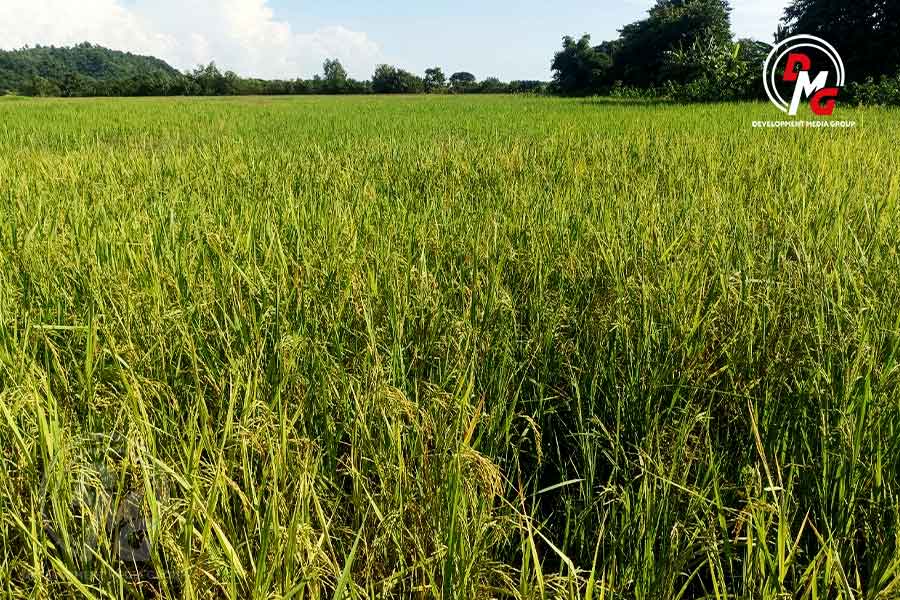
Paddy fields across Arakan State are turning reddish yellow as water sources dry up amid soaring temperatures this month, with some fields completely parched and the soil cracked, according to local farmers.
16 Oct 2026
DMG Newsroom
16 October 2026, Mrauk-U
Paddy fields across Arakan State are turning reddish yellow as water sources dry up amid soaring temperatures this month, with some fields completely parched and the soil cracked, according to local farmers.
Data from the junta-controlled Department of Meteorology and Hydrology (DMH) indicates that temperatures in Arakan State have reached between 32 and 34 degrees Celsius in recent days.
As the effects of the El Niño climate phenomenon begin to take hold, agricultural production across the state faces serious threats.
“As it hasn't rained, the paddy plants are suffering from water shortages and turning yellow and red,” said U Htwee Phyu, a farmer from Tawpanzin Village in Kyauktaw Township. “Highland fields have already run out of water. Only ponds retain some water. Late planted paddy crops are suffering the most.”
Farmers added that they currently lack access to timely information and remain largely unprepared for the anticipated effects of El Niño.
“Farmers don't know anything about El Niño yet,” said a female farmer from Teinnyi Village in Mrauk-U Township. “We want organizations like the United League of Arakan (ULA) to conduct public awareness campaigns about current weather conditions. Providing assistance such as water pumps for irrigation would also be extremely helpful.”
Arakan residents rely primarily on monsoon paddy cultivation. Although current crops have reached the flowering stage, drying water sources have stunted plant growth, leaving farmers deeply concerned about falling yields.
At the same time, farmers reported that local authorities and civil society organizations have yet to launch public education campaigns about El Niño.
“We understand that an intense El Niño weather anomaly is coming, but local residents in Arakan are completely in the dark,” said a young resident of Kyauktaw. “As a basic precaution, people should be informed about what to do and what to avoid during severe weather. Organizations and authorities should begin public education campaigns by distributing information cards or pamphlets.”
Meteorologists project that the El Niño phenomenon will reach peak intensity between November and December 2026 and continue through January 2027.
Experts have warned that El Niño could bring severe droughts and extreme heatwaves to Arakan State, advising farming communities to avoid using chemical fertilizers during periods of extreme heat and to maintain adequate water reserves.
The DMH has also issued advisories warning that El Niño could cause extreme weather conditions in the coming year, including irregular rainfall, unpredictable storm activity, extreme daytime heat and severe drought during the upcoming summer months.

Top News
Military operations spread despite decline in clashes, BNI report finds
By Admin 17 Oct 2026
Junta aerial attacks force school closures across three Arakan townships
By Admin 17 Oct 2026

Family demands swift arrest of statutory rape suspect in Werathani
By Admin 17 Oct 2026
Women face shrinking employment opportunities in Myanmar, UNDP reports
By Admin 17 Oct 2026