
ULA expands governance, anti-drug measures amid deepening Arakan crisis: CAS
The United League of Arakan/Arakan Army (ULA/AA) expanded its administrative and judicial measures across areas under its control in August, while intensifying conflict, economic hardship and humanitarian pressures continued to affect communities across Arakan, according to a new report by the Center for Arakan Studies (CAS).
08 Sep 2026
DMG Newsroom
8 September 2026, Yangon
The United League of Arakan/Arakan Army (ULA/AA) expanded its administrative and judicial measures across areas under its control in August, while intensifying conflict, economic hardship and humanitarian pressures continued to affect communities across Arakan, according to a new report by the Center for Arakan Studies (CAS).
CAS’s Monthly Arakan Review for August 2026 examines political, economic, social and humanitarian developments in Arakan. The report says the ULA/AA introduced new governance measures while the conflict with the Myanmar military intensified on several fronts.
Among the measures cited were curfews in several townships, a ban on motorcycle driving by children under 16, the establishment of a special court for rape and other major crimes, and a 50 percent tax on alcohol and tobacco. The report also said the ULA/AA introduced additional administrative measures as it consolidated governance in territories under its control.
The report highlighted anti-drug measures involving 19 young people aged 16 to 20 who had been detained for drug use in Kyauktaw Township. They included 18 males and one female, with 13 studying between Grades 8 and 12.
According to CAS, the Arakan People’s Revolutionary Government’s Department of Law Enforcement and Public Security provided the youths with rehabilitation, moral education and awareness programmes before releasing them to their families on August 11. They also pledged not to use drugs again.
The governance expansion came amid worsening social concerns. CAS reported cases of sexual violence that prompted calls from Arakanese women for greater transparency and justice, alongside increasing reports of theft and other crimes in some areas. The report also noted healthcare pressures, teacher shortages, declining school enrolment and the introduction of a new Arakanese-language curriculum.
Arakan’s economy also remained under significant strain. Cash shortages drove up mobile-money withdrawal fees, while prices of some basic commodities increased. CAS said high taxes were weakening legal border trade with Bangladesh, while flooding damaged monsoon crops in Mrauk-U and surrounding areas. Airstrikes along the India-Paletwa trade route also threatened regional supply chains.
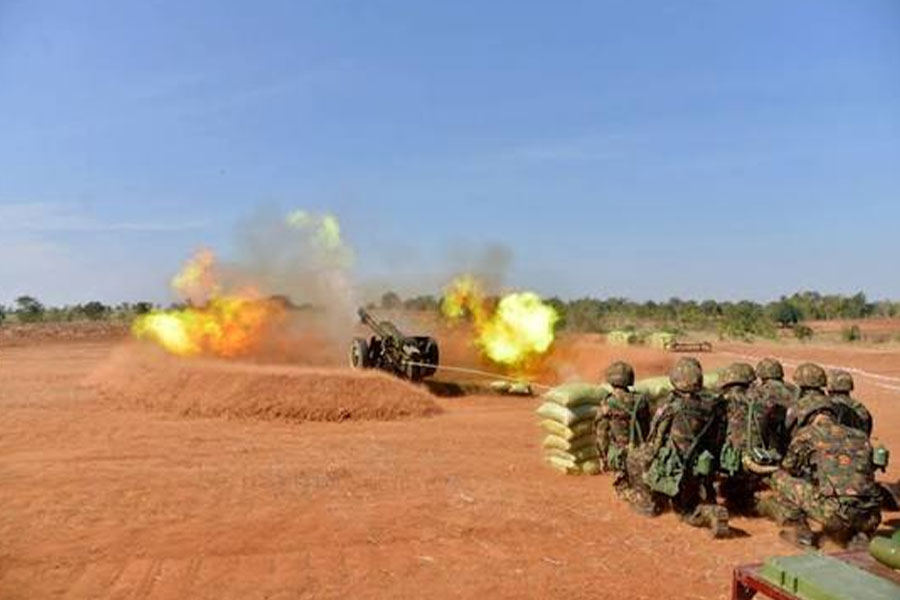
At the same time, fighting between the Myanmar military and AA intensified. CAS said the military increased its reliance on airstrikes and deployed major reinforcements, including around 1,000 troops to Sittwe on August 24 and hundreds more to Mindon two days later, as fighting continued along several fronts.
The humanitarian situation remained particularly serious. Citing DMG tallies, the report said more than 100 civilians were killed or injured in airstrikes during August, while repeated attacks forced residents to flee in several townships. More than 4,000 displaced people in Kyaukphyu were also in need of emergency assistance by the end of the month.
Local charities, monastic groups, overseas Arakanese communities and international humanitarian organisations provided food, shelter and medical assistance, but CAS said growing needs continued to overwhelm available support. Displaced children and pregnant women faced malnutrition, while fishermen and other civilians suffered further livelihood losses amid conflict and restrictions.
The August review presents a contrasting picture of Arakan: the ULA/AA is expanding administrative structures and social controls in areas under its authority, while continuing warfare, economic disruption and humanitarian needs are placing increasing pressure on civilians.
CAS said its monthly review draws on information from local media outlets, including DMG and Western News, and is intended to provide a broader understanding of political, economic, social and humanitarian developments in Arakan.

Top News
Clashes intensify at three locations near Sittwe ROC
By Admin 19 Oct 2026
Junta extends martial law in 55 townships, including AA-held areas
By Admin 19 Oct 2026
Financial hardship limits access to healthcare in Arakan
By Admin 19 Oct 2026
Rice shortages worsen in Taungup as prices soar
By Admin 19 Oct 2026
Junta airstrike kills at least seven, injures many in Paletwa Twsp
By Admin 19 Oct 2026