
Hindu devotees scale back Shanti Mata festival amid airstrike fears
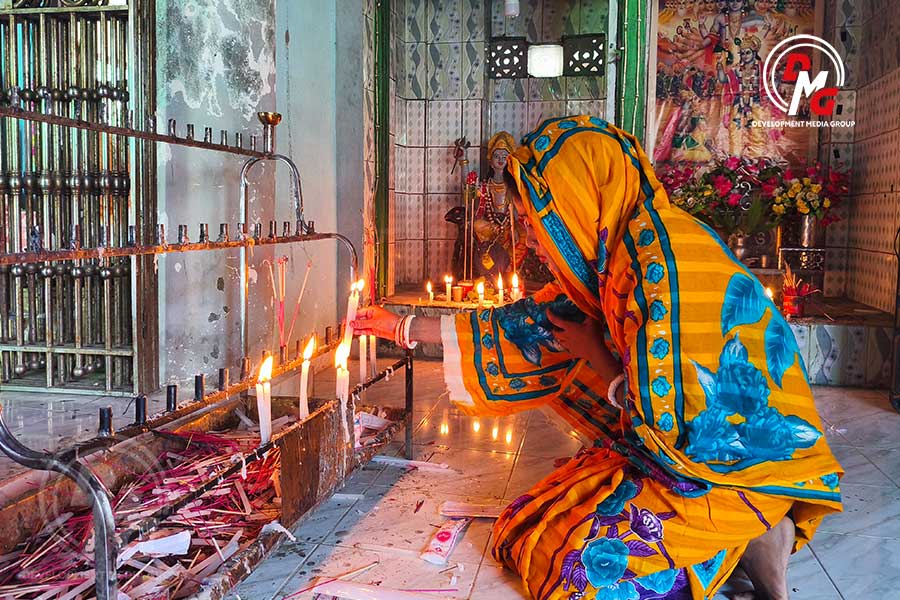
The annual Shanti Mata festival, a Hindu religious observance, was held on a smaller scale in areas controlled by the Arakan Army in Arakan State this year amid fears of military junta airstrikes.
20 Oct 2026
DMG Newsroom
20 October 2026, Kyauktaw
The annual Shanti Mata festival, a Hindu religious observance, was held on a smaller scale in areas controlled by the Arakan Army in Arakan State this year amid fears of military junta airstrikes.
Although the festival is traditionally marked by large public gatherings, local residents said this year's celebrations were held quietly to avoid attracting airstrikes.
"In previous years, the festival was celebrated on a grand scale," said a local festival organizer. "This year, we had to worry about airstrikes. Because junta forces target public gatherings with aerial bombardments, we did not dare hold large scale celebrations. We refrained from inviting outside guests and restricted the event strictly to residents within our own village."
Under normal circumstances, the Shanti Mata festival is celebrated over at least five days each October, with Hindu worshippers gathering for community prayers, traditional drumming and dance performances.
Devotees revere Shanti Mata as a protective deity believed to grant health, wisdom, prosperity and protection from hardship.
In previous years, thousands of worshippers from various townships gathered in Kyauktaw, Buthidaung and Maungdaw to participate in the festival.
"Because of airstrike fears, turnout was very low," a Hindu woman said. "In past years, visitors came from other townships. This time, we intentionally refrained from notifying people to prevent large crowds from forming."
During the festival, devotees offer Shanti Mata scented oils, lamps, flowers and 8 to 10 varieties of fruit, including bananas, grapes, apples and guavas. The observances include vegetarian feasts, devotional recitations by religious leaders, nightly traditional drumming, prayers and sacred dances.
On the final day of the festival, devotees immerse the idol of Shanti Mata in nearby rivers or streams, accompanied by floral offerings and floating lamps.

Top News
Hindu devotees scale back Shanti Mata festival amid airstrike fears
By Admin 20 Oct 2026
.jpg)
Junta aircraft drop over 20 bombs in Kyauktaw
By Admin 20 Oct 2026
18 journalists remain detained in Myanmar, Athan reports
By Admin 20 Oct 2026
Junta airstrike destroys homes in Kyeintali Town
By Admin 20 Oct 2026
Wild elephants destroy farmland in northern Maungdaw
By Admin 20 Oct 2026