
- Telenor charged in Norway over alleged complicity in crimes against humanity in Myanmar
- Junta launches multi-front offensive at five locations in Kyaukphyu
- Heavy fighting enters second week along Sittwe-Ponnagyun border
- 16-year-old sentenced to 10 years for child rape and murder in Maungdaw
- Civilian casualties rise in southern Arakan amid relentless junta bombardments
Weekly Highlights from Arakan (Feb 23 to March 1, 2026)
In an era when daily news from Arakan is often fragmented and fast-changing, DMG's Weekly Highlights of Arakan brings clarity, depth, and context to the stories that matter most.
02 Mar 2026
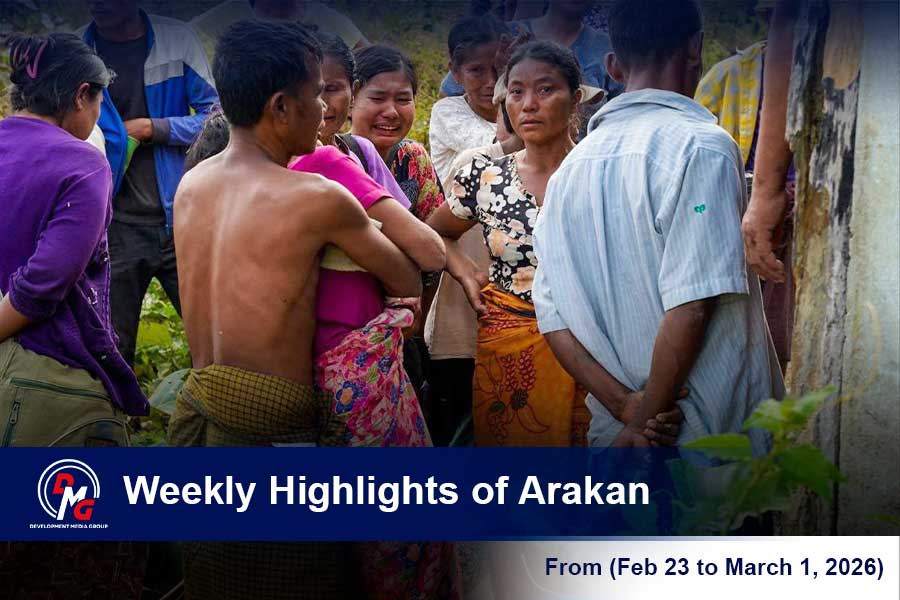
In an era when daily news from Arakan is often fragmented and fast-changing, DMG's Weekly Highlights of Arakan brings clarity, depth, and context to the stories that matter most.
Each week, we round up key political, military, social, and humanitarian developments across Arakan State - connecting the dots between events and offering analysis to help audiences see the bigger picture.
This series is designed for readers and viewers seeking a concise yet comprehensive understanding of how ongoing conflict, governance shifts, and community issues continue to shape lives across Arakan.
Death toll rises to 18 after junta airstrike on Ponnagyun village market
The death toll from the military junta’s airstrike on Yoengu Village, part of Arakan State’s Ponnagyun Township, has risen to 18 after a wounded civilian died while receiving emergency medical treatment.
The junta airstrike targeted the vicinity of the village market on February 24, killing 17 civilians, including women and children, and injuring 14 others. The latest fatality, an elderly woman, died on February 25 from injuries sustained in the attack.
The junta’s recent airstrike on Yoengu Village in Ponnagyun Township stands as one of the deadliest incidents of civilian casualties and property destruction in the state. In the aftermath of the attack, residents of Yoengu and across Ponnagyun Township are living in fear, with many being forced to flee their homes in search of safety.
This tragedy follows the military regime’s December 10, 2025, airstrike on the Mrauk-U Hospital, which resulted in mass casualties. The Yoengu Village incident is now documented as the second-deadliest attack of its kind.
According to data compiled by DMG, there have been at least 12 separate incidents in Arakan State where junta airstrikes have resulted in mass casualty events defined as incidents involving 10 or more deaths. These documented events include three incidents each in Mrauk-U and Kyauktaw, two incidents each in Ponnagyun and Kyaukphyu and one incident each in Rathedaung and Ramree Townships.
As the military regime continues to intensify its aerial bombardments across Arakan State, local residents are facing daily life-threatening risks. These ongoing attacks have severely disrupted social and economic stability, leaving the population under constant threat and extreme insecurity.
Arakan Army signals willingness to forge strategic partnership with Bangladesh’s new government
The Arakan Army (AA) has expressed its intention to establish a strategic partnership with Bangladesh’s new government, citing long standing historical ties between the two regions.
In a congratulatory message to newly appointed Bangladesh Foreign Minister Dr. Khalilur Rahman, the Arakan Army signaled its readiness for closer cooperation, according to a report by the state-run Bangladesh Sangbad Sangstha (BSS).
The message stated that the Arakan Army is prepared to work with Bangladesh on the Muslim refugee crisis and other humanitarian issues, the BSS report said.
In what analysts described as a goodwill gesture, the Arakan Army recently released several Bangladeshi fishermen who had been detained for illegal fishing in Arakan waters.
Observers view the move as an effort to foster positive relations with the newly formed administration in Dhaka.
Border affairs experts noted that communication encountered challenges under the previous interim government led by Dr. Muhammad Yunus, but said the current elected government is expected to engage more actively on trade, border stability and the repatriation of Muslim refugees.
The Arakan Army previously established trade links with Bangladesh through the Kanyinchaung Economic Zone and border points such as Taungpyo Letwe after seizing control of Maungdaw. However, trade has largely stalled due to border instability and restrictions imposed by Bangladesh.
Analysts also pointed to the continued presence of armed groups, including the Arakan Rohingya Salvation Army (ARSA), Rohingya Solidarity Organization (RSO), Arakan Rohingya Army (ARA) and Rohingya Islami Mahaz, in the Maungdaw border area as a significant security concern requiring coordinated efforts between the Arakan Army and the Bangladesh government.
Approximately 1.3 million Muslim refugees are currently sheltering in Bangladesh. While Dhaka continues discussions with the UN and international partners on repatriation, observers believe engagement between the new Bangladeshi government and Arakan State could produce more practical outcomes.
Clashes continue in Sittwe as junta reinforces naval, armored deployment
Clashes have erupted between the Myanmar military regime and the Arakan Army (AA) near Wahbo and Tawkan Villages in Sittwe Township, with the junta deploying additional naval vessels and armored vehicles, according to military sources.
Fighting began on February 23, with the regime positioning armored vehicles near Amyint Kyun Village on the border of Ponnagyun Township and increasing its naval presence offshore.
The source said that while four warships were previously seen in waters near Sittwe, as many as seven vessels have been spotted in recent days.
The Arakan Army currently controls Wahbo Island, while the military remains positioned in Tawkan, Kyantaw and Gantgawkyun villages across the creek, creating a tense frontline standoff.
As fighting intensifies, junta warships have shelled villages along the Sittwe-Ponnagyun border, with artillery support from the No. 12 Police Battalion based in Sittwe.
The renewed fighting in Sittwe follows a period of relative calm that had lasted since the first week of February.
Sittwe remains one of the few major urban centres in northern Arakan State still under junta control. The Arakan Army has maintained a blockade on the city since seizing neighbouring townships, including Ponnagyun, Rathedaung and Pauktaw.
As the capital of Arakan State, Sittwe holds strategic and symbolic significance for the military regime, which has reinforced the city with additional troops and tightened security measures.
Over 200 IDPs in Ponnagyun struggle without shelter, food aid
More than 200 internally displaced persons (IDPs) in Ponnagyun Township, Arakan State, are facing severe accommodation difficulties and urgently need assistance for shelter and food, according to displaced residents.
The group had been taking temporary refuge at a monastery in Yoetayoke Village but were recently told they could no longer stay there.
The displaced families are now building makeshift shelters in open fields using their own limited resources, while those unable to construct huts are staying with relatives in overcrowded conditions.
The IDPs include children, newborns and elderly people. With the summer season approaching, residents fear extreme heat could trigger health problems.
Access to clean water is another pressing concern. The existing well is reportedly contaminated, resulting in cases of diarrhea and skin diseases among children.
With no secure shelter in place, IDPs are also worried about potential health crises during seasonal changes. They fear their fragile huts will not withstand strong winds and rain, raising concerns of further hardship in the months ahead.
Nearly 600,000 people have been displaced across Arakan State due to ongoing military conflict, and many are struggling to cope with food insecurity, inadequate shelter and limited access to healthcare.
International and local humanitarian assistance has declined compared to previous years. Combined with scarce job opportunities and rising commodity prices, displaced communities are facing deepening hardship.
Kyaukphyu IDPs forced to flee again amid junta airstrikes and artillery attacks
Residents of Kyaukphyu Township say internally displaced persons (IDPs) have been forced to relocate once again due to escalating airstrikes and heavy artillery attacks by Myanmar’s military regime, leaving thousands in urgent need of emergency assistance.
The regime has targeted villages near Meekyaung Yay Thauk and Mawgyi with heavy artillery, mortar fire and drone-assisted aerial bombardments, forcing villagers to flee from temporary shelters.
There are currently more than 60,000 IDPs from about 40 villages across Kyaukphyu Township. They are sheltering in displacement camps, forests and other temporary locations, where they face severe shortages of food and medicine.
Displaced residents said they were already struggling with inadequate food and shelter before being uprooted again by the junta’s continued bombardment.
Beyond the lack of shelter, many families are struggling to feed their children as food supplies dwindle.
Although some local humanitarian groups are providing assistance, aid remains far from sufficient given the scale of the crisis.
IDPs are urgently calling on humanitarian organizations to scale up emergency support.
Fighting in Kyaukphyu, southern Arakan State, began on 20 February 2024 and has now lasted for more than a year.
Junta attacks kill 42 civilians, injure 50 in Arakan State in February
Civilian casualties continued to rise in Arakan State in February amid airstrikes and artillery attacks by Myanmar’s military regime.
According to figures compiled by DMG, a total of 92 civilians were killed or injured during the month, including 42 deaths and 50 injuries.
The casualties were primarily caused by airstrikes, drone attacks and heavy artillery shelling, with airstrikes accounting for the highest number of victims.
On February 24, the military regime carried out an airstrike on a local market in Yoengu Village, Ponnagyun Township, killing 20 civilians, including children, and injuring 13 others in a mass casualty incident.
Among those killed and injured by airstrikes, artillery and landmines in February were 13 children, nine killed and four injured, and 50 women, including 24 deaths and 26 injuries. Women accounted for the highest number of casualties.
The Arakan Army currently controls 14 townships in Arakan State. Despite this, the military regime continues to launch airstrikes, artillery and drone attacks on both areas under Arakan Army control and territories under its own administration.
The targeting of non-military sites, including schools, hospitals, markets, monasteries and residential areas, has contributed to a rise in civilian casualties in recent months.
The military regime's systematic targeting of non-military areas where civilians reside has led to a monthly surge in deaths and injuries, leaving the local population in a state of extreme insecurity.
Since the beginning of 2026, the military regime has significantly intensified its aerial campaign across Arakan State, launching a continuous series of bombardments on areas under the control of the Arakan Army (AA).
Human rights organizations have strongly condemned these actions, particularly the military regime's pattern of mass-casualty airstrikes, including the recent devastating bombing of Yoengu Village, as acts of violence against innocent civilians.

Opinion
.jpg)
How Can Myanmar’s Political Crisis Be Brought to an End?
By Admin 13 Sep 2026

By Cutting Trees, We Are Killing Ourselves
By Admin 06 Sep 2026

A Modern August We Must Never Forget
By Admin 31 Aug 2026
Arakan’s Political Shifts and the Debate Over Rights and Governance
By Admin 27 Aug 2026
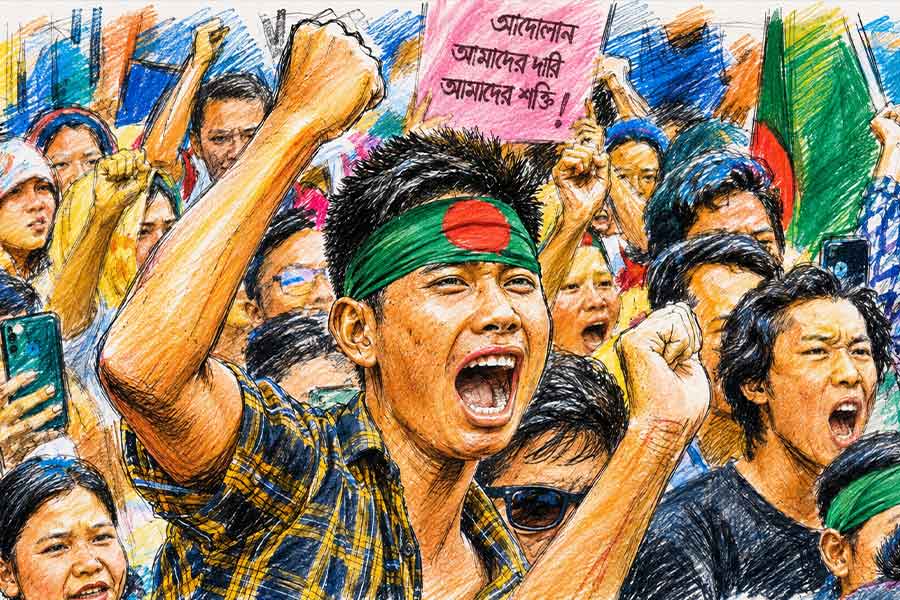
Securing Rights for Bangladesh's Indigenous Peoples is Indispensable
By Admin 09 Aug 2026
POLITICS

BUSINESS
Industry to manufacture finished goods from coconut starting in early 2020
By Aung Kaung Zaw 20 Nov 2019