
- Myanmar junta accused of disguising aviation fuel imports as diesel: JFM
- Arakan records most junta airstrikes as 214 civilians killed across Myanmar: BNI
- High airfares leave low-income families stranded in blockaded Sittwe
- MSF rrges civilian protection after Sittwe shelling kills two, injures 17
- ULA warns Arakan residents of airstrike risks during Thadingyut festival
Analysts say regime keeping Daw Aung San Suu Kyi detained to serve its own interests
Political analysts say that although the regime released former President U Win Myint under a pardon in April, the continued detention of former State Counsellor Daw Aung San Suu Kyi appears to be aimed at serving the regime’s own political interests.
13 May 2026
DMG Newsroom
13 May 2026, Nay Pyi Taw
Political analysts say that although the regime released former President U Win Myint under a pardon in April, the continued detention of former State Counsellor Daw Aung San Suu Kyi appears to be aimed at serving the regime’s own political interests.
On April 30, junta-chief-turned President Min Aung Hlaing announced that Daw Aung San Suu Kyi had been transferred to house arrest. However, her whereabouts remain undisclosed, and meetings with her continue to be prohibited.
Observers say the regime is maintaining control over Daw Aung San Suu Kyi in order to use her as political leverage.
Political analyst Dr. Sai Kyi Zin Soe said, “Currently, the regime likely considers that the right time for political or economic gain, or international recognition, has not yet arrived to justify her release. They won't release her immediately. However, if the regime feels certain that her release would secure full participation in ASEAN, ease international sanctions, open trade relations, and unlock diplomatic ties, they may proceed with such a deal.”
He added that the regime remains reluctant to release Daw Aung San Suu Kyi because of her immense public support. He also noted that the military, concerned over the decline of its political role between 2010 and 2020, is attempting to reestablish its grip on power.
Dr. Sai Kyi Zin Soe further pointed out that although former President U Win Myint was released, he still faces severe restrictions unlike the political atmosphere seen after 2010.
“Specifically, the way U Win Myint was released is not like the 2010 model where political activity was permitted. On one hand, he is still listed as a leader in the National Unity Government, and many continue to recognize him as the President. His name also remains at the United Nations. However, despite his release, U Win Myint has no freedom of movement. He still lacks the right to participate politically, the right to speak out, and the opportunity to meet the public,” Dr. Sai Kyi Zin Soe continued.
Organizations assisting political prisoners say that although the regime announces amnesties to gain international favor, the number of prisoners actually released remains very limited.
Critics also argue that the transfer of Daw Aung San Suu Kyi to house arrest does not represent genuine freedom, but rather a political tactic aimed at reducing international pressure.
“The regime wants to follow the scenario used by their predecessors, like the post-2010 U Thein Sein government. They want to show they are releasing politicians and working toward peace. However, they seem very afraid of Daw Aung San Suu Kyi and the NLD reentering the political arena. This is likely why they do not dare to release an elderly woman over the age of 70. Furthermore, the peace process now is unlike that period, so those possibilities are unlikely,” a politician in Arakan State analyzed.
Activists assisting political prisoners said that since the 2021 military coup, the junta has arrested and imprisoned senior NLD leaders and ministers from Daw Aung San Suu Kyi’s government, while only a small percentage of detainees have been released through recent amnesties.
Daw Aung San Suu Kyi, a Nobel Peace Prize laureate, was arrested by the military on February 1, 2021. She was later charged and sentenced under multiple laws, including the Export and Import Law, the Natural Disaster Management Law, and the Anti-Corruption Law.
On April 30, 2026, one sixth of her remaining 22-year prison sentence was reduced, and she was ordered to serve the remaining 18 years at a designated residence. Although the regime announced her transfer to house arrest, it has not officially disclosed the location where she is being held.
Reports suggest she may be staying at the residence of a former minister in Nay Pyi Taw, though this has not been independently confirmed, and she remains completely isolated from the outside world.
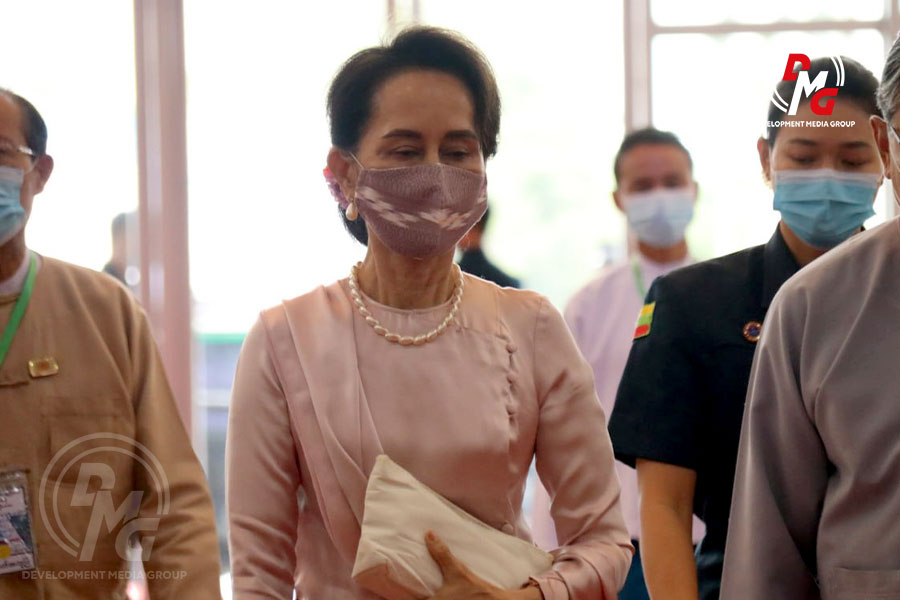
Although regime-controlled media released a recent photograph of Daw Aung San Suu Kyi, she has still not been permitted in person meetings with family members or lawyers. This has fueled growing domestic and international concern regarding her health condition.
The international community, including the European Union, United Nations, the United States, Japan, Norway, United Kingdom, and ASEAN, continues to call for the immediate and unconditional release of Daw Aung San Suu Kyi and all those unjustly detained.

Top News
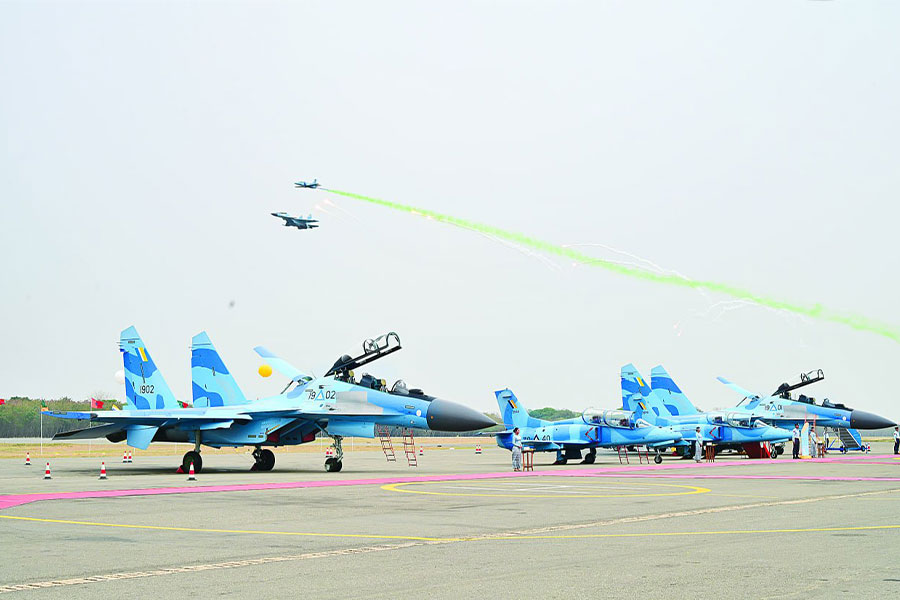
Myanmar junta accused of disguising aviation fuel imports as diesel: JFM
By Admin 26 Oct 2026
Arakan records most junta airstrikes as 214 civilians killed across Myanmar: BNI
By Admin 26 Oct 2026
High airfares leave low-income families stranded in blockaded Sittwe
By Admin 25 Oct 2026
MSF rrges civilian protection after Sittwe shelling kills two, injures 17
By Admin 25 Oct 2026
ULA warns Arakan residents of airstrike risks during Thadingyut festival
By Admin 24 Oct 2026