

Betel leaf cultivation booms in Arakan State amid rising prices
Betel leaf cultivation in Arakan State is thriving as prices rise due to exports to Bangladesh and India, with growers reporting improved livelihoods.
16 Jan 2026
DMG Newsroom
16 January 2026, Kyauktaw
Betel leaf cultivation in Arakan State is thriving as prices rise due to exports to Bangladesh and India, with growers reporting improved livelihoods.
The price of betel leaf in the Arakan market has increased by more than K15,000 per viss, rising from around K25,000 last month to K40,000 this month.
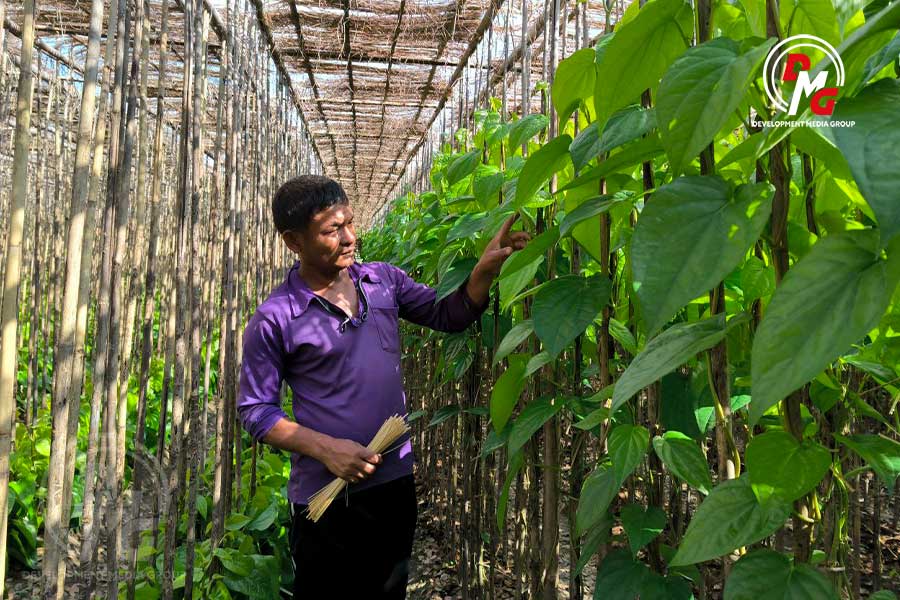
"Betel leaf from Arakan State is bought by traders from Bangladesh and India. People from Buthidaung and Maungdaw also buy betel leaf, so prices have gone up," Daw Than Win, a betel leaf grower from Kyaukgusu Village in Kyauktaw Township, told DMG.
"This month, one viss of betel leaf is selling for K40,000. Last month, it was K35,000, while one viss of small-sized betel leaf was K30,000. Prices vary depending on buyers," she said.
Daw Than Win added that her family has been engaged in betel leaf cultivation for more than 15 years.
Although there is a betel leaf market in Arakan State, farmers say the absence of wholesalers forces them to sell their produce only in village markets.
"In Arakan State, there is a betel leaf market, but there are no brokerages. If there were wholesalers, it would be more convenient to transport betel leaves to the market at the same time," said U Maung Aung Naing, another betel leaf farmer from Kyaukgusu Village.
Betel leaf cultivation is practiced in several townships in Arakan State, including Ponnagyun, Kyauktaw, Mrauk-U, Minbya, Rathedaung, Ann, Myebon, Pauktaw, Ramree and Taungup.
However, plantation owners say expansion is constrained by a shortage of betel leaf plants.
"It is very difficult to find betel leaves. Not every plantation has usable plants. Diseased plantations cannot be bought. Sometimes, when I go to villages to find betel leaves, I return empty-handed. It can take up to a week to find healthy plants," U Maung Aung Naing said.
Betel leaf plantations can only be cultivated in the same location for one year. If the plants die, farmers must find new land, as replanting in the same place is not possible.
Farmers also said that Cyclone Mocha in 2023 destroyed many plantations, leading to a continued shortage of betel leaves in Arakan State.
Betel leaf plants are vulnerable to diseases such as leaf spot, black spot and joint rot, requiring careful maintenance. They grow best in sandy loam soil and are less likely to thrive in areas with high humidity and direct sunlight.
In Arakan State, where local food production is limited, the military regime's road blockades have caused shortages of basic food and goods, severely affecting daily life. Farmers say the strong betel leaf prices are helping to ease economic hardship.

Top News
Clashes intensify at three locations near Sittwe ROC
By Admin 19 Oct 2026

Junta extends martial law in 55 townships, including AA-held areas
By Admin 19 Oct 2026

Financial hardship limits access to healthcare in Arakan
By Admin 19 Oct 2026
Rice shortages worsen in Taungup as prices soar
By Admin 19 Oct 2026
Junta airstrike kills at least seven, injures many in Paletwa Twsp
By Admin 19 Oct 2026