
- Financial hardship limits access to healthcare in Arakan
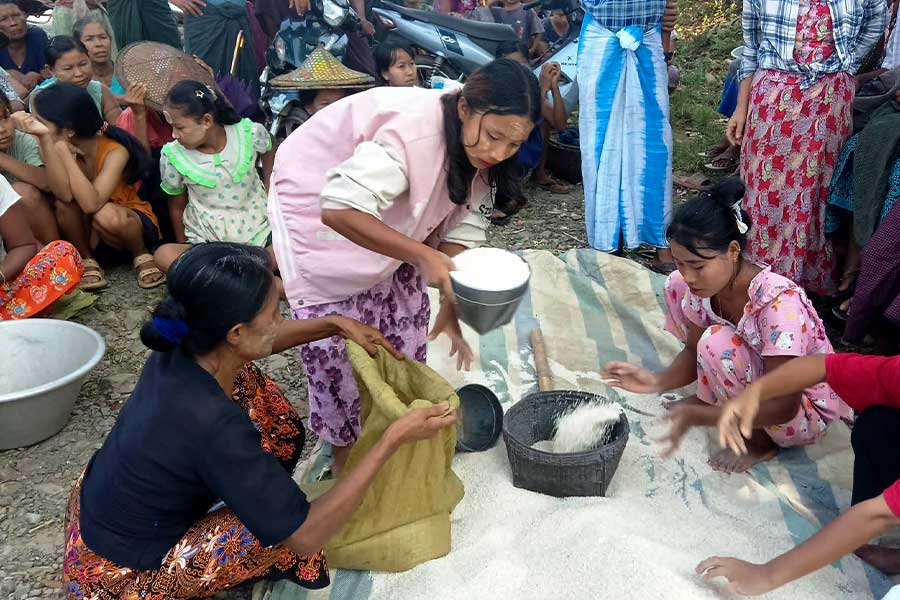
- Rice shortages worsen in Taungup as prices soar
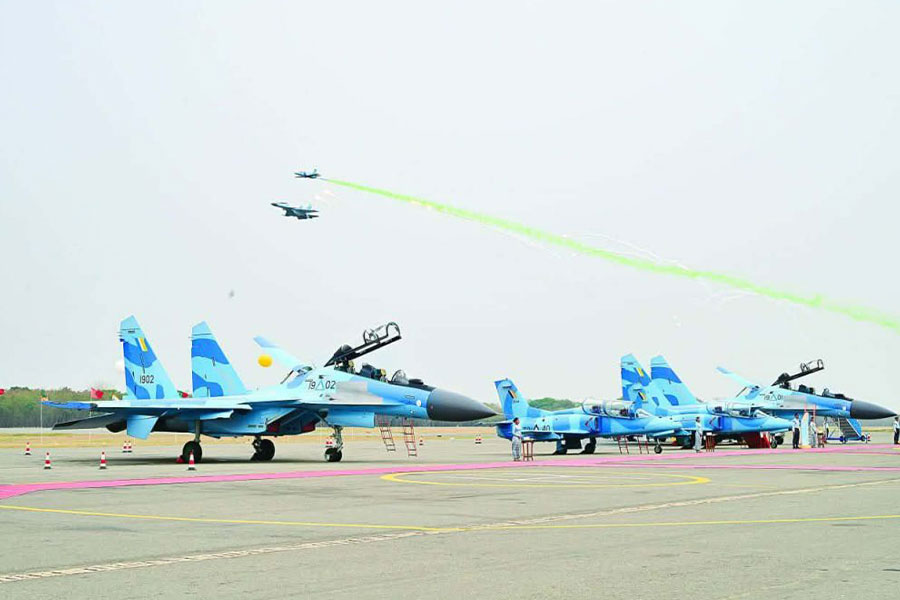
- Junta airstrike kills at least seven, injures many in Paletwa Twsp
- Military operations spread despite decline in clashes, BNI report finds
- Junta aerial attacks force school closures across three Arakan townships
Arakanese zat pwe performers struggle to survive as conflict halts traditional shows
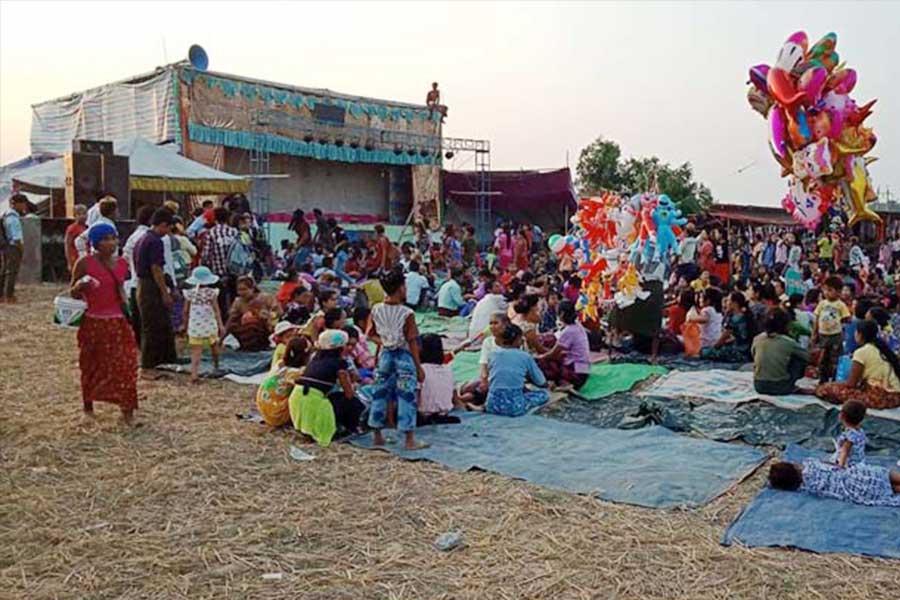
Ongoing conflict in Arakan State and the threat of airstrikes by Myanmar’s military regime have brought pagoda festivals and traditional zat pwe performances to a complete halt for more than two years, leaving Arakanese performers struggling to make ends meet.
20 Feb 2026
DMG Newsroom
20 February 2026, Kyauktaw
Ongoing conflict in Arakan State and the threat of airstrikes by Myanmar’s military regime have brought pagoda festivals and traditional zat pwe performances to a complete halt for more than two years, leaving Arakanese performers struggling to make ends meet.
Due to security concerns, zat pwe (traditional dance drama) troupes and other festive events have been suspended across the state. Artists who rely on these performances for their livelihoods say their careers have come to a standstill.
Thousands of people dependent on the troupes are now working as daily wage labourers in construction, cargo handling, woodcutting and bamboo shoot gathering to survive.
“Currently, we don’t have any steady work. We are just surviving on whatever odd jobs we can find. We’ll do any work as long as it brings in money. Compared to before, we are facing many difficulties, and there are simply no job opportunities for us,” said Ko Tha Hsan, a comedian from the Arakan Moe Chit zat pwe troupe.
Industry sources say there are at least 20 well-known Arakanese zat pwe troupes in the state.
Prominent troupes include Sein Shwe Yadanar, Yadanar Than Aung, Arakkha Mandaing, Yoma Yinthwe Takkhita, Khaing Pyi Hein Rakkhita, Yoma Thazin Thukhuma Yinkhwin, Shwe Yadanar San, Shwe Khaing Thazin, Arakan Moe Chit, Pyi Chit Lin, and Yadanar Shwe Nan.
Traditionally, these troupes perform during the open season from October to April or May.
“When I was running an Arakanese zat pwe troupe, the business was good, and we didn’t have to worry about food. Now, I have to sell curry to get by. Every day, I wake up at 4 or 5 a.m. to prepare for the market. Other troupe members are also doing whatever work they can find just to have a meal,” said Daw Aye Mya Than, owner of the Sein Shwe Yadanar troupe.
Previously, performers earned between K50,000 and K60,000 per night, while those under annual contracts could make between K5 million and K10 million per year.
Most troupes have now disbanded or suspended operations, forcing performers to abandon their art and rely on manual labour for daily survival.
“We still have hope that we can continue our artistic work. We want to preserve this traditional art as much as we can. All the suspended troupes share this hope. We do this not only for our livelihood but also out of true passion,” Ko Tha Hsan added.
Despite the prolonged suspension of performances, members of Arakanese zat pwe troupes say they remain hopeful of returning to the stage.
While modern entertainment is now widely accessible online, performers believe their traditional folk art will adapt and endure. In Arakan State, zat pwe remains a popular form of entertainment among people of all ages.

Top News
Financial hardship limits access to healthcare in Arakan
By Admin 19 Oct 2026
Rice shortages worsen in Taungup as prices soar
By Admin 19 Oct 2026
Junta airstrike kills at least seven, injures many in Paletwa Twsp
By Admin 19 Oct 2026
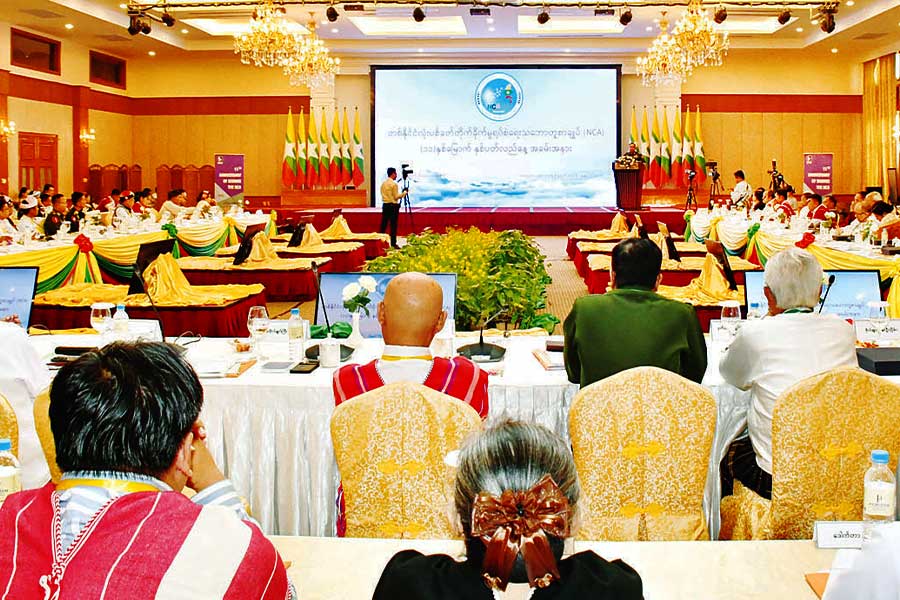
Arakanese politicians face public backlash over junta-backed NCA event
By Admin 17 Oct 2026
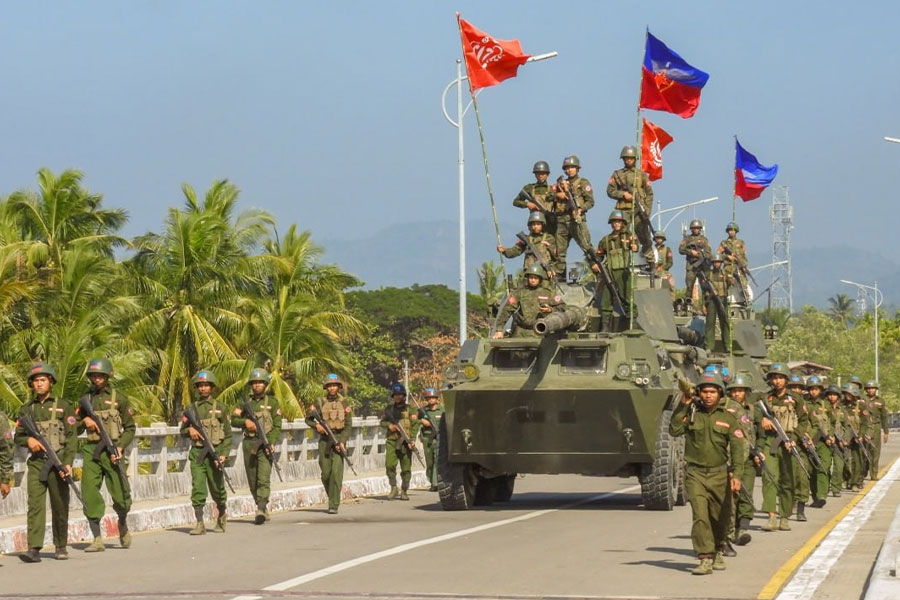
Military operations spread despite decline in clashes, BNI report finds
By Admin 17 Oct 2026