

- Junta jet fleet bombs at least three locations in Kyauktaw
- Junta aerial bombardment of Taungup leaves two residents dead, one injured
- Junta deploys 2,000 troops in major offensive against AA-held territory: ISP-Myanmar
- APHR opposes Min Aung Hlaing’s Malaysia visit, urges halt to Myanmar returns
- Myanmar military airstrikes kill eight in Ponnagyun as attacks escalate across Arakan
Low demand hits Arakan State brickmaking industry despite kiln operations resuming
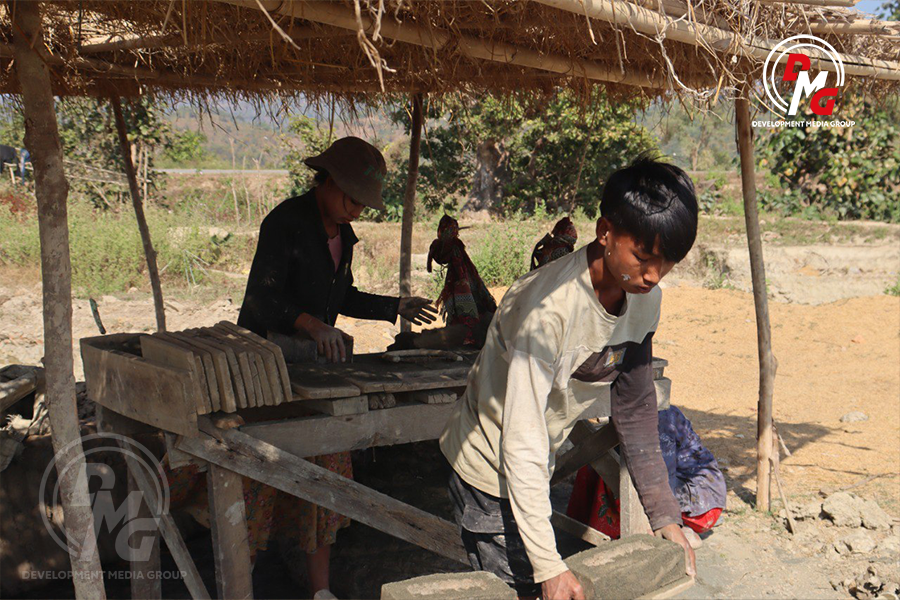
Small scale brickmaking operations in northern Arakan State are struggling to find buyers despite resuming production as the local security situation stabilizes under Arakan Army control, according to industry sources.
30 Jan 2026
DMG Newsroom
30 January 2026, Kyauktaw
Small scale brickmaking operations in northern Arakan State are struggling to find buyers despite resuming production as the local security situation stabilizes under Arakan Army control, according to industry sources.
Rising commodity prices, the threat of junta airstrikes and high overhead costs have driven up brick prices this year, resulting in a stagnant market.
“Last year, we sold a single brick for K350. This year, the price has risen to between K450 and K500. Compared to last year, there are almost no buyers. People are afraid to build new homes because the military regime frequently carries out airstrikes in Arakan State,” said U San Hla Kyaw, a brick kiln owner in Kyauktaw Township.
Residents in blockaded Arakan State have been attempting to restart small scale businesses to sustain their livelihoods, with the brickmaking industry among those resuming operations during this year’s dry season.
Ko Aung Kyaw Myo, another brickmaker, said the increase in brick prices is directly linked to the rising cost of firewood used in the kilns.
“I expect this year’s prices to be higher than last year because firewood is so expensive. The price difference per brick is about K30 to K50. A single truckload of firewood now costs K500,000, while two truckloads cost K750,000,” he said.
He added that the market could recover if the regional situation stabilizes and cement prices decline.
Although brick kilns have been operating since fighting subsided in some areas, the military regime’s continued use of aerial bombardment has discouraged residents from investing in new permanent structures.
“The market is not good, but it is not completely dead yet. We are just getting by. People only buy exactly what they need, whether it is 1,000 or 5,000 bricks. We no longer have consistent daily sales,” said Daw Khin Yi, a brick kiln worker.
Demand has also been reduced by the migration of families to mainland Myanmar or abroad in search of better employment and education opportunities amid the high cost of living. As a result, new construction in Arakan State has sharply declined.
While some bricks are purchased for regional rehabilitation projects, most rebuilding efforts currently rely on bamboo and thatch rather than permanent masonry, leaving the brick market close to a standstill.
Daily wage workers who depend on the kilns for their income said they hope the market will recover and return to its previous level of activity.

Top News
Junta jet fleet bombs at least three locations in Kyauktaw
By Admin 07 Oct 2026
Two ethnic Chakma men injured in Maungdaw landmine blast
By Admin 07 Oct 2026
Ponnagyun residents flee en masse as junta airstrikes target displacement camps
By Admin 06 Oct 2026
Junta aerial bombardment of Taungup leaves two residents dead, one injured
By Admin 06 Oct 2026
Junta deploys 2,000 troops in major offensive against AA-held territory: ISP-Myanmar
By Admin 06 Oct 2026