

- Kyauktaw market closure disrupts trade and drives up prices across Arakan
- Arakan has Myanmar’s highest multidimensional poverty, 1.66 million affected: UNDP
- Arakan records most armed incidents, second-highest civilian casualty toll in Myanmar: NLTA
- Junta fails to regain territory despite major Arakan offensive: ISP-Myanmar
- Two Myebon fishermen missing after junta troops throw fishermen into sea
Livelihood crisis forces IDPs in Ponnagyun to turn to begging
Internally displaced persons (IDPs) in Ponnagyun Township, Arakan State, are increasingly resorting to begging as they struggle with severe livelihood hardships, a lack of job opportunities, and dwindling humanitarian assistance amid ongoing conflict.
21 Jan 2026
DMG Newsroom
21 January 2026, Ponnagyun
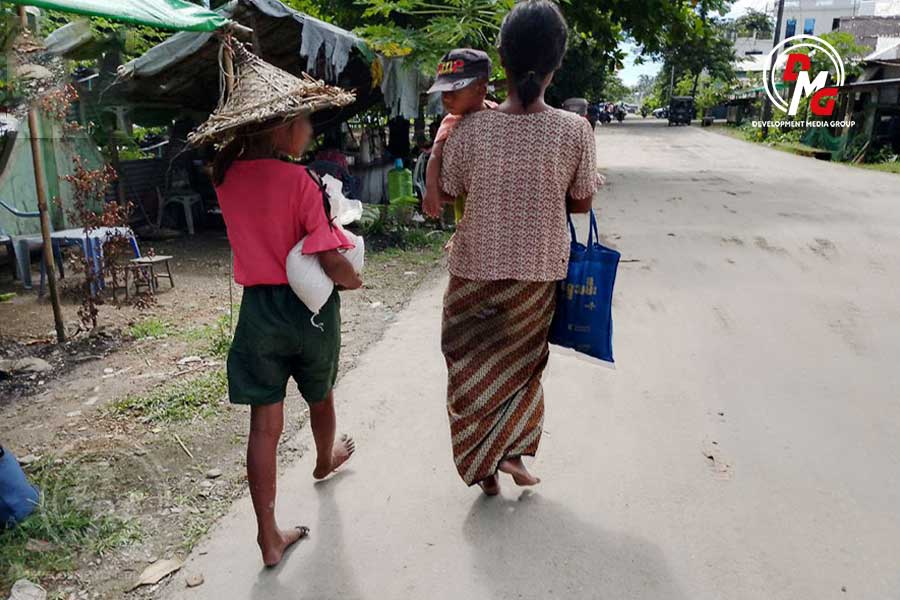
Internally displaced persons (IDPs) in Ponnagyun Township, Arakan State, are increasingly resorting to begging as they struggle with severe livelihood hardships, a lack of job opportunities, and dwindling humanitarian assistance amid ongoing conflict.
IDPs said their living conditions have deteriorated to a desperate level, leaving many with no option but to beg in order to survive.
“Two people in my family who are still strong enough go to the mountains to cut firewood, but it is not enough to cover our food costs,” said Daw Hla Win Sein, a resident of Kyantalin displacement camp. “Firewood does not sell quickly, and buyers only come every three or four days. Since we cannot make ends meet, we have to go out and beg.”
Previously, IDPs relied on donations from nearby villages. However, as local support has declined, many are now travelling long distances to northern Maungdaw, Ann, Taungup, and Myebon townships to beg for food and money.
According to camp residents, nearly 300 of the 500 households in Kyantalin IDP camp have been forced into begging as they can no longer cope with the extreme financial hardship.
“Some families who managed to bring gold or savings have opened small shops, but the majority have no choice but to rely on donations,” said U Tun Aye Maung, another resident of the Kyantalin displacement camp.
There are currently more than 600,000 displaced people across Arakan State due to fighting. With limited humanitarian aid reaching them, IDPs are facing multiple crises, including food shortages and a lack of access to healthcare.
The situation has been further worsened by travel restrictions and blockades imposed by the military regime, which have prevented international organizations from delivering assistance.
In addition, telecommunications and internet blackouts have disrupted the work of local social welfare groups, hindering their ability to carry out regular relief operations.

Top News
Kyauktaw market closure disrupts trade and drives up prices across Arakan
By Admin 10 Oct 2026
Arakan has Myanmar’s highest multidimensional poverty, 1.66 million affected: UNDP
By Admin 10 Oct 2026
Junta fails to regain territory despite major Arakan offensive: ISP-Myanmar
By Admin 10 Oct 2026

Clashes intensify near Taung Maw Oo naval station as Arakan Army launches offensive
By Admin 09 Oct 2026