
- Over 400 Arakanese deportees remain detained in Yangon under tight security
- Junta attacks disrupt fishing livelihoods in Werathani
- Junta air raids deepen livelihood crisis for displaced people in Ponnagyun
- Extreme heat and water shortages threaten paddy fields across Arakan
- Arakan Army captures junta outposts as fighting intensifies near Sittwe
Thai lottery gains popularity among Myanmar people amid post-coup crisis
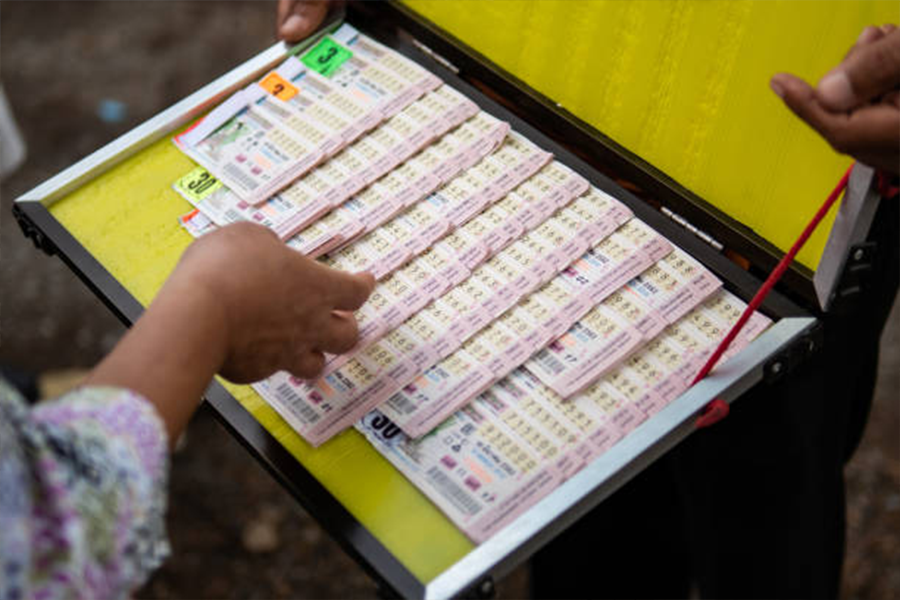
Amid the economic downturn following Myanmar’s military coup, a growing number of people are turning to the Thai lottery as they struggle to make ends meet amid armed conflict and financial hardship.
29 Jan 2026
DMG Newsroom
29 January 2026, Myebon
Amid the economic downturn following Myanmar’s military coup, a growing number of people are turning to the Thai lottery as they struggle to make ends meet amid armed conflict and financial hardship.
As fighting between the military regime and revolutionary forces spreads nationwide, civilians are facing severe disruptions, including blocked transport routes, phone and internet shutdowns, and interruptions to the flow of essential goods.
Widespread job losses have further deepened the socioeconomic crisis, leaving many people grappling with daily survival.
Lottery vendors say the Thai lottery has become a psychological outlet during these hardships, offering the hope of a large return from a small investment.
A Myanmar lottery vendor based in Thailand said, “The current situation in Myanmar is declining in all sectors including the economy, society and education. Since most people cannot find jobs and are struggling, they place their hopes on luck. They think if they are lucky, they will win once. That is why more people are trying their luck with the Thai lottery. The payout is substantial if they win.”
The Thai Government Lottery uses a six-digit number system. Each six-digit number is printed in sets of one million tickets, with total monthly production reaching up to 90 million tickets.
Draws are held twice a month, usually on the first and sixteenth, although dates may change during major public holidays in Thailand. The First Prize requires all six digits to match exactly and carries a jackpot of six million baht. There are five main prize tiers, along with smaller prizes such as the first three digits and the last two digits.
Due to the relatively high chances of winning across multiple prize categories, people from across Myanmar are participating, and reports of First Prize winners have further boosted interest.
Although the official price set by the Thai government is 80 baht per ticket, buyers in Myanmar pay around 14,500 kyats, with slight variations depending on exchange rates.
A woman from Myebon Township in Arakan State said, “I try my luck with the Thai lottery at least once a month. Even if I do not win this month, I hope for the next. It is about testing my luck. This amount of money would be spent anyway, so I see it as an investment. Over time, I do not feel like I have lost, but if I win, the return is far greater than what I put in.”
On June 16, 2025, the six-million-baht First Prize was won by Ko Zin Myo Tun, a resident of Rue Model Village in Ann Township, Arakan State, who is currently living in Thailand.
Agents say such success stories continue to attract Myanmar people facing economic hardship, with participation rising significantly compared to the period before the coup.
In areas such as Arakan State where internet access has been cut, residents cannot buy tickets online and instead rely on offline sub agents.
A Karen lottery vendor said, “We provide home delivery with cash on delivery. Online sales are mostly limited to people we know. Recently, sales have increased. Where we used to sell in tens, we are now selling in hundreds.”
As the national economy continues to deteriorate under military rule, sales of the military controlled Aung Bar Lay state lottery have sharply declined.
Alongside the Thai lottery, several revolutionary lotteries have emerged, including the National Unity Government’s Spring Lottery, the Tumee Lottery for Chin resistance forces, and the Karen National Union’s Thoo Lei Lottery. Last month, the Ta’ang Lottery was also launched to support education in the Palaung region of northern Shan State.

Top News
Over 400 Arakanese deportees remain detained in Yangon under tight security
By Admin 16 Oct 2026

Junta attacks disrupt fishing livelihoods in Werathani
By Admin 16 Oct 2026
Junta air raids deepen livelihood crisis for displaced people in Ponnagyun
By Admin 16 Oct 2026
Extreme heat and water shortages threaten paddy fields across Arakan
By Admin 16 Oct 2026
Junta, Arakan Army battle for control of strategic Ngapyi Island
By Admin 15 Oct 2026