

- Heavy clashes erupt between junta and Arakan Army near Sittwe
- Arakan residents suffer severe mental and physical distress amid junta airstrikes
- Junta jet fleet bombs at least three locations in Kyauktaw
- Junta aerial bombardment of Taungup leaves two residents dead, one injured
- Junta deploys 2,000 troops in major offensive against AA-held territory: ISP-Myanmar
Farmers cry foul over paddy traders’ exploitative practices in Arakan State
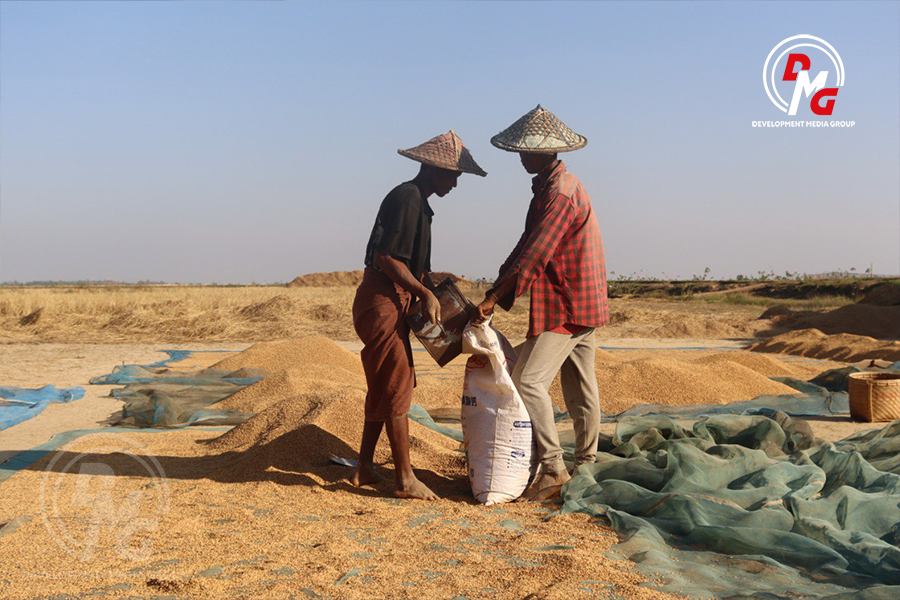
Farmers say there is effectively no paddy market in Arakan State this harvest season, leaving them vulnerable to exploitative practices by traders and facing significant losses.
02 Dec 2025
DMG Newsroom
2 December 2025, Ponnagyun
Farmers say there is effectively no paddy market in Arakan State this harvest season, leaving them vulnerable to exploitative practices by traders and facing significant losses.
Previously, one basket of paddy was sold using baskets holding 52–54 tins, but traders are now buying with baskets holding 60–65 tins, farmers said.
“In the past, one basket of paddy was weighed with a basket containing 52 tins. The standard is 48 tins, but farmers can accept 52. This year, traders have increased one basket to 64 tins, which is causing a lot of suffering for farmers. If we don’t sell during this time, there will be no buyers,” said U Tun Aung Thein, a farmer in Ponnagyun Township.
He continued: “For example, instead of 52 tins, one basket now has 64 tins — 12 tins more. That means 1,200 tins for every 100 baskets. One hundred twenty tins of paddy are equal to 24 baskets, or six rice bags. The profit that should go to farmers has gone to the traders.”
Farmers say their hard-earned production is headed for disaster, with no market for paddy, high input costs, and trading practices entirely at the discretion of merchants.
The United League of Arakan (ULA) is considering establishing a standard measure for paddy and rice trading, and monitoring purchases more closely.
“The baskets used by traders are different from farmers’ baskets. Ours hold 54 tins. Traders’ baskets have held 64 tins for years. Farmers are suffering exploitation even though there is no market for paddy,” said a female farmer from Kyauktaw Township.
Last year, 100 baskets of local paddy varieties fetched over K500,000 and 100 baskets of Kaukkyi paddy fetched nearly K1 million. This year, 100 baskets of local paddy fetch only K400,000, and Kaukkyi only around K800,000, according to farmers.
Many farmers say they are also struggling with labour costs, with the price of harvesting one acre of paddy rising to K150,000 this season.
With no paddy market in Arakan State for two consecutive seasons, farmers say they are incurring heavy losses despite high investment.
“We want the standard basket fixed at 54 tins. Buyers have huge capital, so we have no choice but to sell to them. If we don’t, there will be no buyers. We want the ULA to intervene,” said U Maung Soe Than, a farmer in Kyauktaw Township.
Farmers warn that food security in Arakan State could be at risk in the coming years, as they may be forced to reduce their acreage.
Arakan State has over 1.25 million acres of cultivated land, but farmers say the sector is in decline due to military conflict and rising commodity prices.

Top News
Heavy clashes erupt between junta and Arakan Army near Sittwe
By Admin 07 Oct 2026
Arakan residents suffer severe mental and physical distress amid junta airstrikes
By Admin 07 Oct 2026

Junta jet fleet bombs at least three locations in Kyauktaw
By Admin 07 Oct 2026
Two ethnic Chakma men injured in Maungdaw landmine blast
By Admin 07 Oct 2026
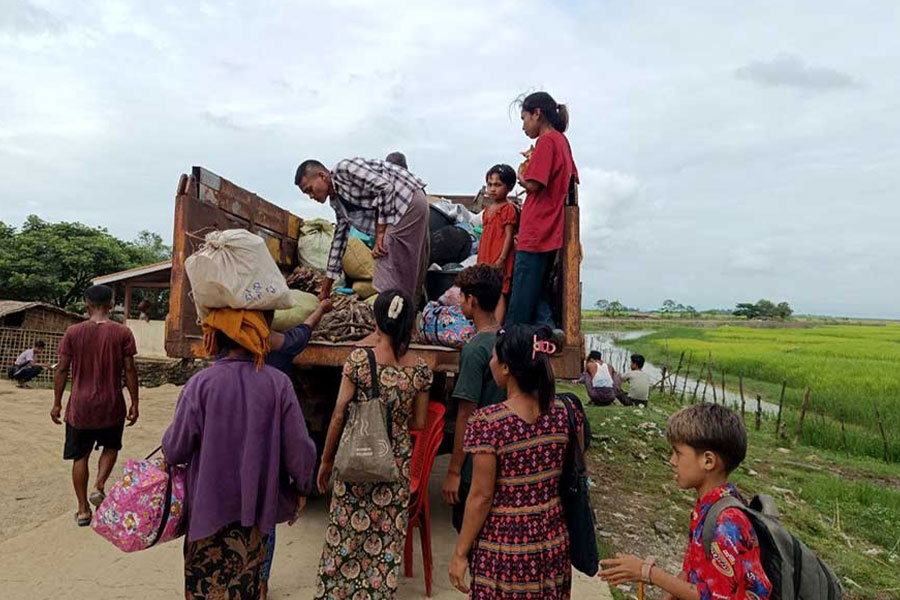
Ponnagyun residents flee en masse as junta airstrikes target displacement camps
By Admin 06 Oct 2026