
- ULA warns Arakan residents of airstrike risks during Thadingyut festival
- Months-long internet blackout drives up costs for residents of Thandwe and Gwa
- At least five injured in junta Y-12 airstrikes on Werathani villages
- Junta orders Sittwe residents to dismantle home bomb shelters
- Arakan records most armed incidents as 78 civilians killed across Myanmar: NLTA
In Myanmar’s Arakan State, the World Is Watching a Human Rights Collapse in Real Time
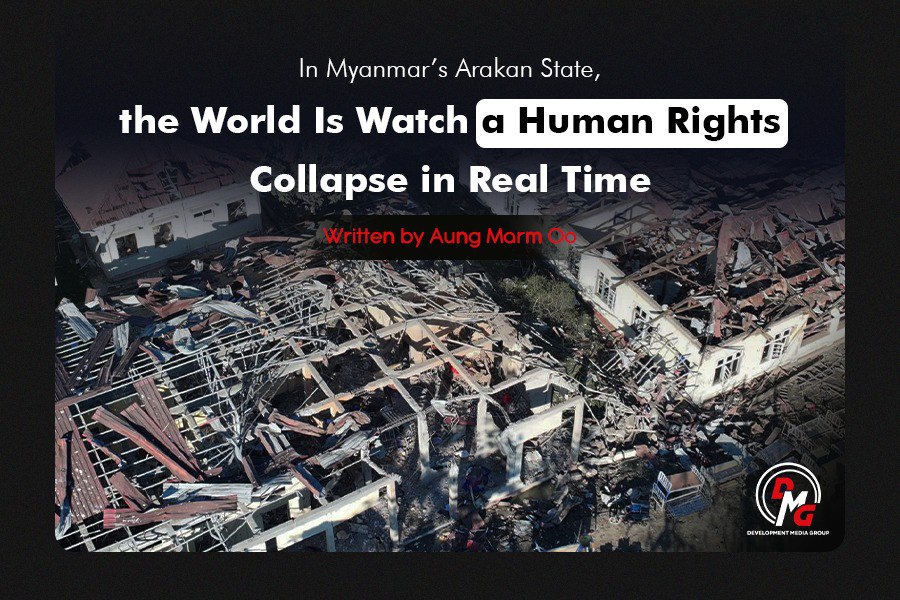
On December 10 — International Human Rights Day — a military jet dropped bombs on Mrauk-U Public Hospital in Myanmar’s Arakan (Rakhine) State. More than 30 people were killed, including patients seeking treatment and family members keeping vigil at their bedside. Over 70 more were injured. The hospital’s main building was reduced to rubble.
13 Dec 2025
Written By Aung Marm Oo
On December 10 — International Human Rights Day — a military jet dropped bombs on Mrauk-U Public Hospital in Myanmar’s Arakan (Rakhine) State. More than 30 people were killed, including patients seeking treatment and family members keeping vigil at their bedside. Over 70 more were injured. The hospital’s main building was reduced to rubble.
The symbolism was impossible to ignore: on a day meant to reaffirm humanity’s shared commitment to fundamental rights, Myanmar’s military chose to attack a place of healing.
This was not a tragic anomaly. It was the latest episode in a pattern of deliberate, unlawful attacks on civilians and civilian infrastructure across Myanmar — and nowhere more intensely than in Arakan State, where the military’s air campaign has escalated sharply since late 2023.
A War From the Sky
Over the past year, airstrikes have become one of the junta’s most frequently used tools of warfare. In Arakan, residents speak of a daily fear that has seeped into every aspect of life. Fighter jets circle without warning, dropping bombs on villages, marketplaces, and now hospitals.
Since January 2024, dozens of strikes have hit Kyauktaw, Mrauk-U, Pauktaw, Ponnagyun, Rathedaung, and other townships under the control of the Arakan Army (AA).
In September, a school in Kyauktaw Township was hit from the air, killing 21 students and injuring more than 20 others. Days later, airstrikes destroyed homes near Sittwe. Earlier this year, civilians watching a football match at a tea shop in Sagaing Region were also killed — a grim reminder that nowhere in Myanmar is safe: not classrooms, not clinics, not even evening gatherings.
Such strikes violate the most basic principles of international humanitarian law, which prohibit attacks on civilians and on protected structures such as hospitals. Yet accountability remains virtually nonexistent.
Arakan’s Hidden Crisis
Arakan State’s humanitarian catastrophe has received far less global attention than conflicts in other parts of Myanmar. Yet the region faces an exceptionally complex political reality: the United League of Arakan/Arakan Army (ULA/AA) now controls roughly 90 percent of the state’s territory, while the parallel Arakkha People’s Government administers public services in many townships.
Under this emerging governance system, community-based “public education” programs have been created to keep learning alive amid conflict. Teachers hold classes in private homes, monasteries, or makeshift shelters. Students run to irrigation ditches when jets roar overhead. More than 60 percent of the teaching force now consists of displaced former government teachers or volunteers.
And yet even these improvised systems cannot protect children from the sky.
With schools bombed, teachers unpaid, and families unable to afford textbooks — which now cost up to 100,000 kyats — tens of thousands of children in Arakan have fallen permanently out of education. Many will never return. The loss of an entire generation’s learning is becoming one of the most devastating human rights consequences of Myanmar’s war.
A Broader Human Rights Collapse
The attack on Mrauk-U Hospital should be understood not as an isolated atrocity but as part of a wider strategy: a campaign designed to terrorize communities, displace populations, and weaken the functioning of any alternative administration outside military control.
According to the ULA/AA’s Humanitarian and Development Cooperation Office (HDCO), nearly 1,000 civilians in Arakan have been killed since late 2023, with more than 2,000 injured. Airstrikes alone account for over 443 deaths and more than 1,000 injuries.
These figures almost certainly understate the true toll. Communication blackouts, restricted access, and fear of retaliation mean many incidents go unreported.
Meanwhile, Myanmar faces a nationwide economic collapse, mass displacement exceeding three million people, and an increasingly fragmented conflict stretching from Kachin and Chin to Bago and the central heartland. As it loses ground across the country, the junta has relied more heavily on aerial bombardment — the one tool it still controls absolutely.
Yet international action remains largely limited to condemnations and symbolic sanctions.
What the World Must Do Now
Myanmar’s crisis is no longer an internal matter. The scale of civilian harm, the use of airpower against protected institutions, and the obstruction of humanitarian access demand an international response rooted not in geopolitics but in the basic obligations of the human rights system.
Several steps are urgent and feasible:
1. Cut the junta’s access to aviation fuel.
Without aviation fuel, the air campaign cannot continue. Targeted sanctions on suppliers, shippers, and financial intermediaries must be tightened and enforced.
2. Support independent documentation efforts.
Local organizations — including those in Arakan — are documenting attacks with painstaking detail. Their evidence is essential for future accountability mechanisms.
3. Expand cross-border humanitarian access.
Millions of people, especially in western Myanmar, cannot rely on junta-controlled aid routes. International agencies must work with local actors to deliver assistance through non-regime channels.
4. Recognize and support parallel community governance structures.
Where local administrations such as the Arakkha People’s Government are providing education, justice, health care, and humanitarian relief, the international community should explore principled, conflict-sensitive ways to collaborate.
5. Do not legitimize the junta’s upcoming elections.
Any recognition of the regime’s staged political process undermines the democratic aspirations of Myanmar’s people and rewards the use of terror as a governing strategy.
Human Rights Day Cannot Be an Empty Ritual
What happened in Mrauk-U is a warning to the world. On a day meant to celebrate universal rights, Myanmar’s military demonstrated once again its willingness to violate every one of them.
If the international community fails to respond, the message will be unmistakable: some human lives — some human rights — are treated as less worthy of protection.
The people of Arakan, and Myanmar as a whole, deserve far better. They deserve a world willing to uphold the principles it claims to defend. They deserve safety from the sky. And most of all, they deserve the chance to imagine a future not defined by war.

Opinion
Can the UN Restore Trust in a Fractured World?
By Admin 23 Oct 2026
Arakan Amid the Storm: From Survival to Rebuilding a People
By Admin 22 Oct 2026
Surviving Amid the Bombs: Arakan's Quiet Resistance
By Admin 19 Oct 2026
Shadows Over Childhood: Confronting the Reality of Missing Children
By Admin 16 Oct 2026
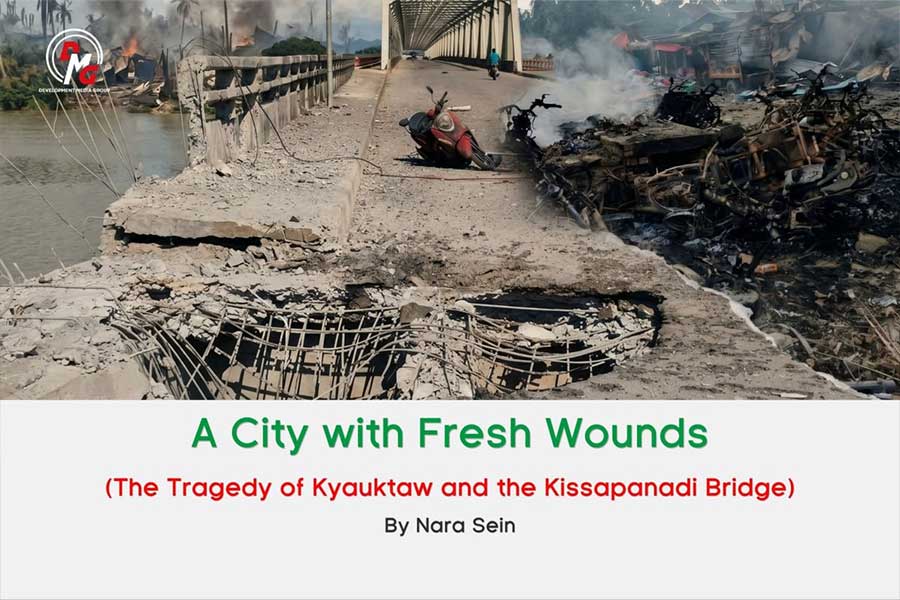
A City with Fresh Wounds (The Tragedy of Kyauktaw and the Kissapanadi Bridge)
By Admin 01 Oct 2026
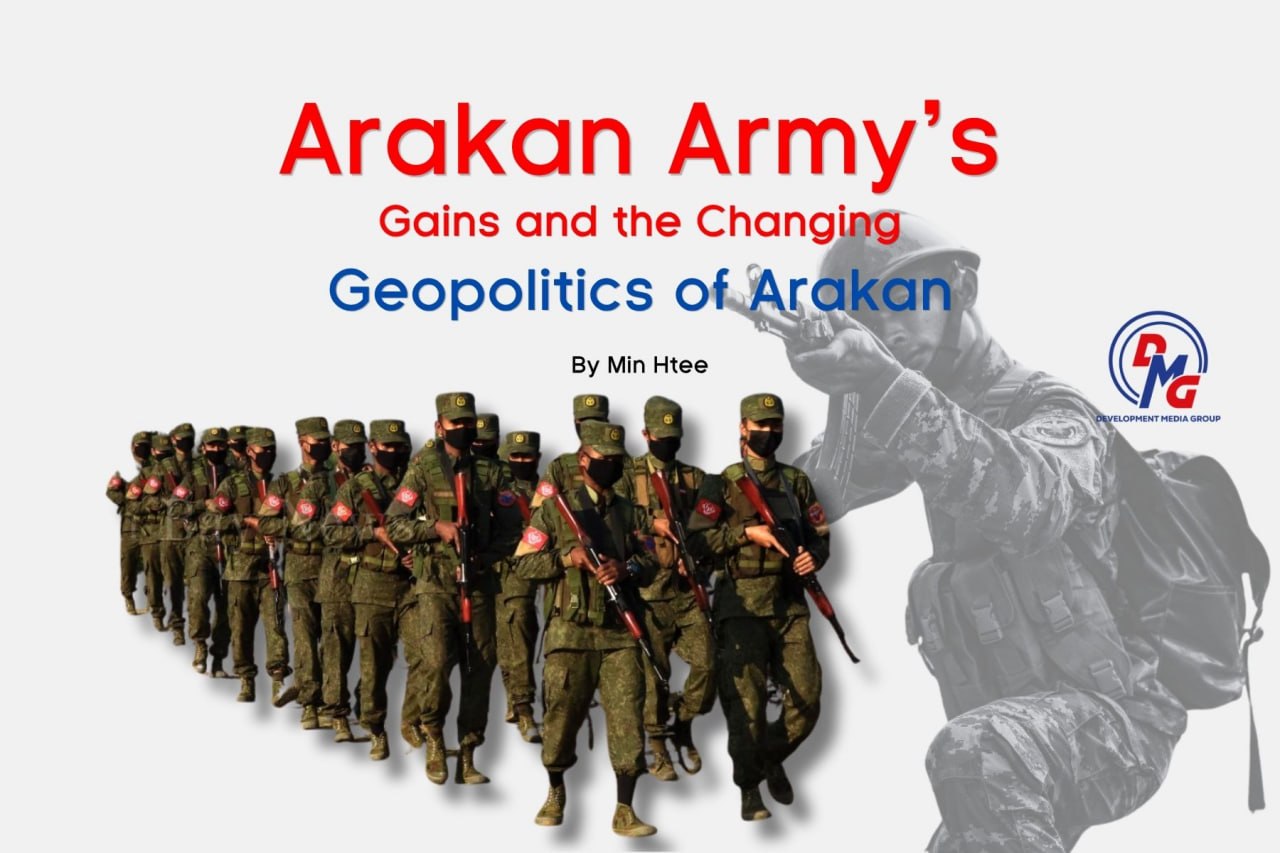
Arakan Army’s Gains and the Changing Geopolitics of Arakan
By Admin 29 Sep 2026
POLITICS
BUSINESS
Industry to manufacture finished goods from coconut starting in early 2020
By Aung Kaung Zaw 20 Nov 2019